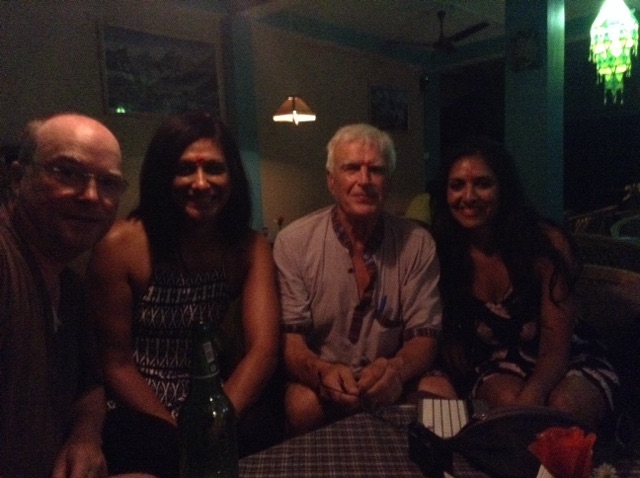
Agra

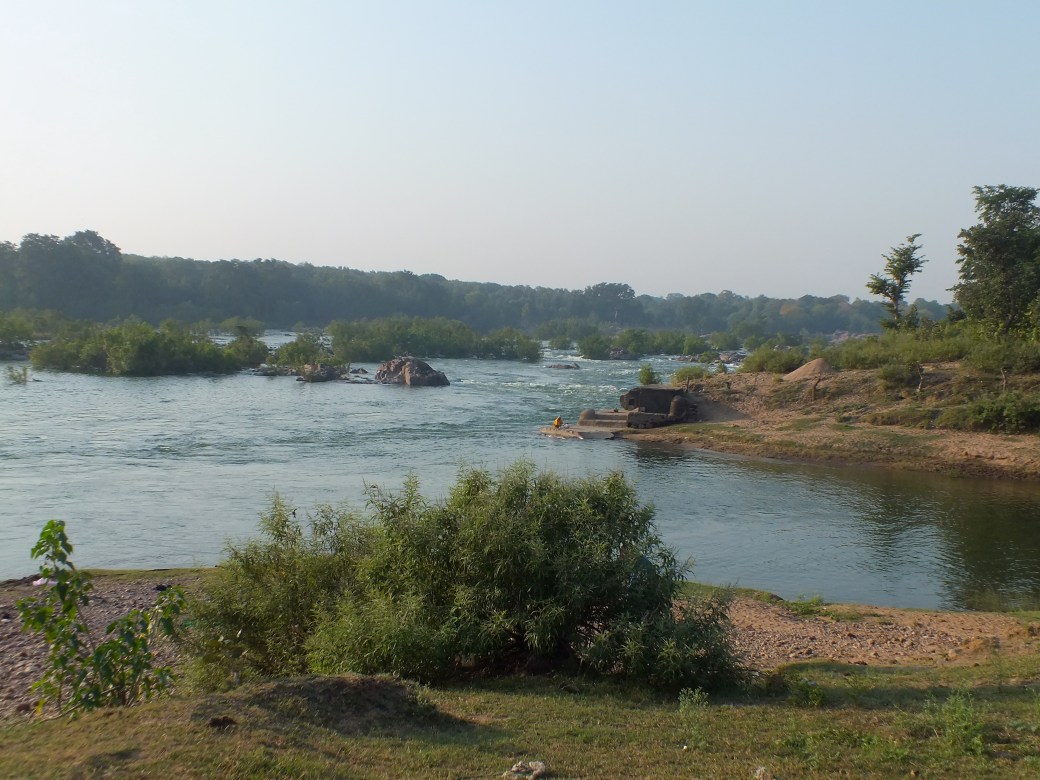
Broadly speaking, our first camping episode was successful. Our dinnertime ratatouille was bland, our breakfast modest. Our campfire lasted long into the night, overseen by a couple of tuk-tuk guys who stayed overnight to insure our security. Given the amount of beer we downed maybe their security was more at risk than ours. Earlier in the afternoon we had a glorious swim in the swirling currents of the Betwa River, a welcome counter to the heat of the day. Despite cooler jungle air and my cold, we swam again before breakfast.
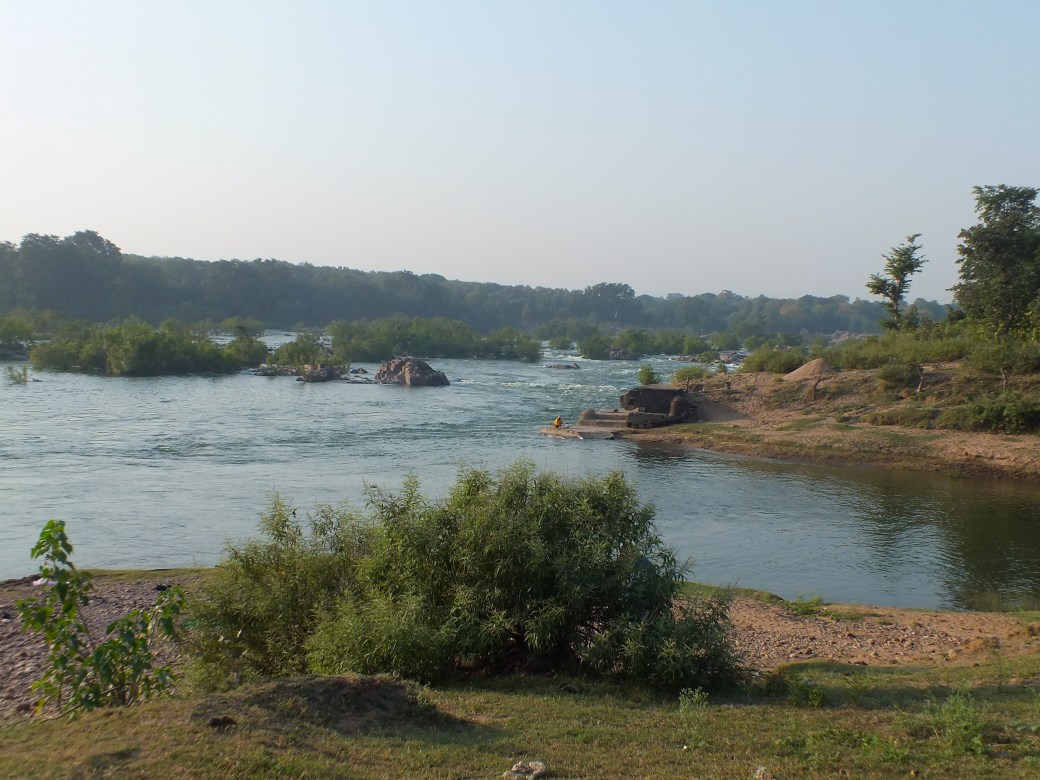
BetwaRiver.JPG

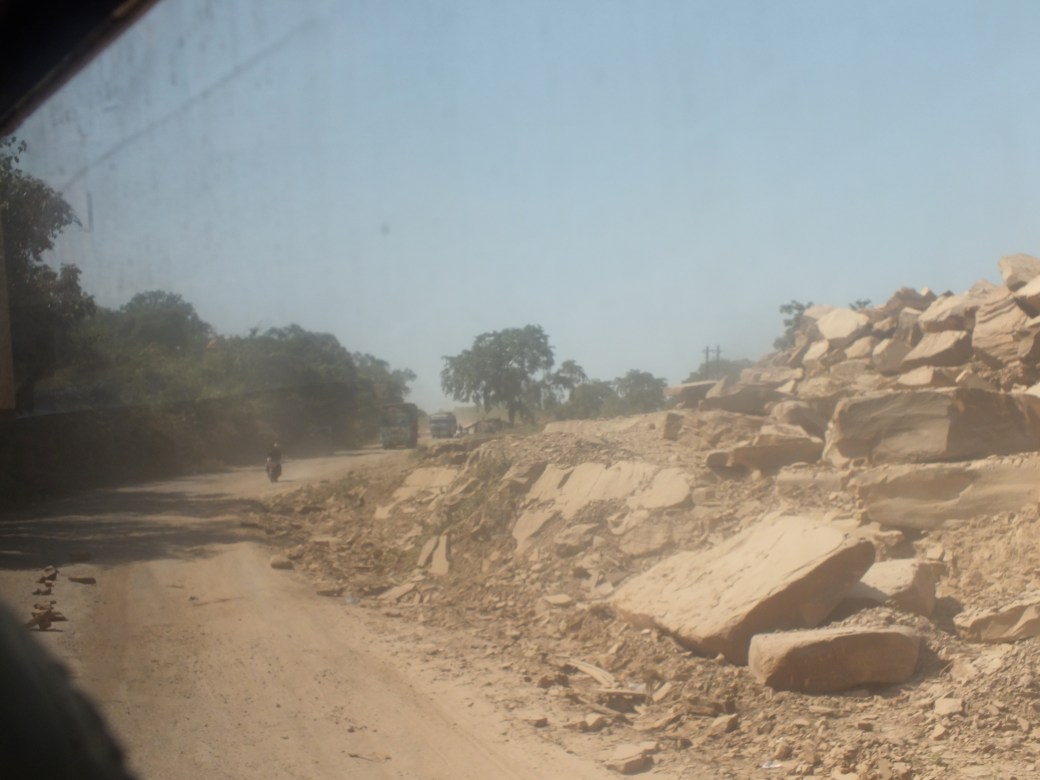
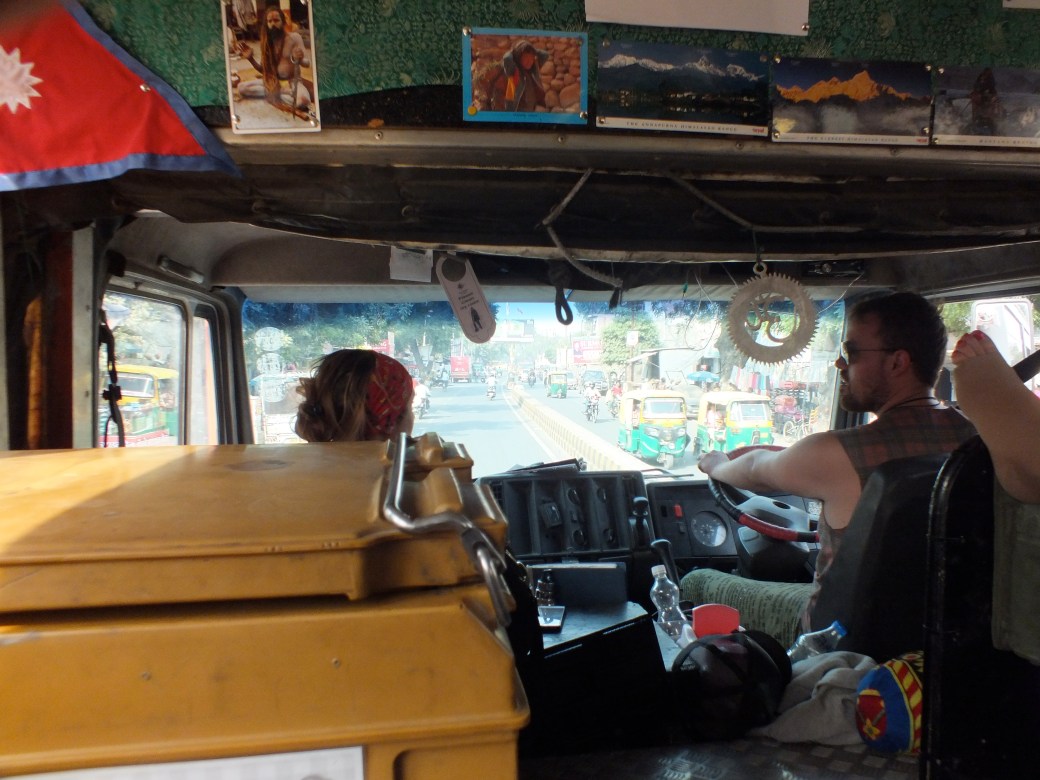
For the next 400 km. we continued to follow the rugged Vindhya range, dotted occasionally by dusty roadside settlements.
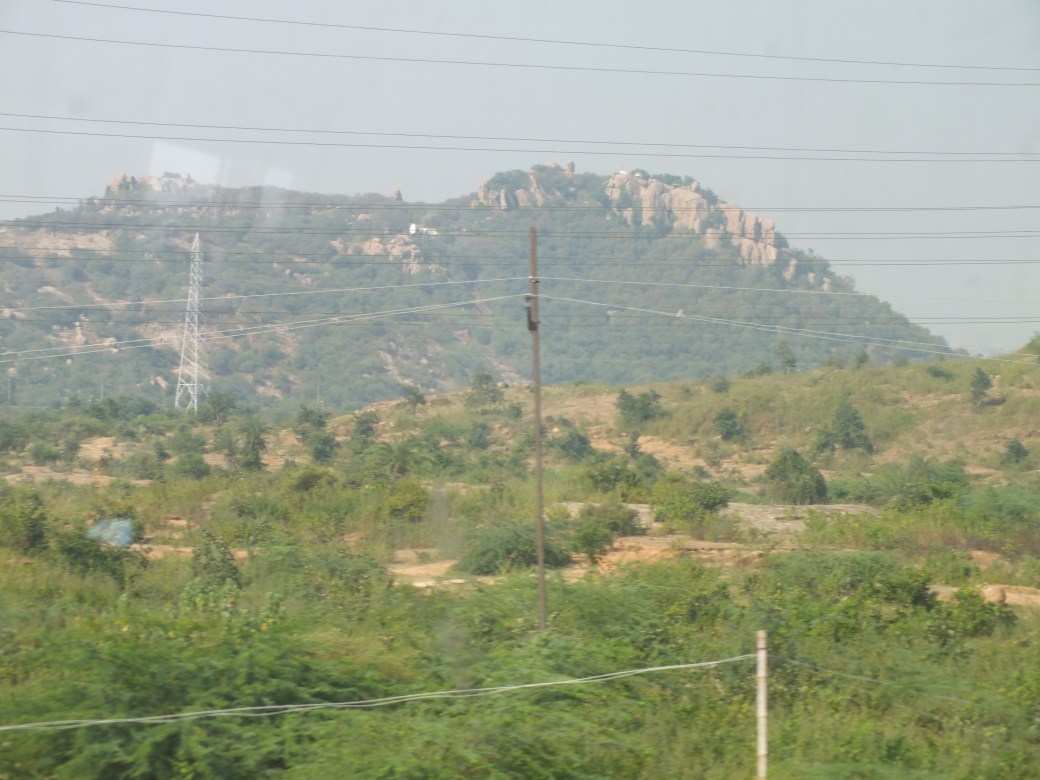
roadtoagra2

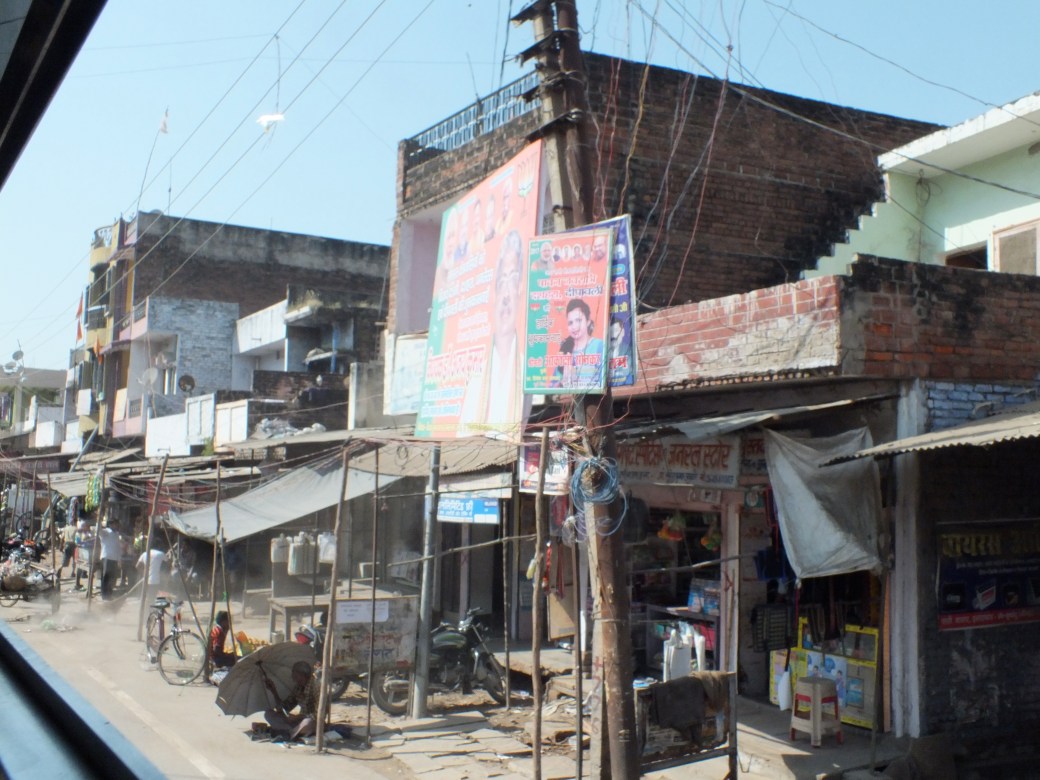
roadside.JPG

With the heat and the bumps, the trip did not register, neither in photos nor memory- except for probably our first crossing of a controlled provincial boundary, probably between Madhya Pradesh and Rajasthan. It is unusual elsewhere to encounter a rigorous border check-point between federal units-except maybe the fruit-check at the edge of Florida. But here, massive gates, a massive parking space filled with 18-wheelers, secure-looking buildings and scurrying agents. Not for the last time our truck-like appearance failed to convince the enforcers that we were just tourists, not some taxable commodity. Not for the last time Ali became our spokesperson, maybe in the hope that dealing with a woman would frazzle the enforcers into leniency. She had to march across the parking expanse with a load of papers to make our case. Took a good half -hour. We took the opportunity to have a pee.

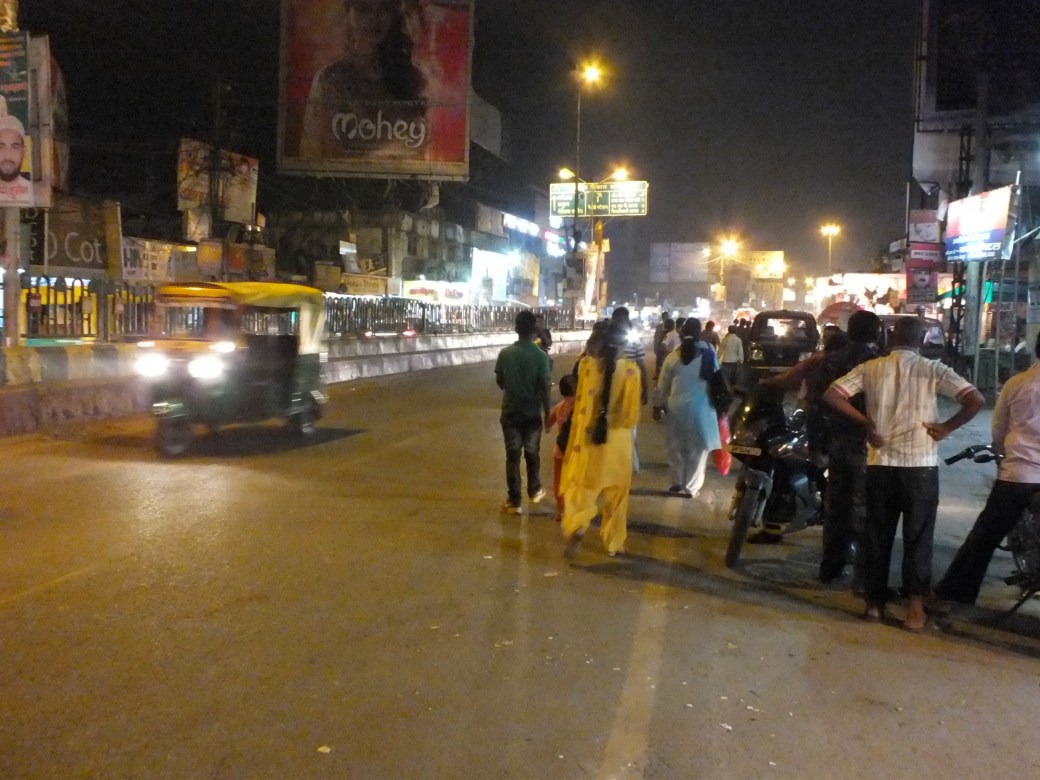
The roads actually improving as we rolled westward towards Agra, we arrived around 3pm at the Hotel Dazzle, named thus to distract its guests. I think maybe we were its first guests ever: quite modern and comfortable building, but no keys to rooms, beds not made up, little toilet paper, many young boys hanging around aimlessly. Whenever one wanted to leave or enter a room, or get some TP, one of the boys had to be found and roused to action. On the location side, better news: good shopping and restaurants nearby including a British coffee chain. The addicts were saved. Some guys got shaves and haircuts, a very cheap luxury inaugurated earlier in the border town.

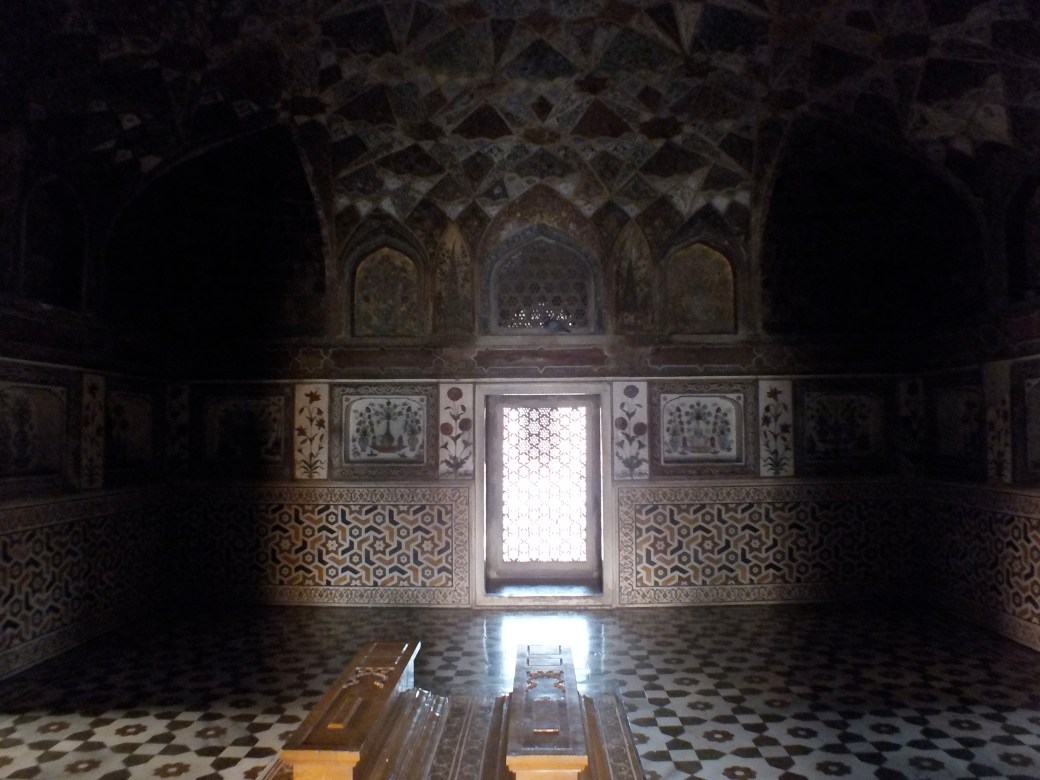
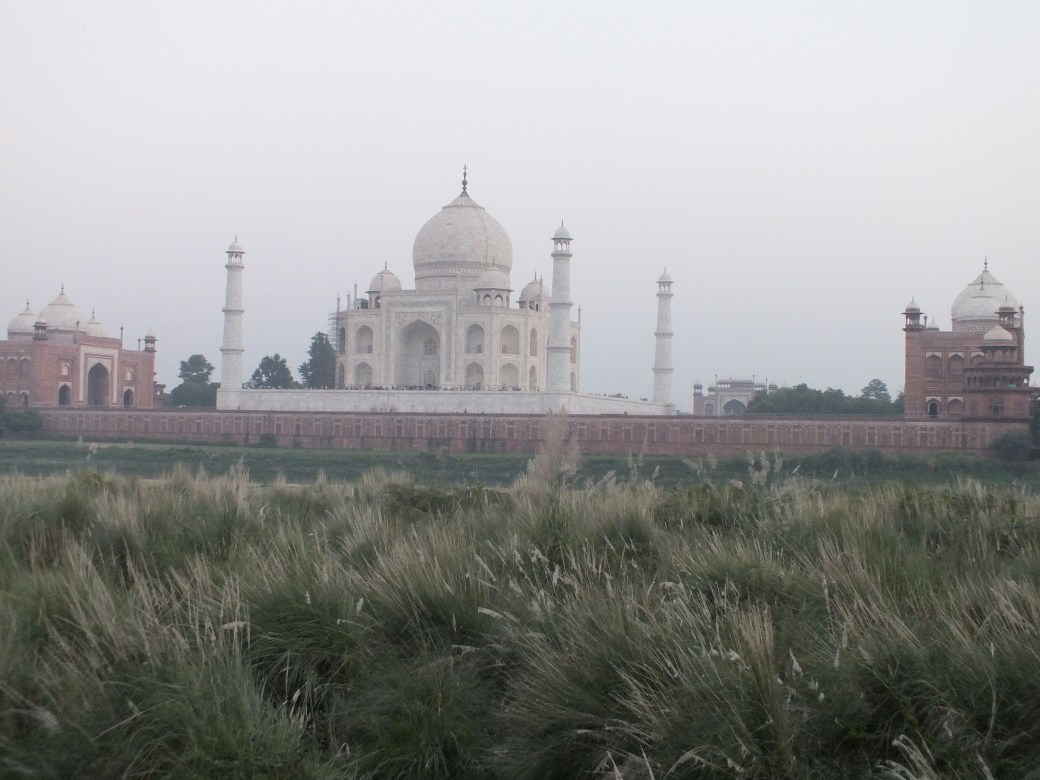
In the evening we visited Itmad-ud-Daulah tomb (sometimes known as the ‘Baby Taj’), and viewed the Taj itself from across the Yamuna River.
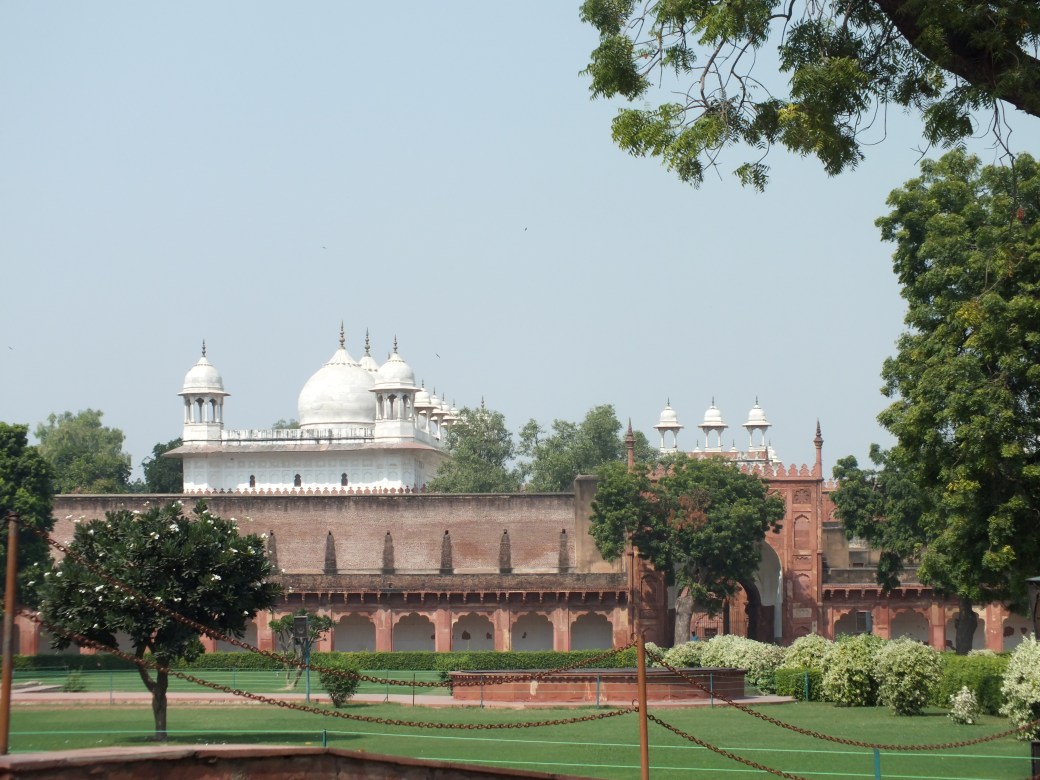
Itmad-ud-DaulahMausoleum.JPG

TajAcrossYamunaRiver.JPG

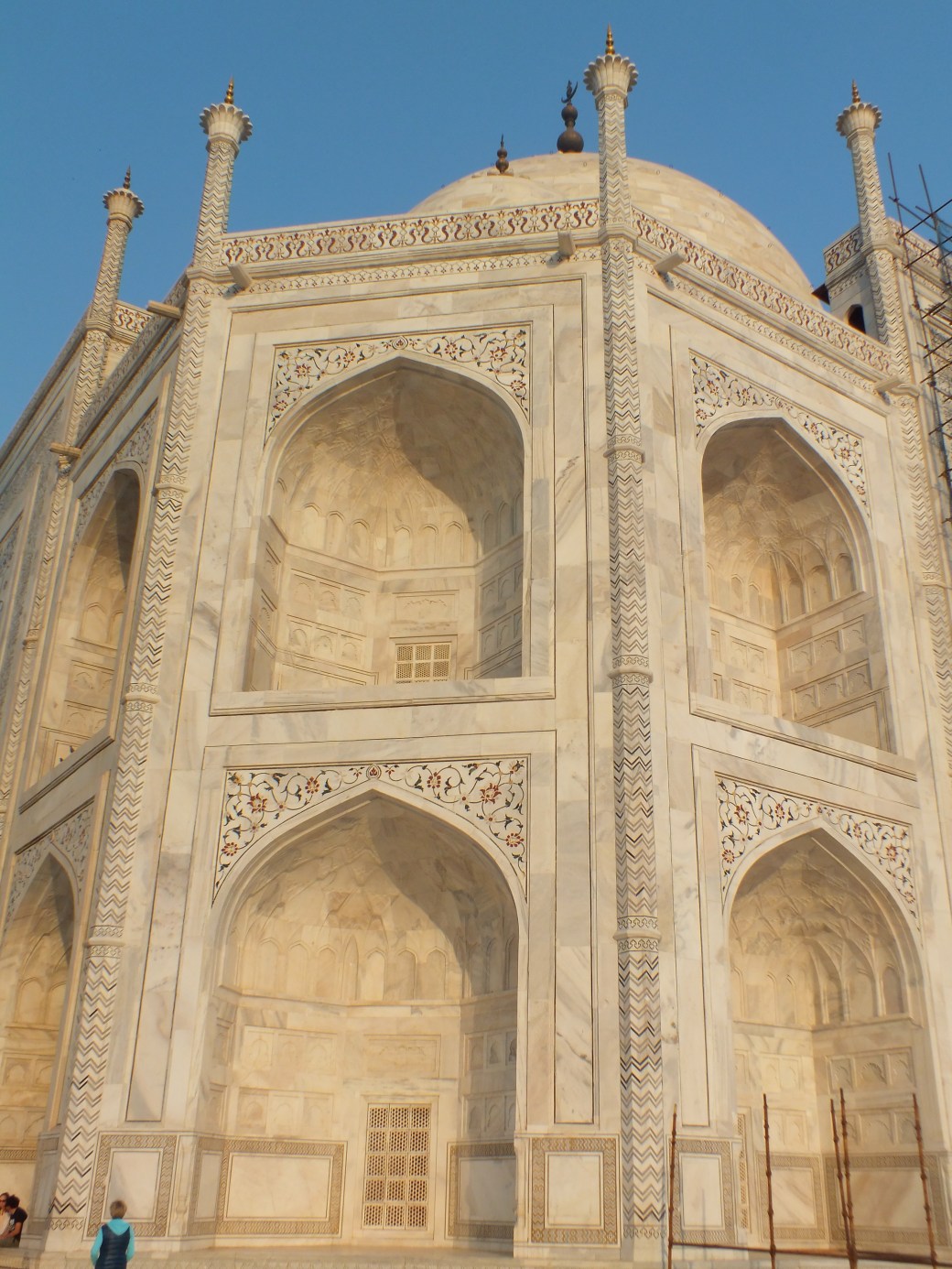
Next morning we were up again at 5 to visit the Taj Mahal. Due to bureaucracy we missed chance to see it in the light of a full moon. We were there to see it at sunrise but almost missed that too due to queues and incompetent guide.
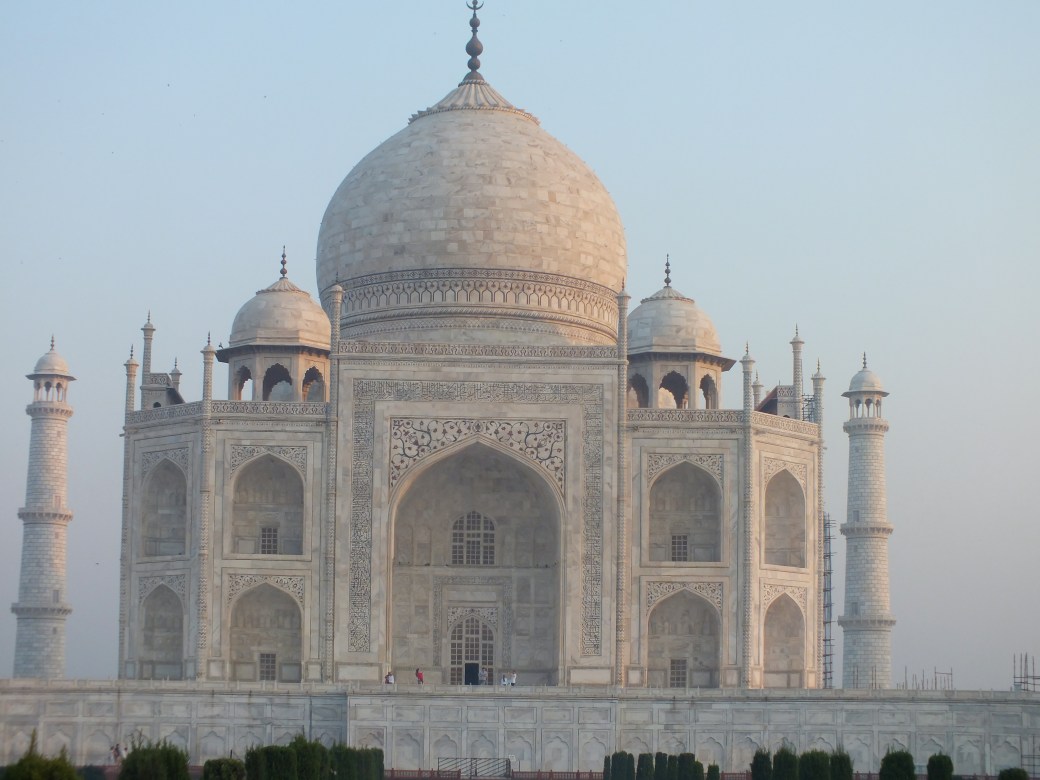
TajAtSunrise.JPG

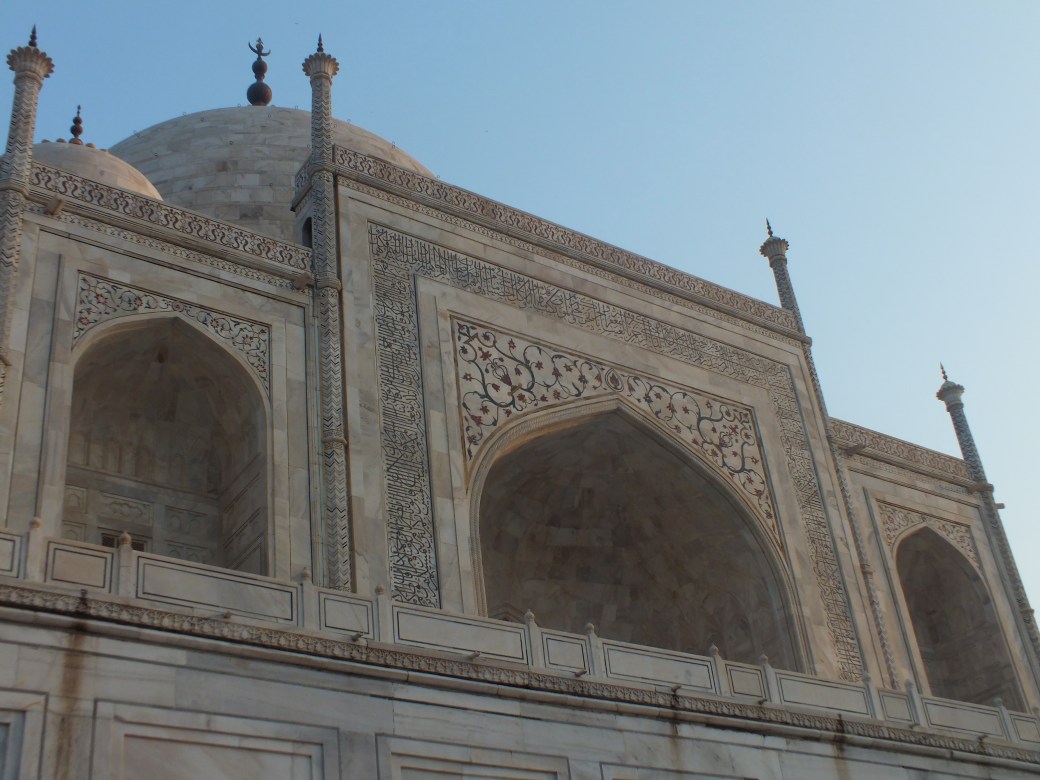
An imposing building of solid white marble, the Taj was built by the fifth ruler of the Mughal empire, Shah Jahan. Begun in 1631 it took 20 years to complete, engaging over 20,000 workers and skilled craftsmen, some of whom were brought in from all over India, Central Asia and even Europe to work on the marble inlay work and complex decorations. The site has been described by UNESCO as being “the jewel of Muslim art in India and one of the universally admired masterpieces of the world’s heritage”. (Dragoman notes). A masterpiece of Islamic architecture, it was designed to commemorate the Shah’s favorite wife, Mumtaz Mahal.

The Mughal invasion…

Agra rose from obscurity in 1504 when Sikander, a dominant Lodi sultan based in Delhi proclaimed Agra as his alternate capital, building a fort to subdue the rival Tomar rajputs of Gwalior, a town just south of Agra. The Lodi people were Afghans who in 1451 succeeded the Saiyyids, another Afghan group who established themselves in Delhi after the sacking of the city in 1398 by the Central Asian warlord Timur (Tamburlaine). Successive waves of invaders, led by Turks, Persians and Afghans, sought the plunder offered by the resources and craftsmen of Hindu India. Though these Islamists largely tolerated Hindu practices, they instituted the jizya, a tax on its practioners.
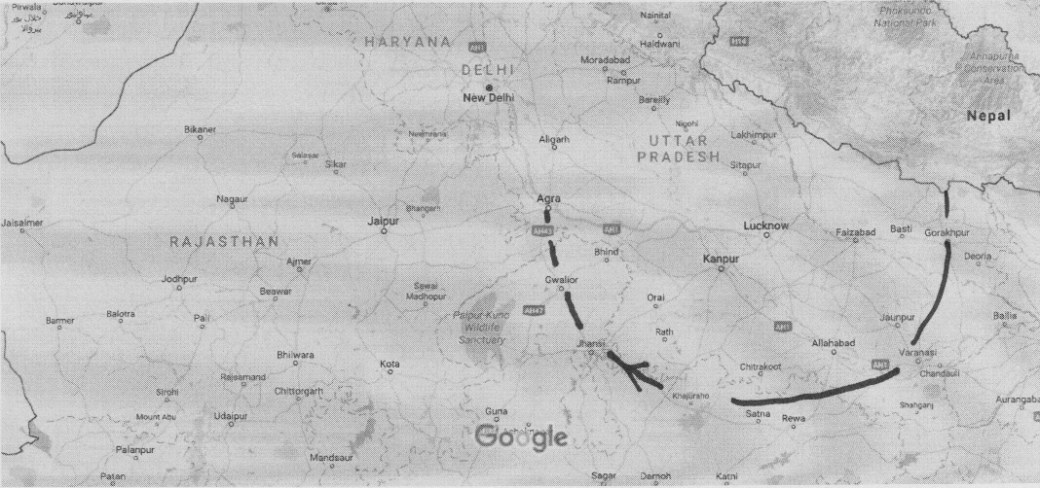
NWIndia.jpeg

Northwest India, with our route to Agra among sites mentioned

In turn, the first Mughal (Mongol) khan, Zhar-ud-din Mohammad (1484-1530), known as Babur the Tiger, culminated a series of attacks on the Punjab from his base in Kabul by capturing Agra and Delhi in 1528. Babur was a distant descendant of Ghengis Khan originally form Tashkent. Significantly, he was a sensitive character given to artistic and poetic expression. Equally significantly, he mastered the use of new gunpowder technologies and thus overran the more numerous forces of Rana Sangha and other Punjab rajputs in Northern India in 1527-29. So began 200 years of Mughal rule in India.

Babur died in 1530, succeeded by his favorite son Humayun (1508-1556), more of an aesthete than a warrior, who nonethess managed to conquer much of Rajasthan, Malawa and Gujarat in the western Punjab over 1534-36. Gradually he frittered away these gains, ceding his kingdom in 1540 to another Afghan, Sur Shah Khan, the ruler of Bengal to the east. Though the Sur people ruled the Punjab for 15 years, Shah Khan died in 1545 during a successful attack on Kalinjar, the hill fort protecting Kajuraho, thus starting the famous temples’ disappearance into the jungle. Shah Khan in his brief reign initiated administrative reforms, including systematic revenue collection and military organization, that the Mughals later perfected.

After his defeat Humayun fled, eventually to Persia where, in return for the fabulous Khoh-i-nur diamond (186 karats) which he had obtained after conquering the raja Vikramaditya of Gwalior, he was given a largely Persian army. With it he reconquered the Punjab by 1555- then died accidentally from a fall from his makeshift astronomical observatory in Agra.

Humayun’s 12 year old son Akbar (1543-1605) succeeded him. Probably dyslectic, never able to read and write, Akbar showed promise as a warrior. Indeed, with the support of his able regent Bayram Khan he defeated the previously unbeaten and equally unlikely warrior of lowly origins, the Hindi Hemu, who could not even ride a horse but nonetheless swept the Mughals from Delhi shortly after Humayun’s death. Against a superior force including hundreds of elephants Akbar prevailed when the enemy panicked after their leader Hemu fell.

Akbar thus began his 50-year rule. In 1556-60 he defeated the Sur rajas in Punjab, Awadh, and Gwalior. In complete control at 19 years old, he engaged the local Hindi people and immersed himself cultural and religious issues. He enjoyed first-hand the diversity of his Indian countrymen, and lifted the detested jizya tax on non-Muslims. In 1562 he married the daughter of the raj of the Kacchwaha rajput of Amber, near where the Kacchwahas would later found the city of Jaipur, and wisely incorporated the raj and his family into the Mughal hierarchy as nobles (amirs). By creating bonds with rajas throughout Rajasthan, allowing them to retain their assets and privileges, Akbar gained their allegiance as well as their considerable armies.

At this time Akbar completed the great Red Fort on the banks of the Jamuna in Agra. Together with strongholds at Lahore, Allahabad and Ajmer, Agra formed the foundation of the Mughal empire in northern India. As it happened, Akbar’s first son Jahangir was born in nearby Sikri in 1569. Viewing this as auspicious, Akbar decided to build a new capital there, renaming it Fatepur Sikri (next stop on our trip). In this new capital he plunged deeply into religious issues, inviting members of a wide range of beliefs into debate, culminating in the creation of a “Divine Faith” centred on himself- though he did not view himself as a deity.

In 1585 Akbar, having subdued Rajasthan, Gujarat, Orissa and Bengal in the east, again moved his base, to Lahore, to focus on the northwest frontier, where he secured Kashmir, Sind, Kabul and Kandahar. Only the Deccan and the south remained outside his reign- so in 1598 he returned to Agra to tackle the nearest Deccan sultanate, perhaps feeling secure in the Red Fort from both his southern enemies and his increasingly powerful son Jahangir.

In fact Jahangir (1569-1627) seized the throne in 1600 during his father’s absence in the Deccan, and in 1602 declared himself emperor. Reconciled with his father before Akbar’s death in 1605, he secured his succession by blinding a more popular rival- his own son. “A king should deem no man his relation” he said. Sure enough, in 1622 Jahangir’s favorite son, on whom he had just bestowed the title ‘Shah Jahan’ (King of the World) murdered the blind brother and rebelled against his father. Reconciled with his father just before the latter’s death in 1627, Shan Jahan killed the remaining brother and other possible pretenders.

During his father’s reign Shah Jahan ( 1592 -1666) made a number of conquests, principally against the Mewar rajputs to the south, and less impressively the fort at Kangra in the Himalayan foothills, areas around Kashmir and the minor hill-state of Garhwal. On the other hand, he failed to halt incursions in Bengal in the east and Afghanistan in the west. Later, as emperor, Jahan was more successful in forcing the realms of Golconda and Bijaour, further south, to submit as vassal states. These states eventually extended by force Mughal dominion into Tamil Nadu and Madras, still further south. So Shah Jahan in the end controlled much of what is modern India.

However, Shah Jahan is mostly remembered for what he built: completion of the Red Fort in Agra, another Red Fort in Delhi, Shalimar Gardens in Kashmir, a palace in Ajmer, mosques in Lahore, his father’s tomb in Lahore, a whole new city Shahjahanabad (now Old Delhi) and of course the Taj Mahal. Jahan had married one of his mother’s nieces, Mumtgaz Mahal (roughly, ‘Palace Favorite’). After she died in 1631 giving birth to a 14th child (surprise!) the distraught Jahan began in the following year the construction of her tomb- the Taj Mahal, a masterpiece combining Muslim architecture with Indian design and craftsmenship. It integrates features of Humayun’s tomb (Akbar’s work), the inlaid marble of the tomb of Jahan’s father-in-law Itmad-ud-Daulah ( by his wife), the spectacle of Akbar’s tomb (Jahangir) and the landscaping of Jahangir’s gardens.

Classical Mughal architecture, majestically combining Islamic and Indian features, realized in the Taj, symbolizes the broader efforts of the Mughals to synthesize Islamic and Indian traditions to gain the support of their Hindu subjects. Another aspect of this initiative was the growth, in the same period, of the Urdu language, a hybrid rooted in the patois of military camps.

This long digression on the first five of the Mughal emperors sets the scene for the magnificence of the Taj Mahal and the red fort in Agra. From its gates the Taj announces itself as a special monument.
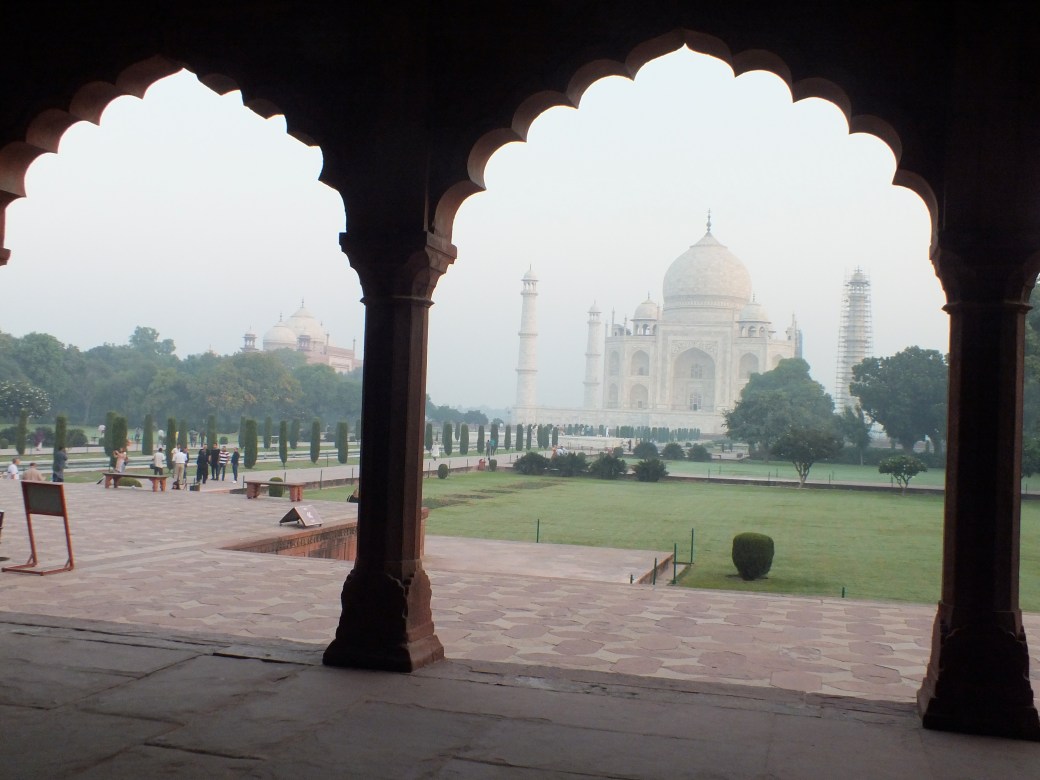
TajView.JPG

Tajview2.JPG

The tranquil mall invites us for a closer look…
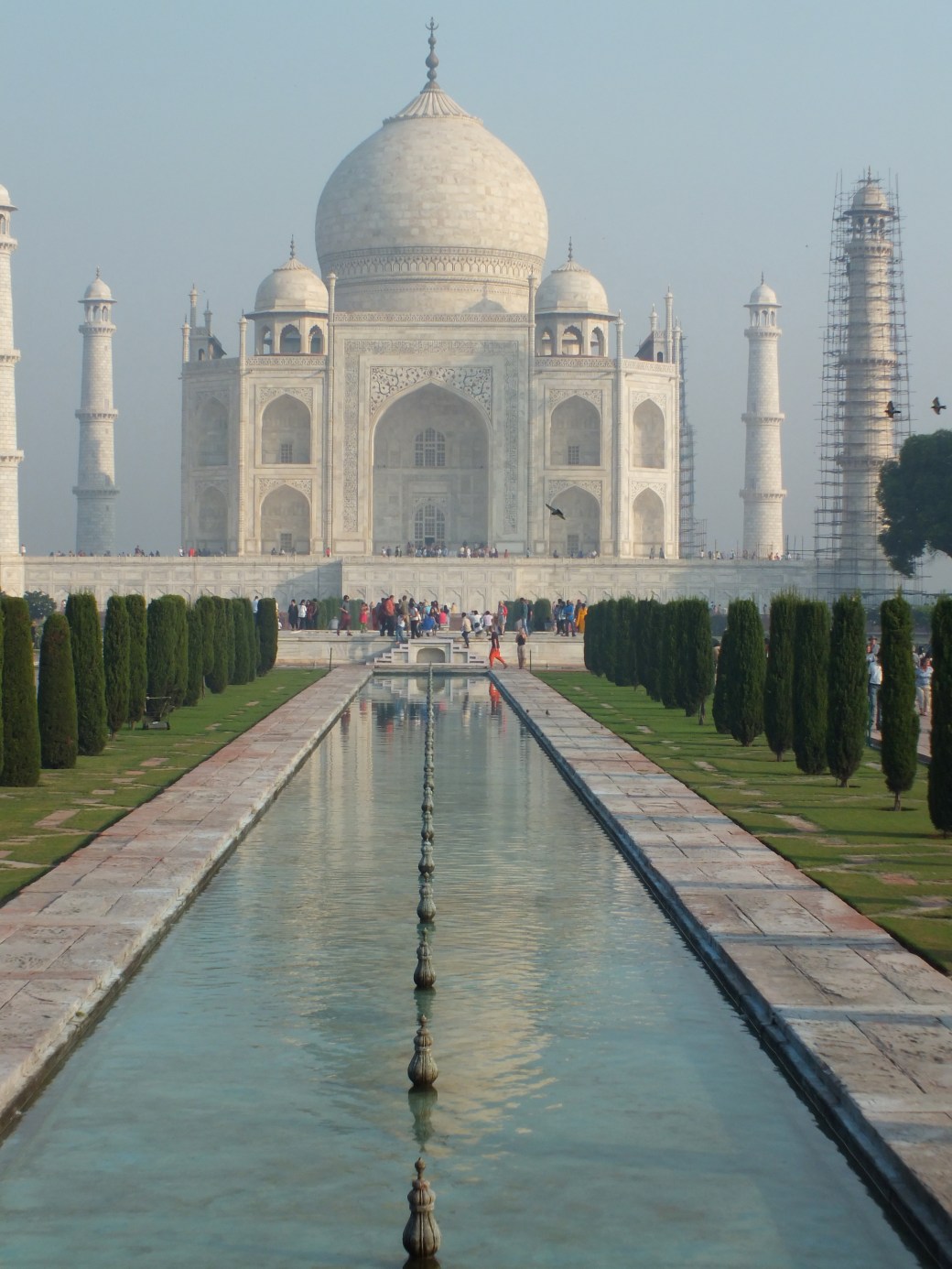
TajMall.JPG

TajDetail3.JPG

TajDetail.JPG

Impressive engraving and paintings adorn both the exterior and interior walls of the Taj…
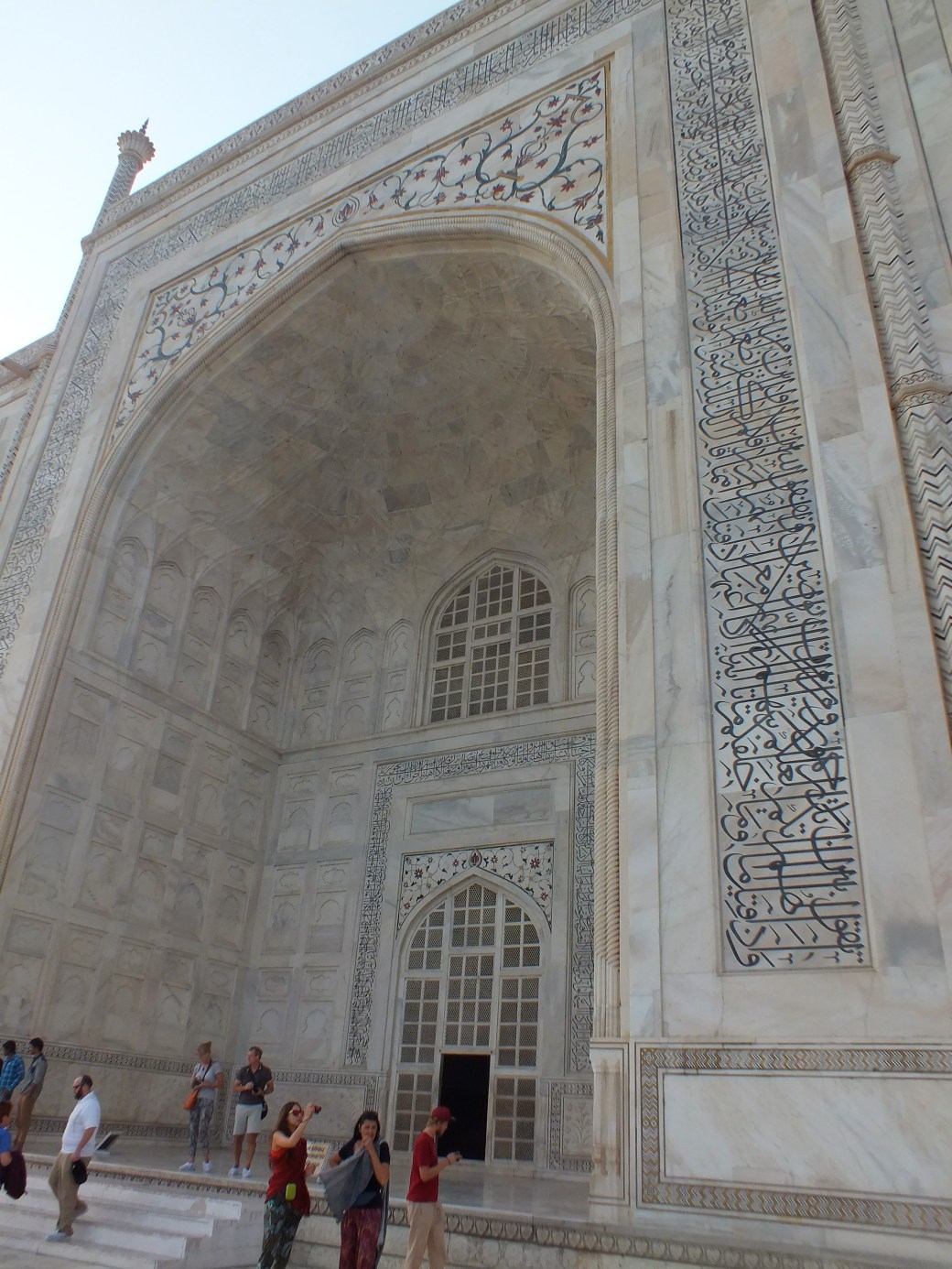
TajDetail4.JPG

Tajinterior.JPG

From the tombs of Shan Jahan and his wife Mumtaz Mahal, to the living…
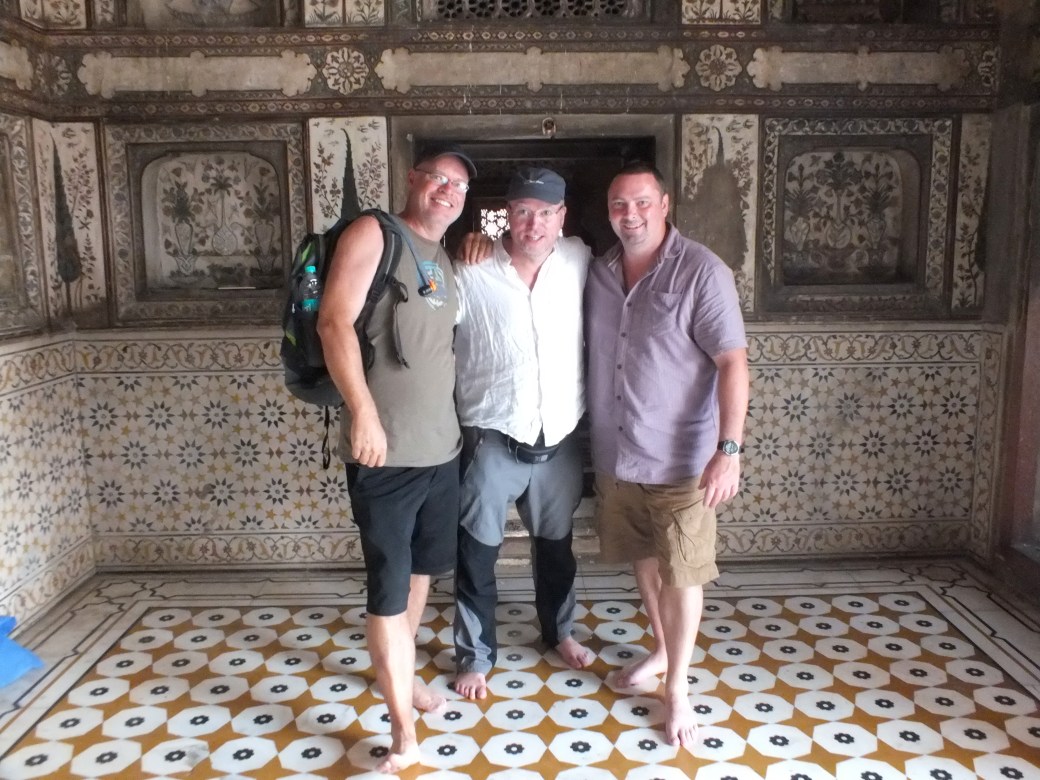
Doug+boozebrothers.JPG

The Marble Works

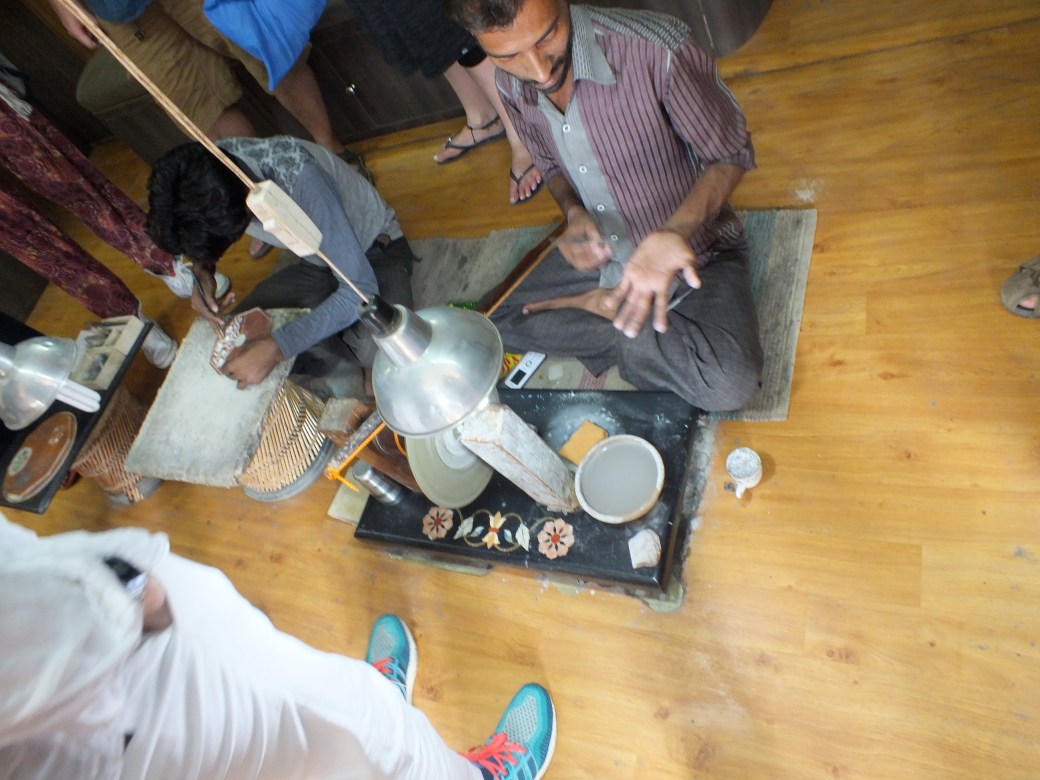
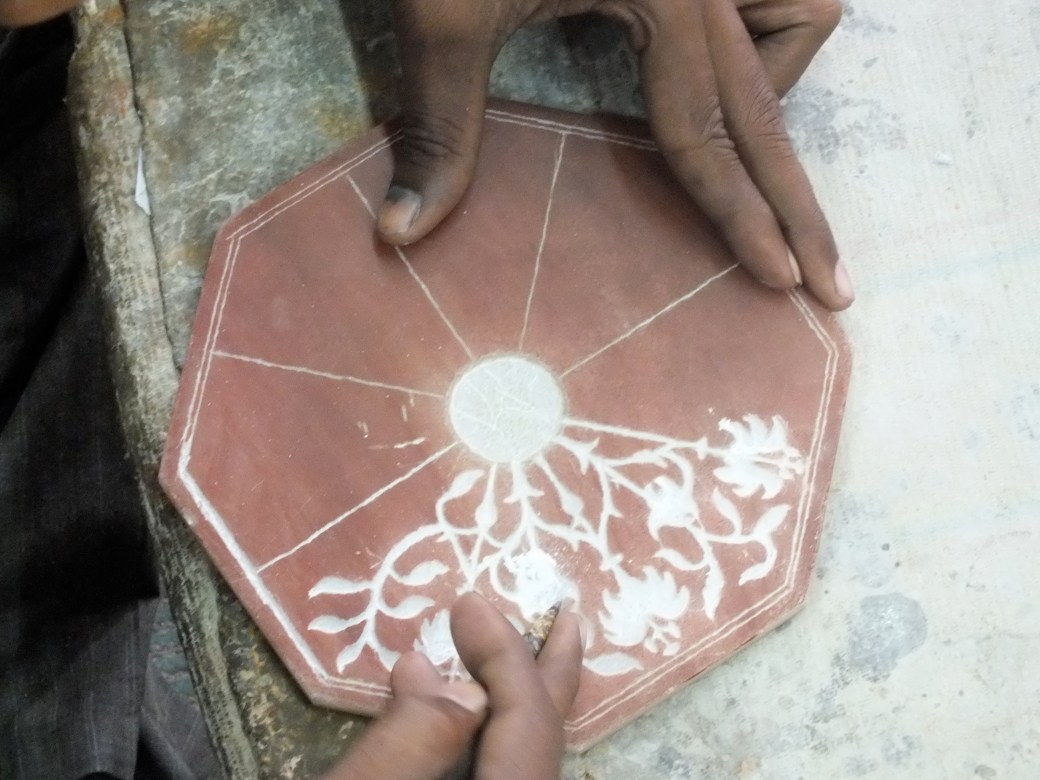
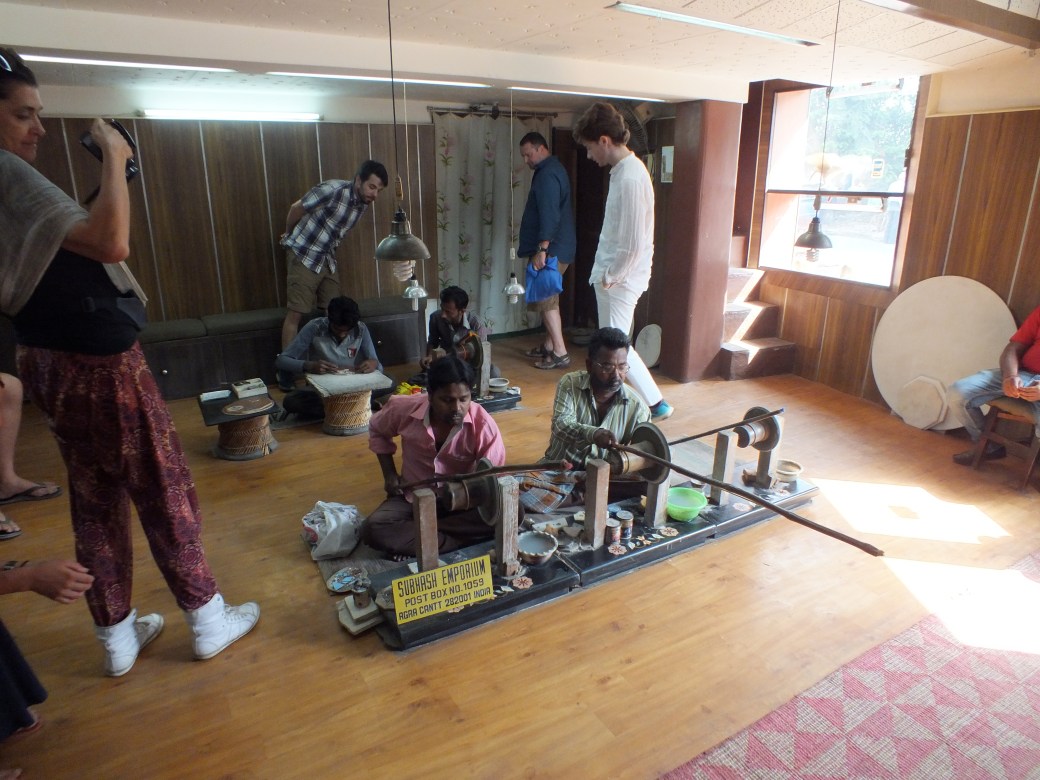
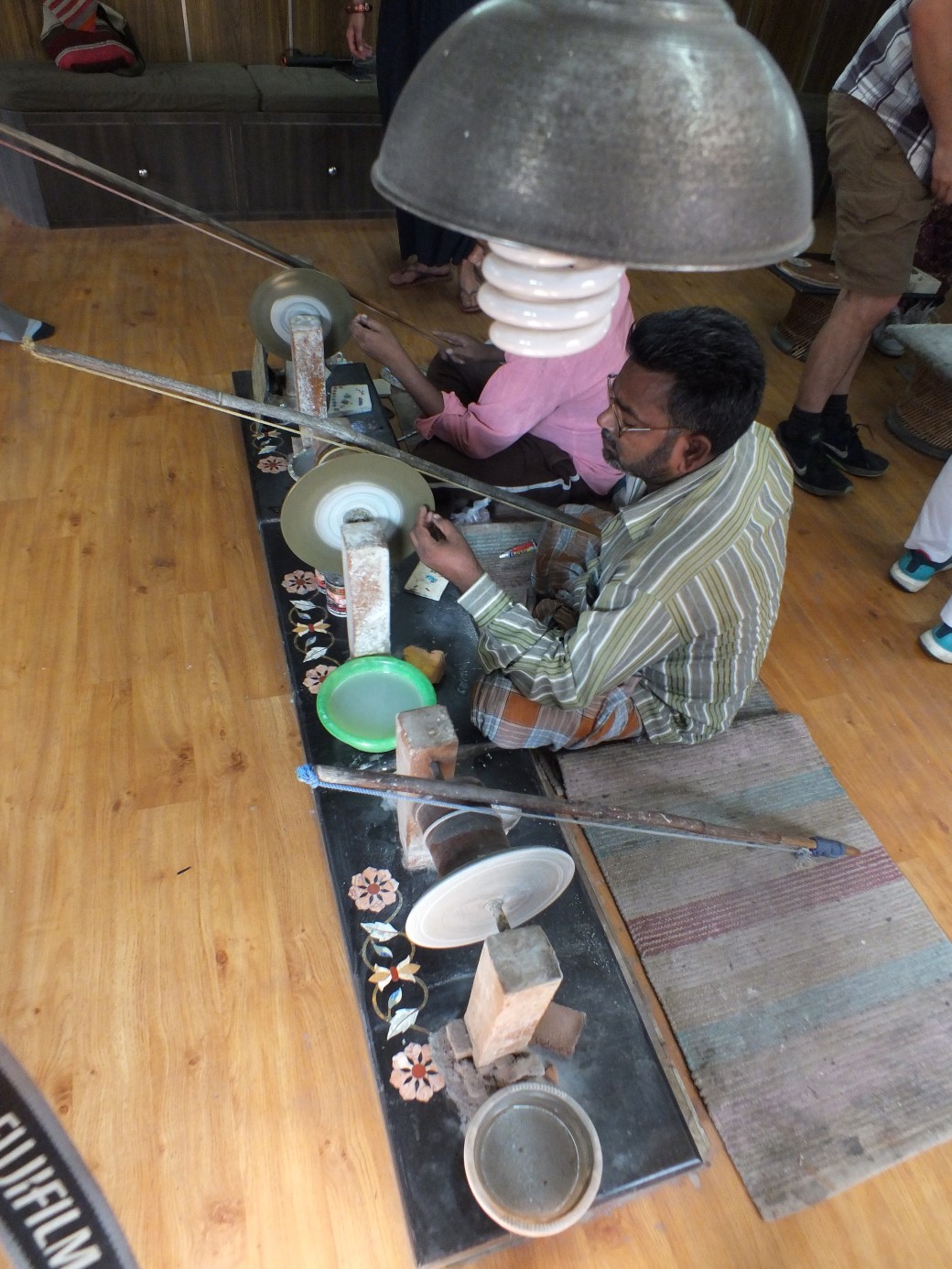
After our earlier morning visit to the Taj the tuk-tuks took us to a marble studio in central Agra, to see modern craftsmen creating the sorts of artistry we saw on the walls of that monument to Mumtaz. In this case the creations are more mobile- from small statues through wall hangings to large tables. In the studio’s anteroom we introduced by its director to a form of art new to me, inlaid marble. Formally called Pachchekaari, a Persian term for “marquetry with gem stones” on marble, the craft dates from the Mughal era., revived by the founder of this studio in the early 20th century.  I was impressed by his business ethic, displayed in two plaques on the walls: value your customers, they are your life read one; the other urged ‘value your employees, they are your best asset’. Unfortunately, we were unable to photograph the magnificent pieces in the adjoining room- copyright concerns I suppose- but we did see a sample of the craftsmen at work.
MarbleCraft.JPG

MarbleCraft2.JPG

Marblecraft3.JPG

Using some pretty ancient looking tools, the artists are etching wonderful patterns into marble surfaces, then inserting almost invisible shards of precious stones into the grooves.
DesignPhase.JPG

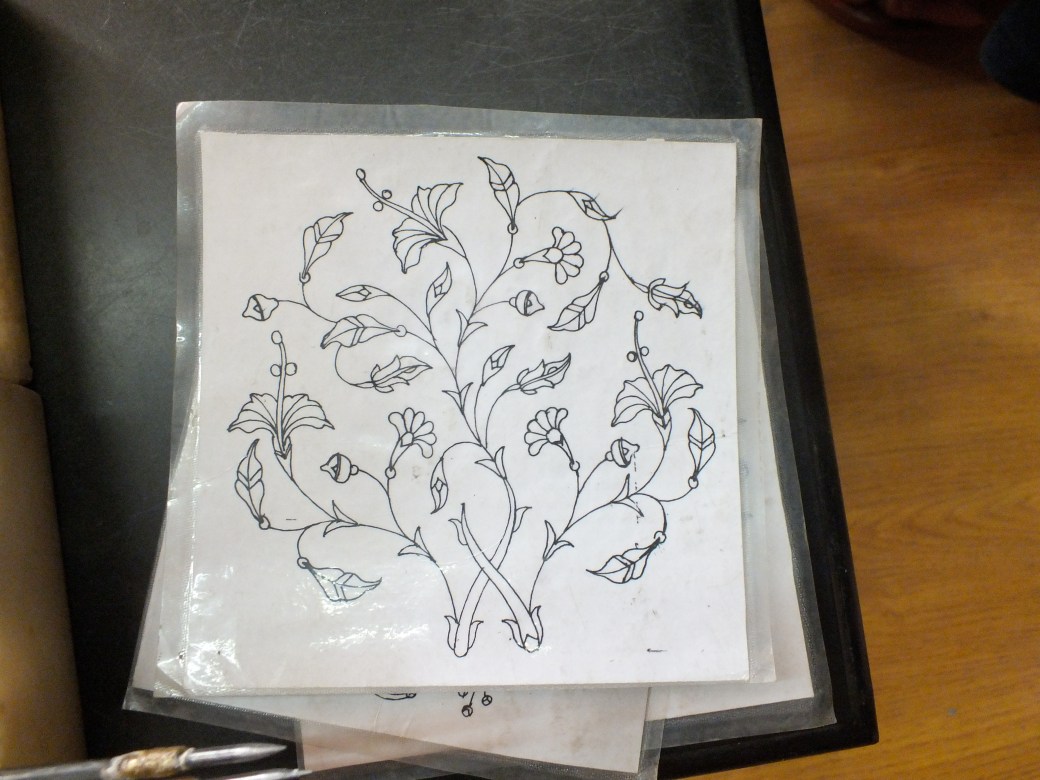
Design for a new pattern.

EtchingPhase.JPG

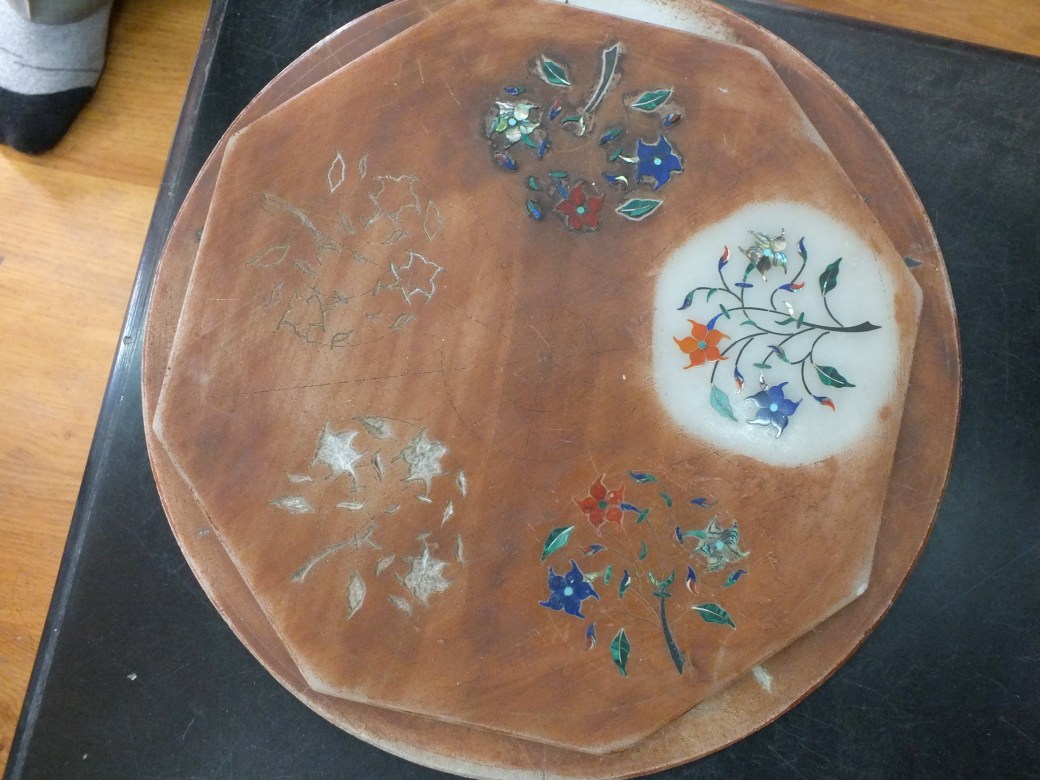
Etching phase, on a small decorative plate.
ProdctnPhases.JPG

Steps in the production of the final artifact.

Though we were unable to photograph the extraordinary collection in the very large showroom, a couple of captures from the firm’s brochure suggest the intricacy and colourfulness of the designs and the range of objects on which they can be realized.
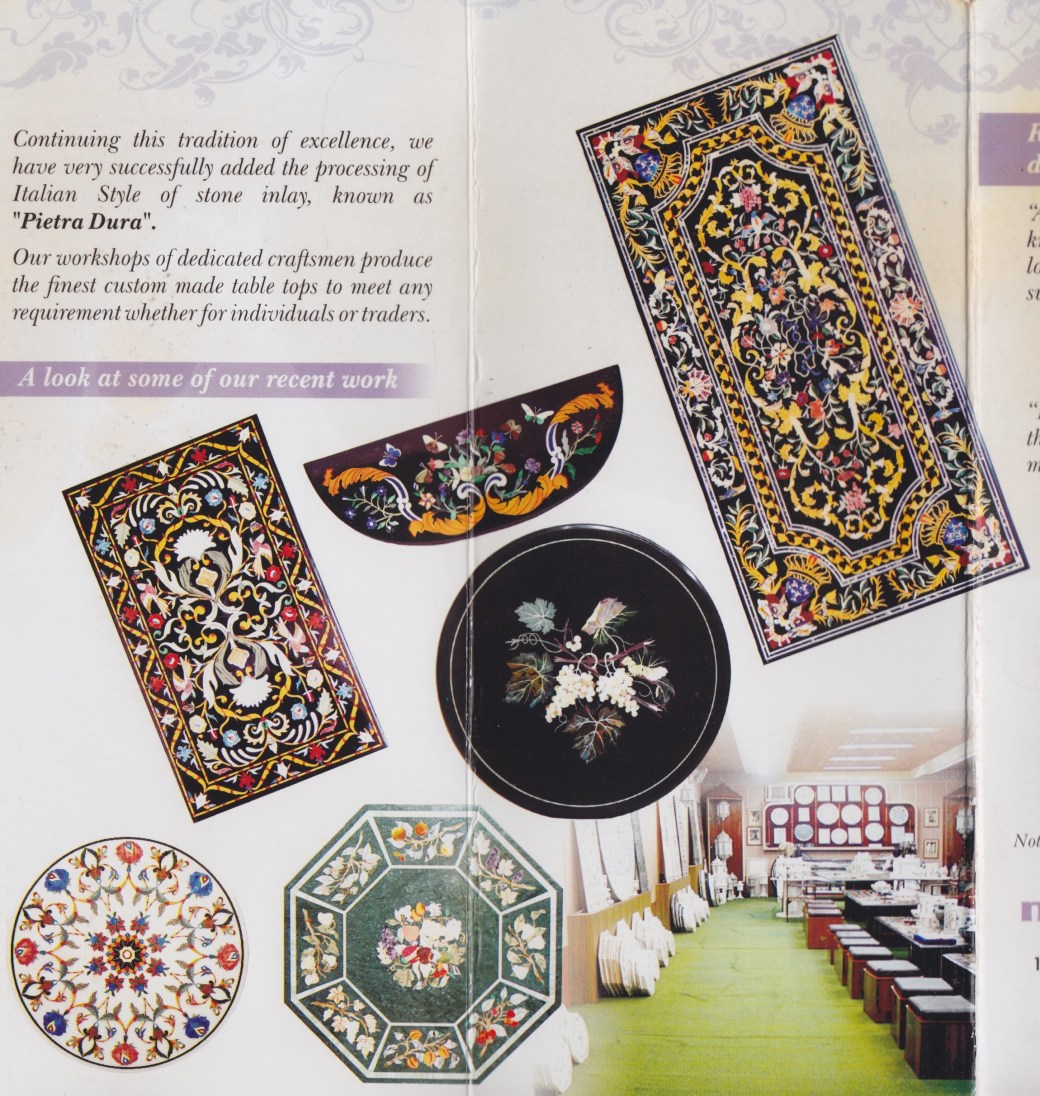
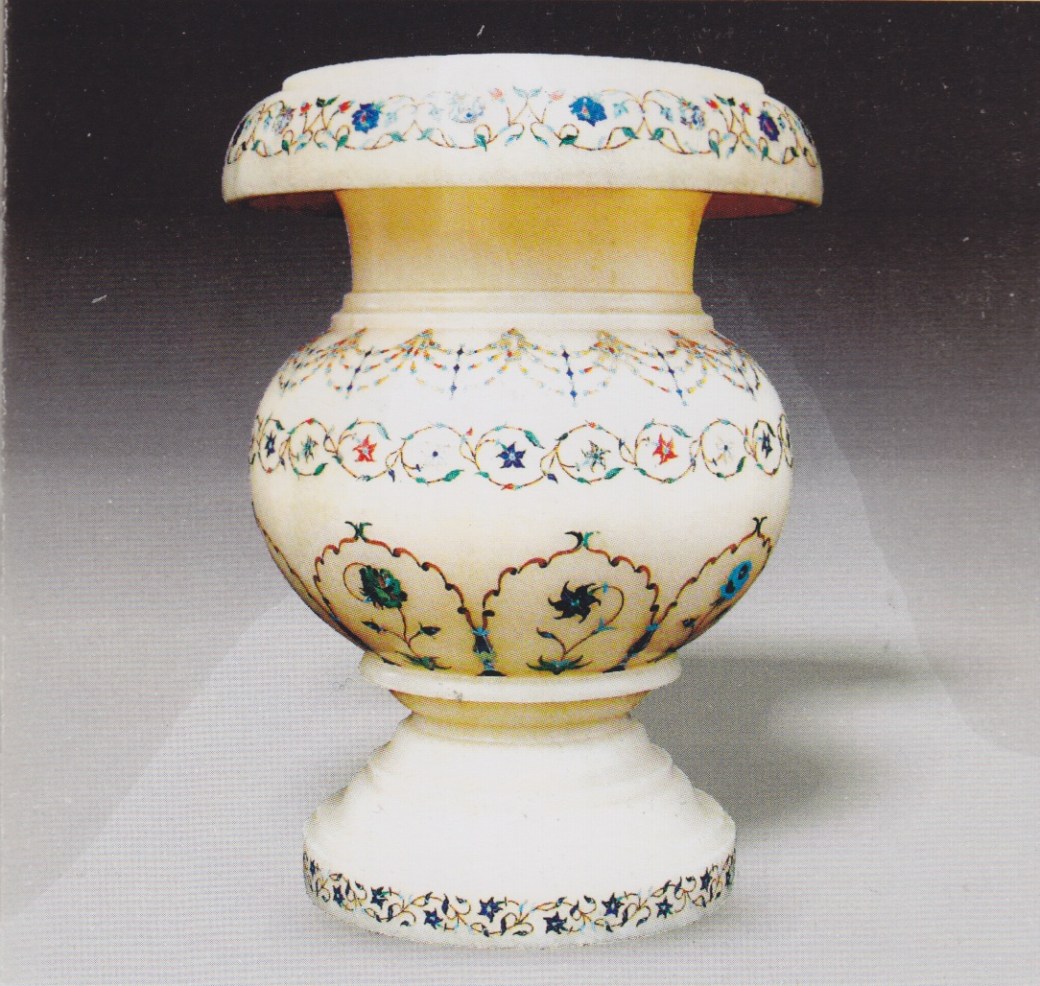
Inlaid Marble.jpeg

Inlaid Marble2.jpeg

Fortunately, I did not have 13,000 pounds sterling in my pocket- otherwise I would have come home with an absolutely gorgeously patterned dining table for eight…

Brunch

After the Marble Emporium we adjourned for a much-delayed breakfast at our guide’s home.
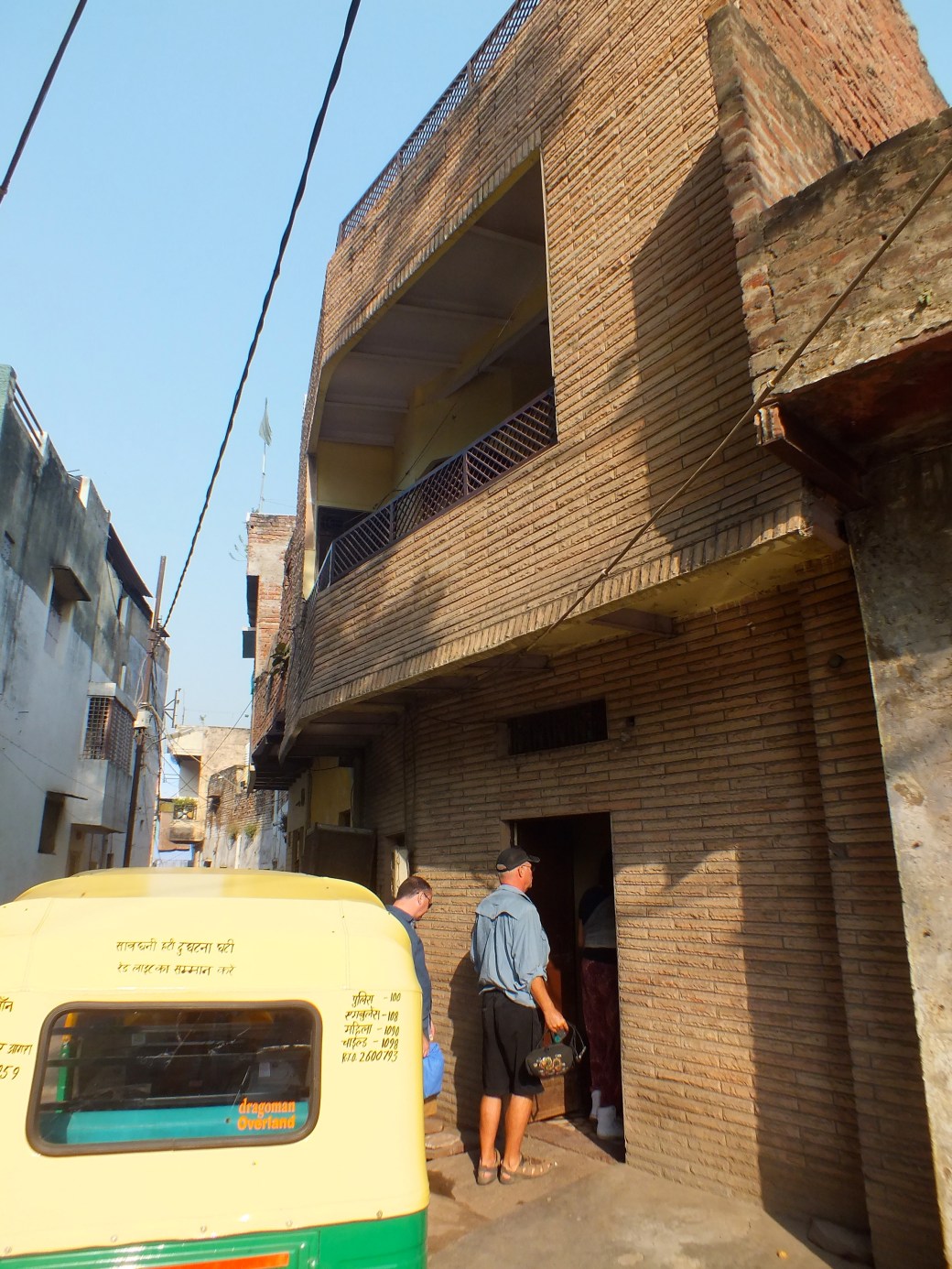
HostHouse.JPG

Like many things in India, worth the wait.
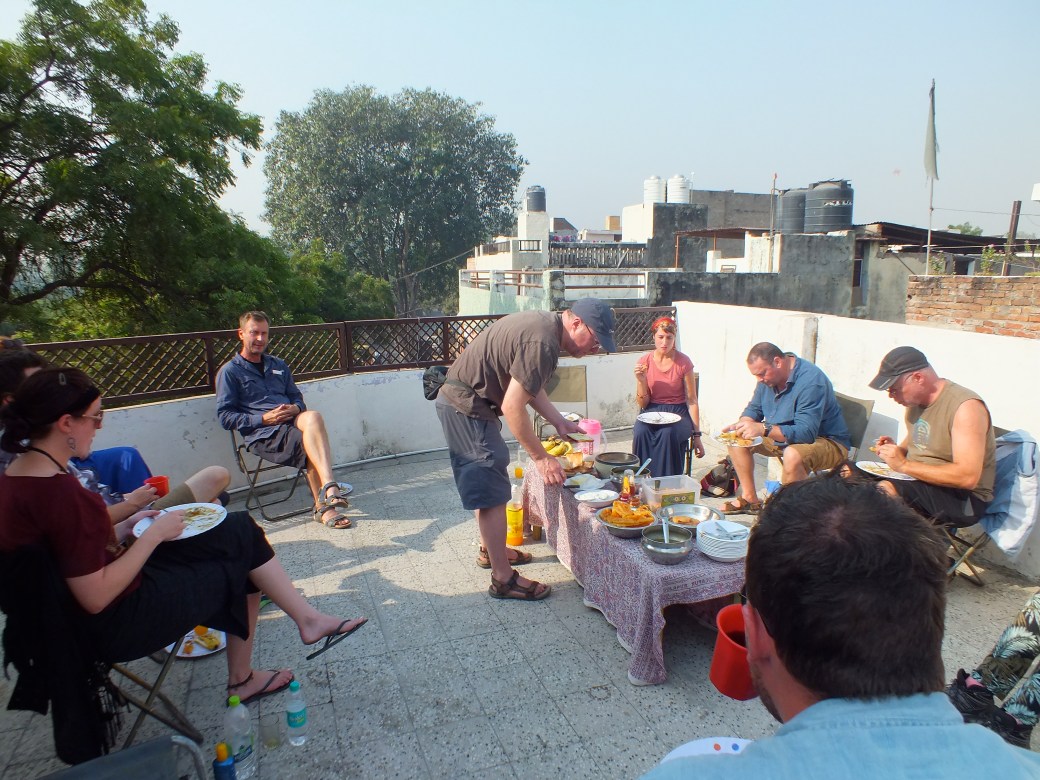
Brunch.JPG

A delightful brunch prepared by the host’s family.
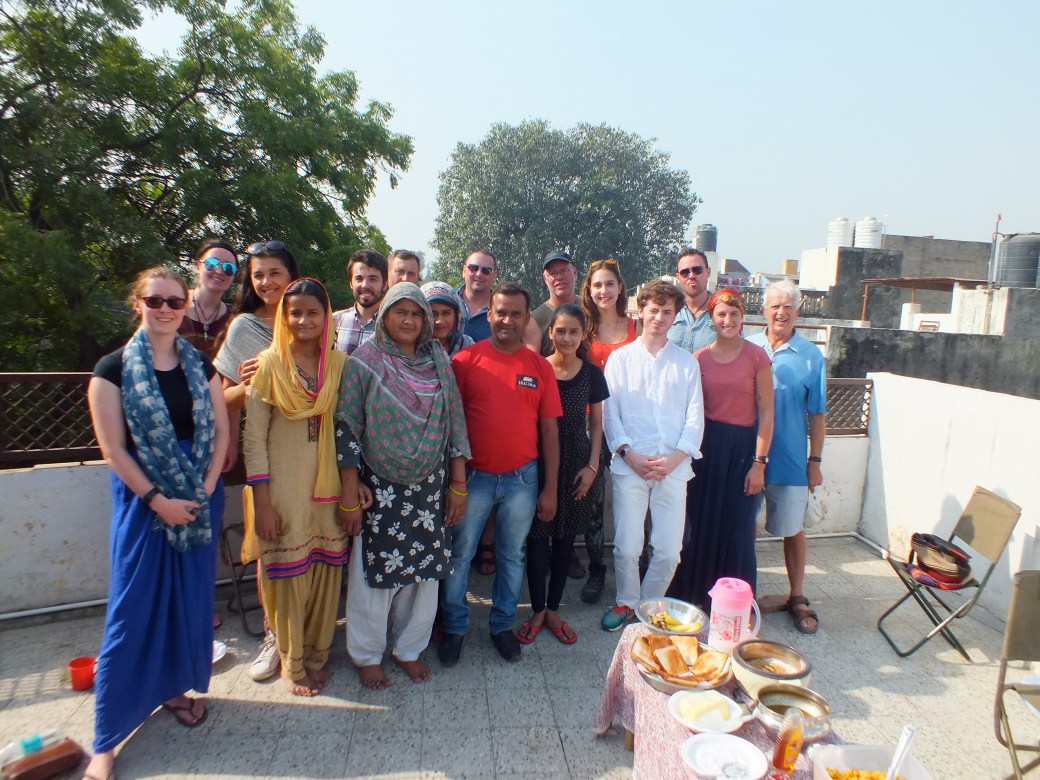
HostFamily.JPG

Not sure if the many lovely ladies are daughters or alternate wives. In any case, totally charming.
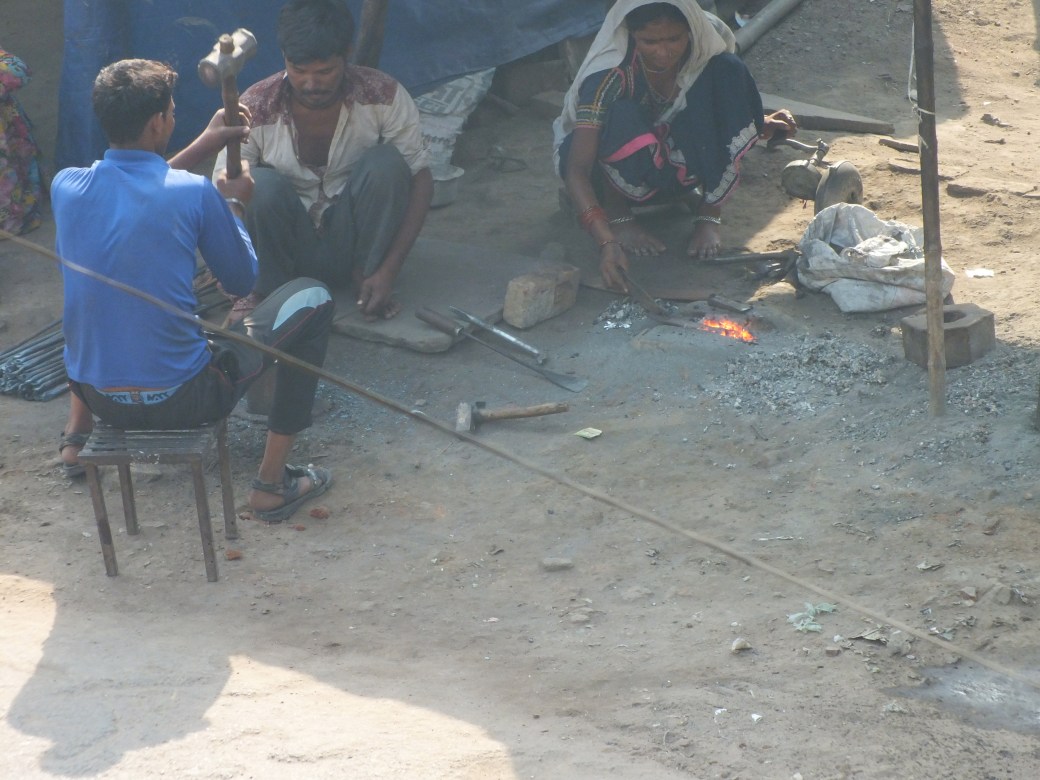
LocalIronWorks.JPG

As we ate, a few local monkeys (literally) bounded about the rooftops. Too quick for a photo, but I did capture a local ironworks operating in the street below, quite typical of the very low key, low tech industries practiced on the streets throughout India. The woman is powering the ‘blast furnace’ while the guys are shaping the molten metal.


The Red Fort in Agra

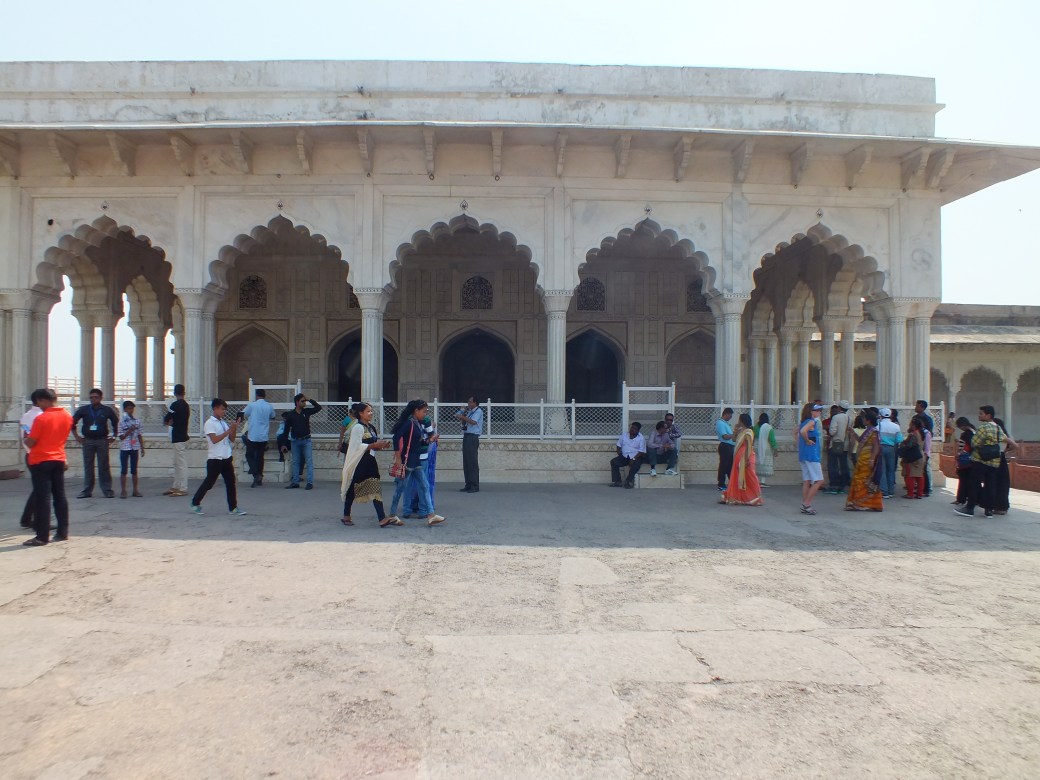
Next on our agenda, the Red Fort, started by Akbar in 1562 as he established his capital in Agra. We spent most of the afternoon in this immense (96 acres) sandstone stronghold.
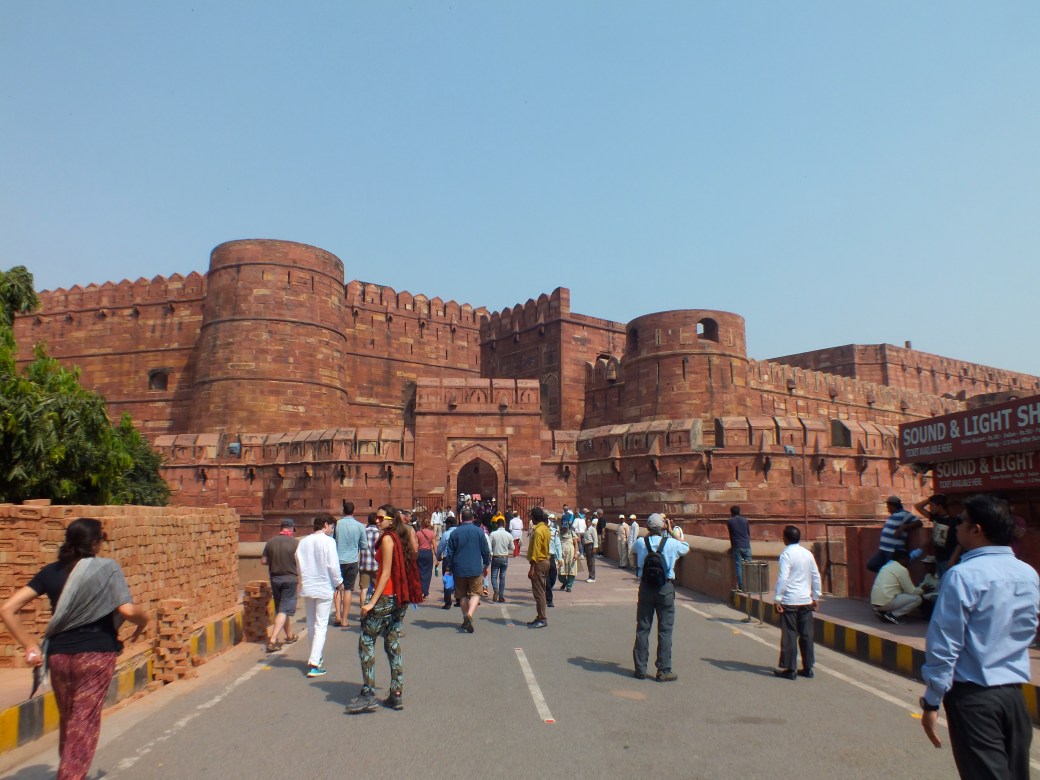
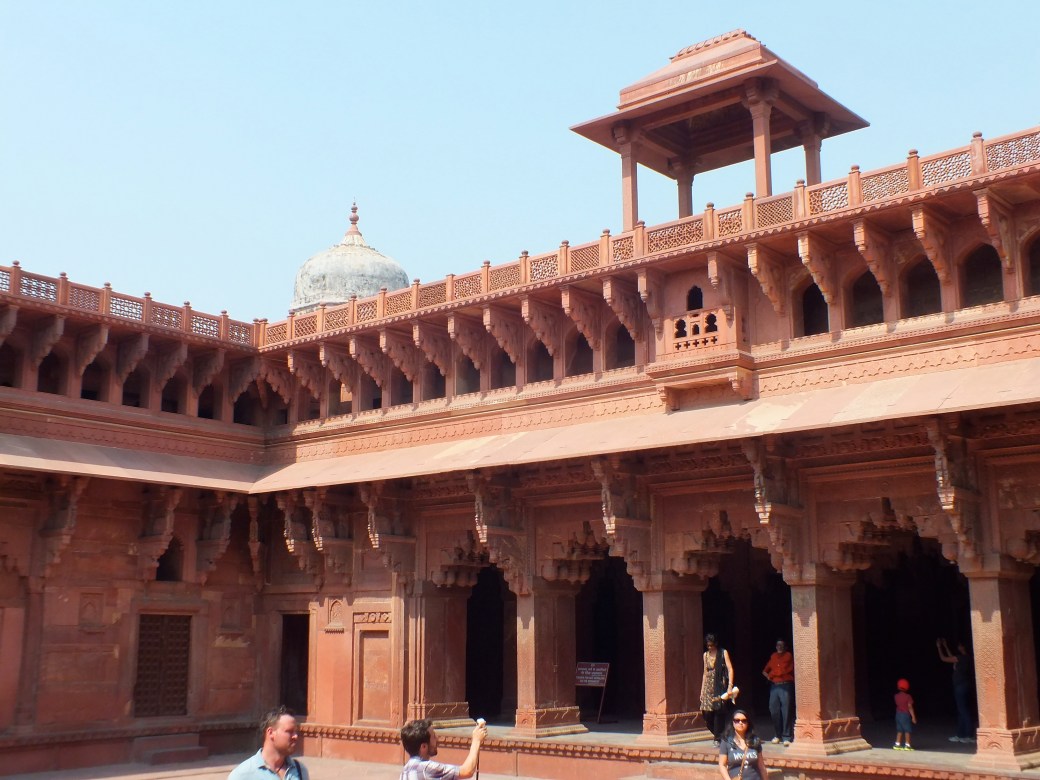
RedFort.JPG

RedCourtyard.JPG

Like other bastions of power in India, the fort is remarkable not only for its gigantic external battlements but also for the beauty of its interior…
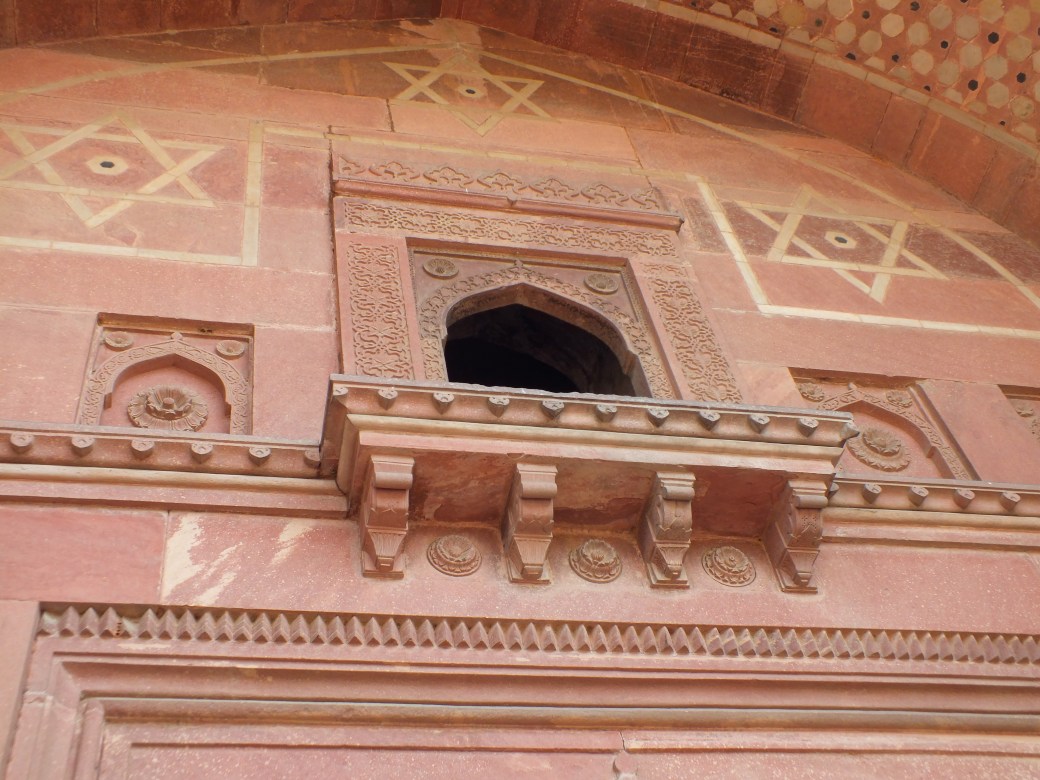
RedDetail.JPG

and especially the beauty of the enclosed palace, where the Mughal emperor lived with his wives and harem
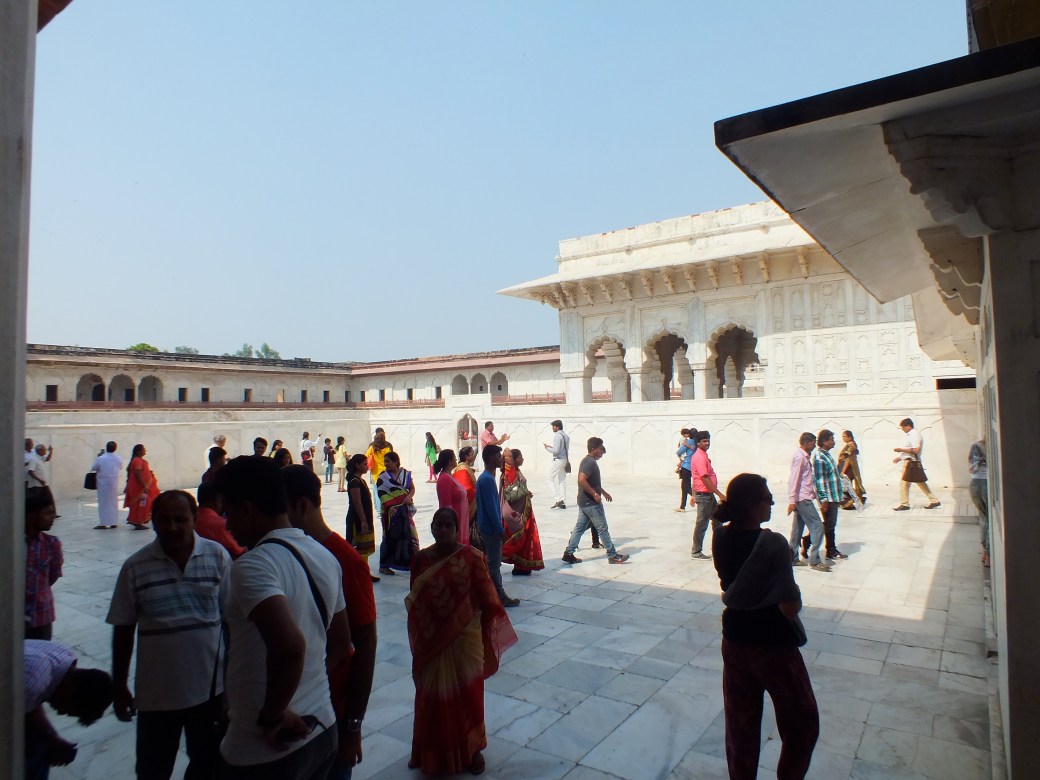
PalaceCourtyd.JPG

The palace contained an innovative early air conditioning system, cooling water pouring hollow walls in the main chambers. Not quite automatic- the water was hauled to the roof by a gang of minions.

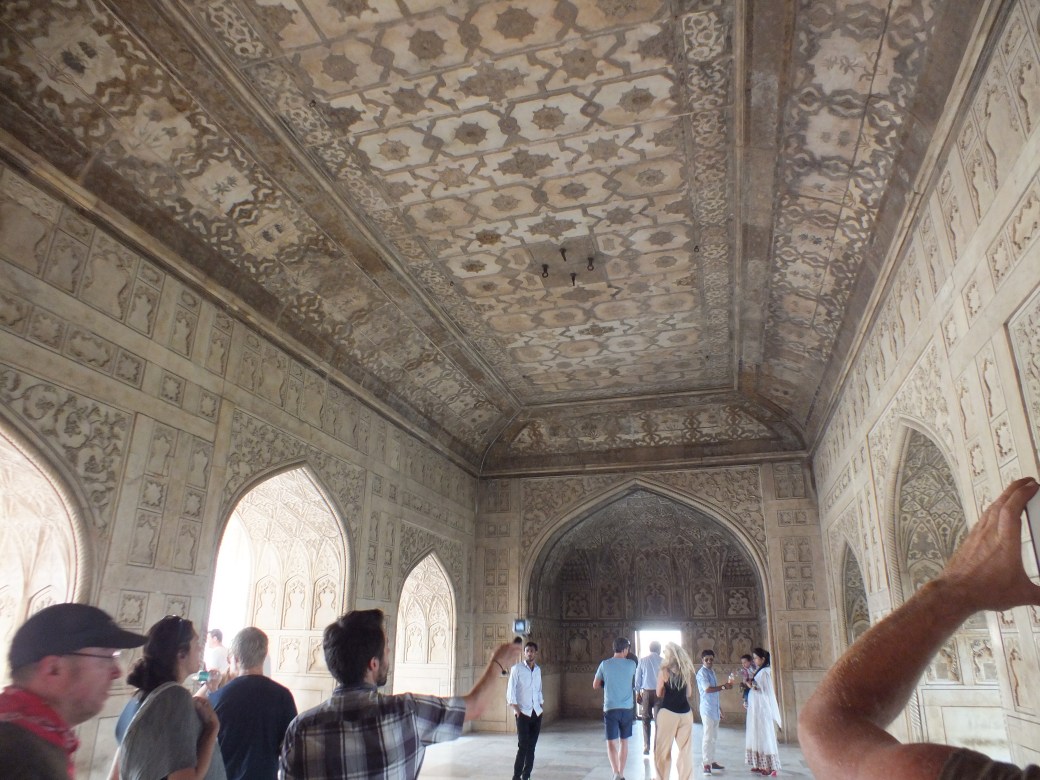
PalaceDetail.JPG

Palace.JPG

PalaceDetaail2.JPG

Typical palace features, an ornate dais for audiences with ministers or the public…
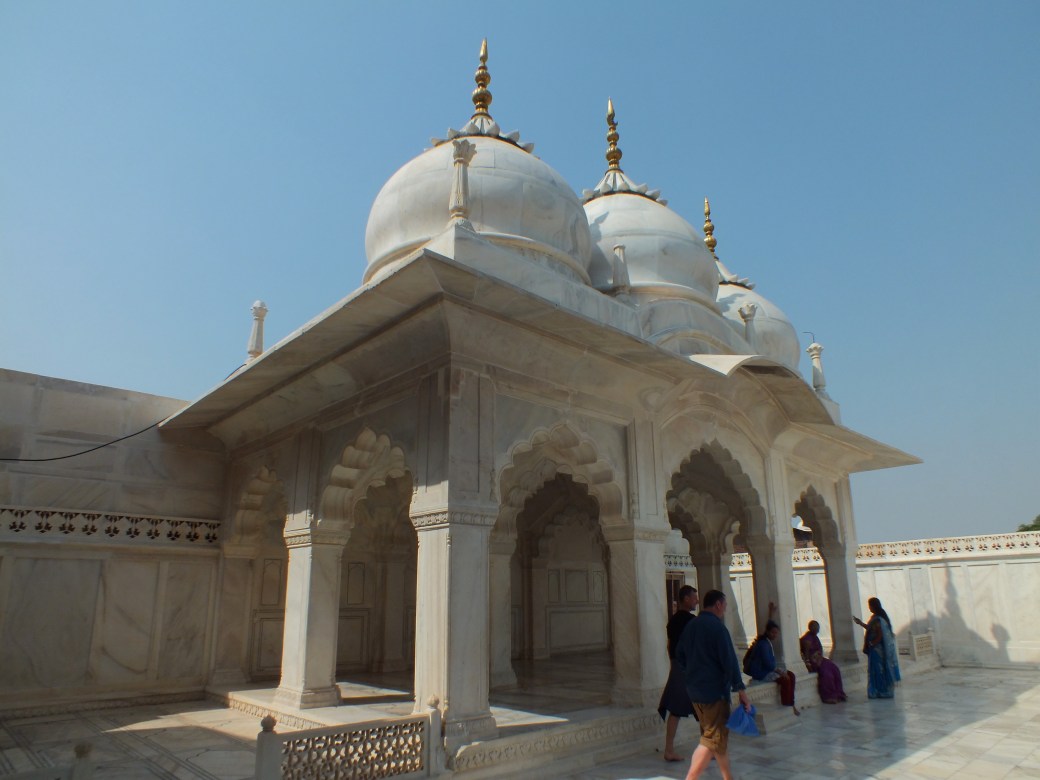
Mosque.JPG

and a mosque.

Following the established practice, Shah Jahan was deposed by his son Aurangzeb (1618-1707) in 1658. It is speculated that a main reason for the coup was the decline of the empire’s economic health, exacerbated by the immense cost of the construction of the Taj Mahal. Shah Jahan was imprisoned in the palace of his red Fort until his death in 1666. Ironically from the walls of his not incommodious prison he could gaze wistfully at the Taj…
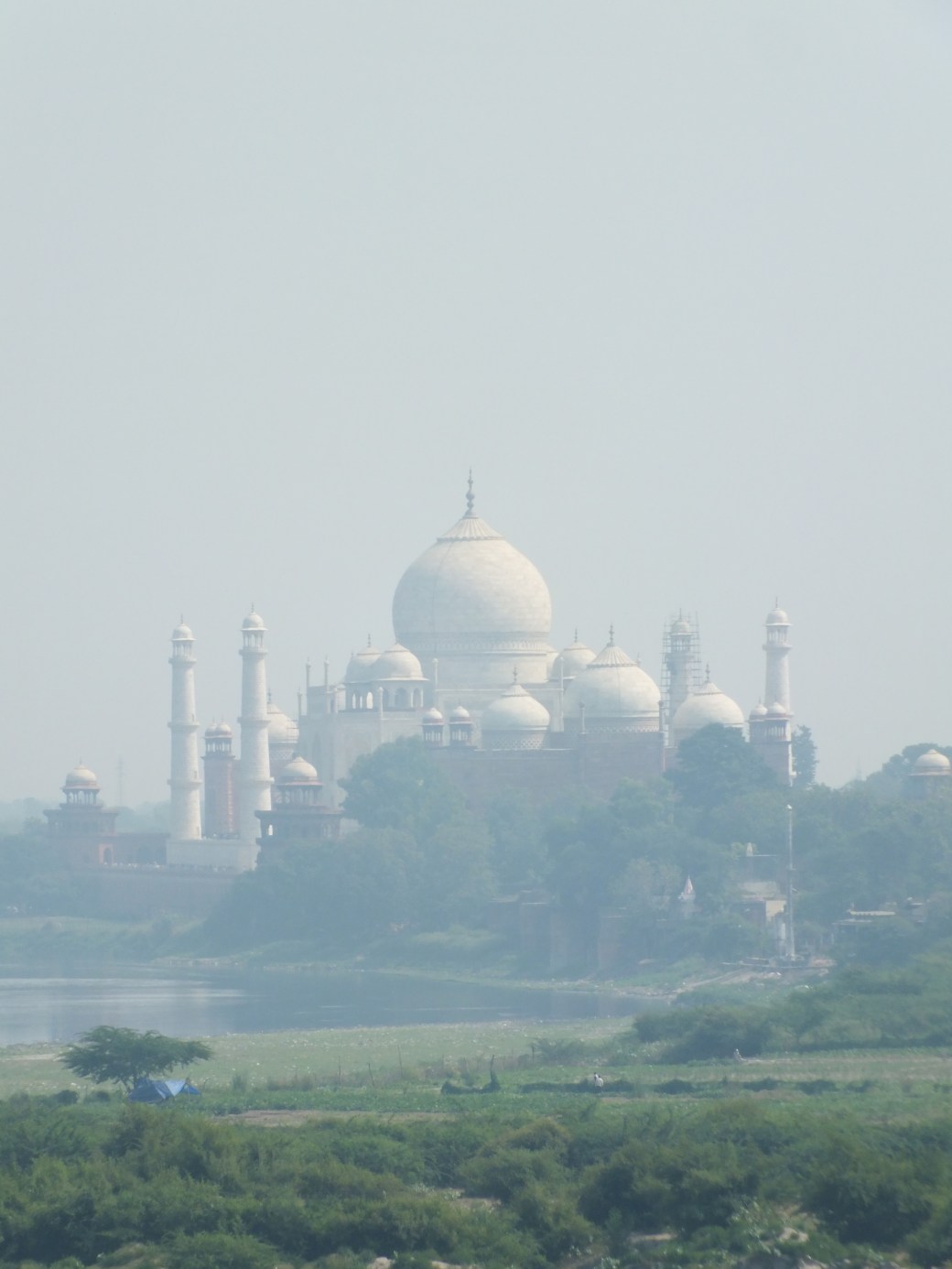
TajfromRed.JPG

where he eventually joined his beloved wife in death.

Postscript

 The death of Aurangzeb, the last of the great Mughal emperors, in 1707 began the decline of the empire, which petered out by 1857, with the exile of the last Mughal, Bahadur Shah Zafar (Bahadur Shah II) after the British retook his retreat, the Red Fort in Delhi. The reign of the Mughals outlined here could serve as the paradigm of governance by local chieftains throughout India before the coming of the British, first with their East India Company and later with political conquest, culminating in the final annexations of territory and suppression of the ‘Great Rebellion’ in 1858. On the one hand there was the Mughals’ superior military skill, not in massed numbers but in the mastery of technologies like gunpowder and above all, tactics. On the other hand, the Mughals like those  before them amassed enormous wealth through plunder and taxes on the masses which they turned into colossal fortifications,  palaces and temples.

On the good side, the repeated invasions from the east, Persians, Central Asians, Afghanis, and Mongols, seeking to plunder “Hindustan’s” resources and arts, brought new technologies, languages, literature, religions, and forms of governance, and especially in the case of the Mughal emperors, a deep interest in philosophy, science and astronomy.

On the downside, building empire meant the shedding of a lot of blood, not just of rival pretenders but tens of thousands of captives, sometimes whole cities. For example, the intellectually enlightened Akbar nonetheless massacred 20,00 after ending the siege of Chitor.

The legacy we see, immense fortresses, magnificent palaces constructed with thousands of tons of sandstone and marble imported some times from great distance undoubtedly cost thousands more lives of humble workers or slaves. Astounding wealth accumulated in a few hands, at great expense to the struggling masses. But lest we become too smug about our own story, note that we are not far removed from our own feudal state. Witness, as a random example, Arundel Castle.
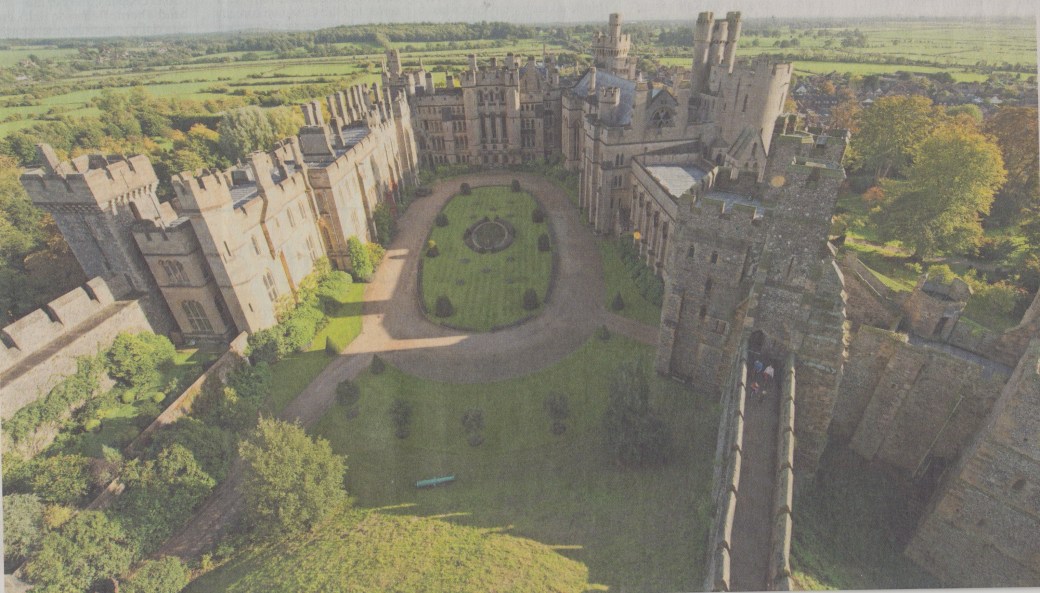
ArundelCastle.jpeg

Same scale. Same source: taxes on struggling tenant farmers

And though the tide has raised us all since then, the proportional share of total wealth is probably about the same.

Back on the road

Next, we head for Jaipur, the “Pink City”, by way of Fatehpur Sikri.

Note: The historical background here and elsewhere is largely drawn from John Keay’s really excellent, highly readable India, Harper Press, updated 2010.

Intro to India

Most of us Westerners when we think of India imagine a relatively homogenous nation-state, like the US or England for example, divided into political units like provinces maybe, but populated by a single people. This impression would be particularly deceptive in the case of India, not just because India is a very populous, recently independent country. For modern India is a relatively young amalgamation of many local dynasties, small and large, evolving over 5,000 years of recorded history, a fact reflected in the number of ‘dialects’ still spoken- something like 1600 of them. At independence, there were 972 local ‘rajs’, or local fiefdoms, some of which continued to exercise powers like taxation up to 1970.
A traveler will probably encounter only a couple of these languages, like the dominant Hindi or a regional one like Bengali. However, the diverse roots of Indian civilization are most evident in the enormous variety of historical sites- the forts, the palaces, the temples. While the great majority of these sites date back only a few hundred years, particularly to the ‘renaissance’ of Indian culture in the Mughal period, archeologists trace the first signs of this civilization back as far as 3000 BC, to the growth in the Indus valley of agricultural settlements and the earliest appearance of writing in the fundamental texts of Hinduism.
The traveler will also notice that much of this history is generated by invaders- from the Indus valley, from Persia, from Central Asia, Mongolia, even from Afghanistan and most recently Britain. The invaders carried with them new ways of warfare, like tactical use of horses and elephants, new art forms, new architectural designs, new religions, new forms of governance, all contributing to the enormous diversity of modern India.

In our modest way we set out in Sotiri, our Dragoman truck, to sample first hand the living history of one of the major foundations of human civilization.

Varanasi

Our entry into India at Nautanwa was not auspicious. The Nepalese border guards did not stamp our exit permit correctly, so our drivers James and Ali had to walk back across the border to try to get Sotiri released. Meanwhile our new party of travelers cooled our heels- or tried to, in the heat- in the modest hut of the Indian border guards, on the dusty, disheveled and uninviting main road. However, the guards where quite gracious, offering tea and shelter over the three hours it took to get our truck back. Turned out after the Nepalese delay the Indian side insisted on inspecting every cranny on the truck and a sample of our luggage. We looked like drug runners…

bordertown

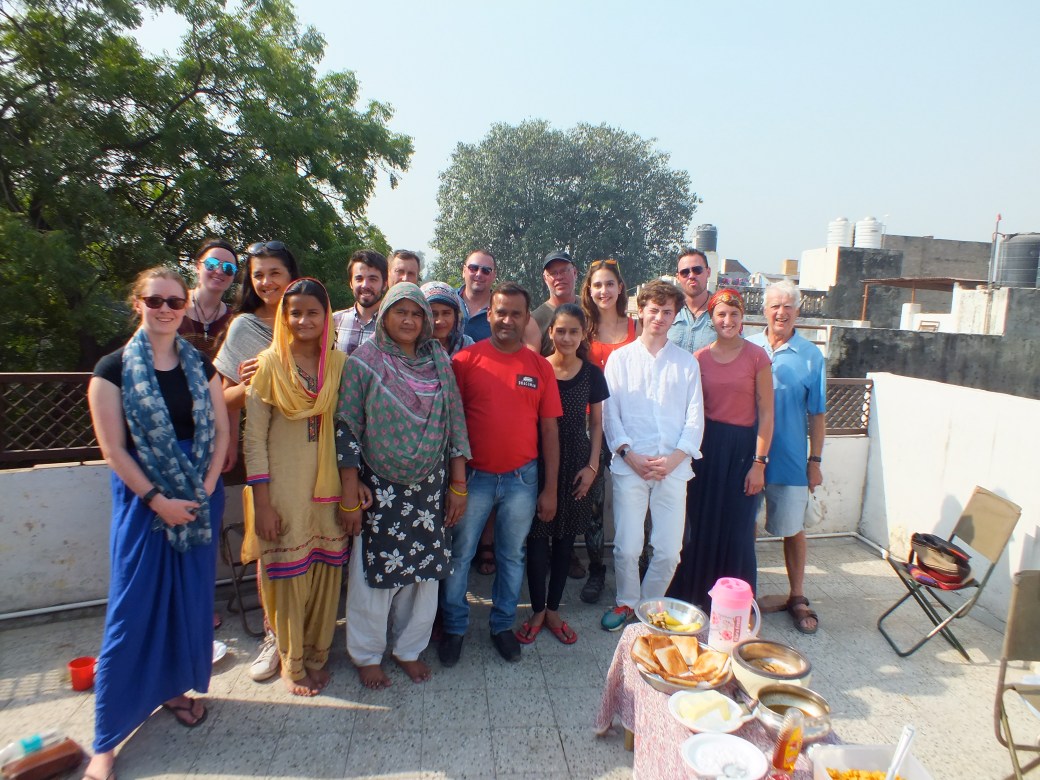
“We” were a motley group of thirteen. Doug and I from the Nepal trip, our drivers Ali and James of course, plus the newcomers: two late-twentyish English girls, Polly? and? from the London area; the “booze brothers”- Steve, a Canadian from Vancouver, and Mike, a London cabbie of Irish extraction; Pete the Australian house renovator and antiquarian; Greg, the American from Seattle, a tech nut, active in Democratic politics (woe is he!); Archie, the just-graduated Midlands boy; the just-graduated Austrian environmentalist  Ariane? and her Mom?.

tajbrunch

“We” at brunch with Agra host family later in trip

Finally we got on the road as the sun set and traveled 2 hours or so in the dark. Not fun on lousy roads. We arrived in Gorakhipur, a non-descript town only known recently for a prison riot, after 8, everything closed except Pizza Hut, massive political event blocking the main street in front of our hotel- the ‘President’. The hotel itself was prison- like: dark halls, big door locks, small cells. I expect the eponymous president was assassinated after building the place…

gorakipur

Gorakhipur

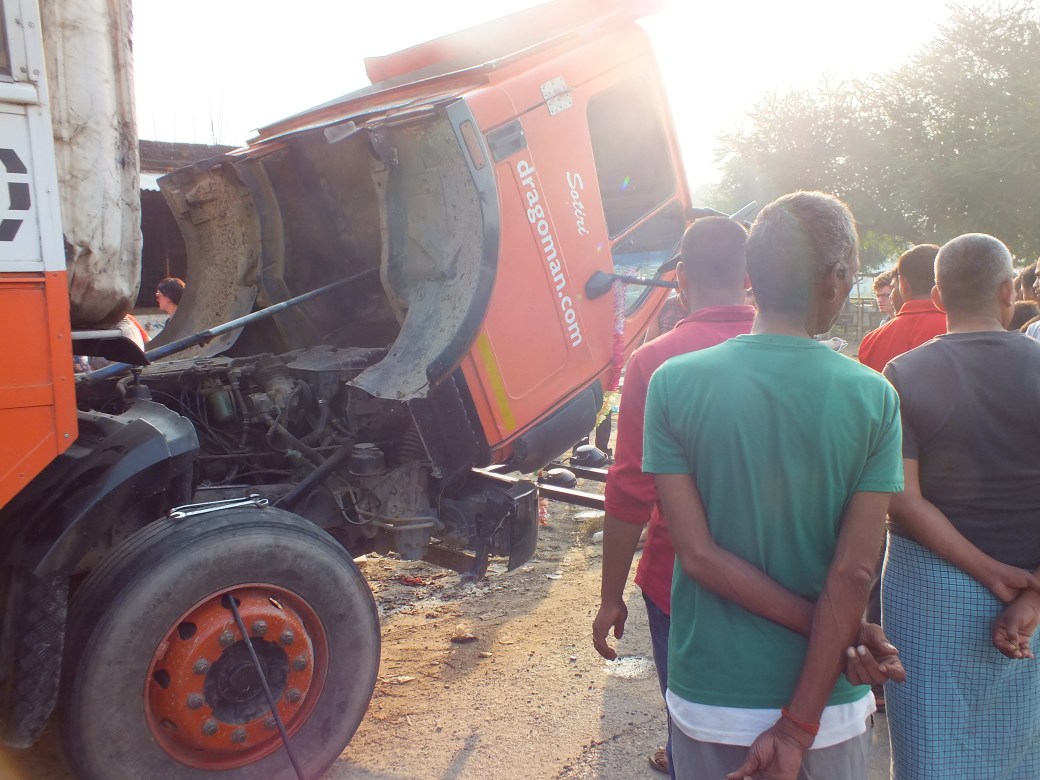
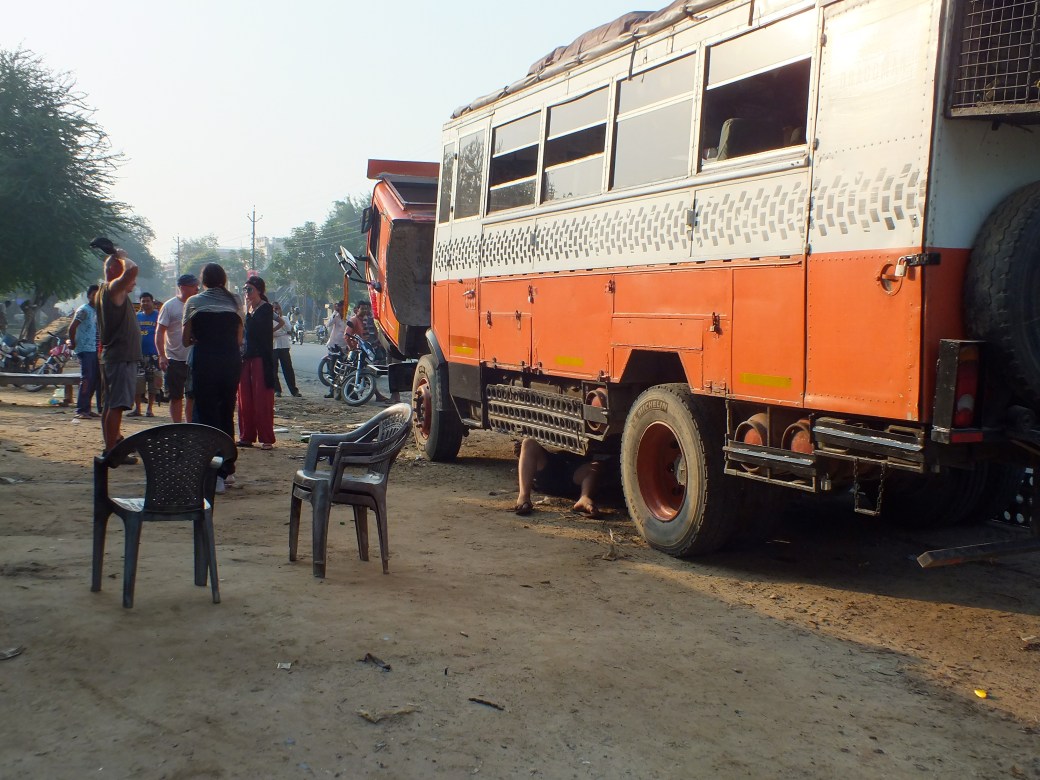
Up before 5 once again to head for Varanasi. After about an hour on not-so-bad pavement the truck stopped dead in mid road. We had to get out and push it ( remarkably easy) off to the side in front of a couple of ramshackle huts, typically populated by a bunch of indolent men.

breakdown

Breakdown

Our driver mechanics set to work, first thinking we got corrupt fuel at the last filling. Finally they figured out they filled the wrong tank so we had run the other one dry.

AliRepairs.JPG

Ali at work underneath

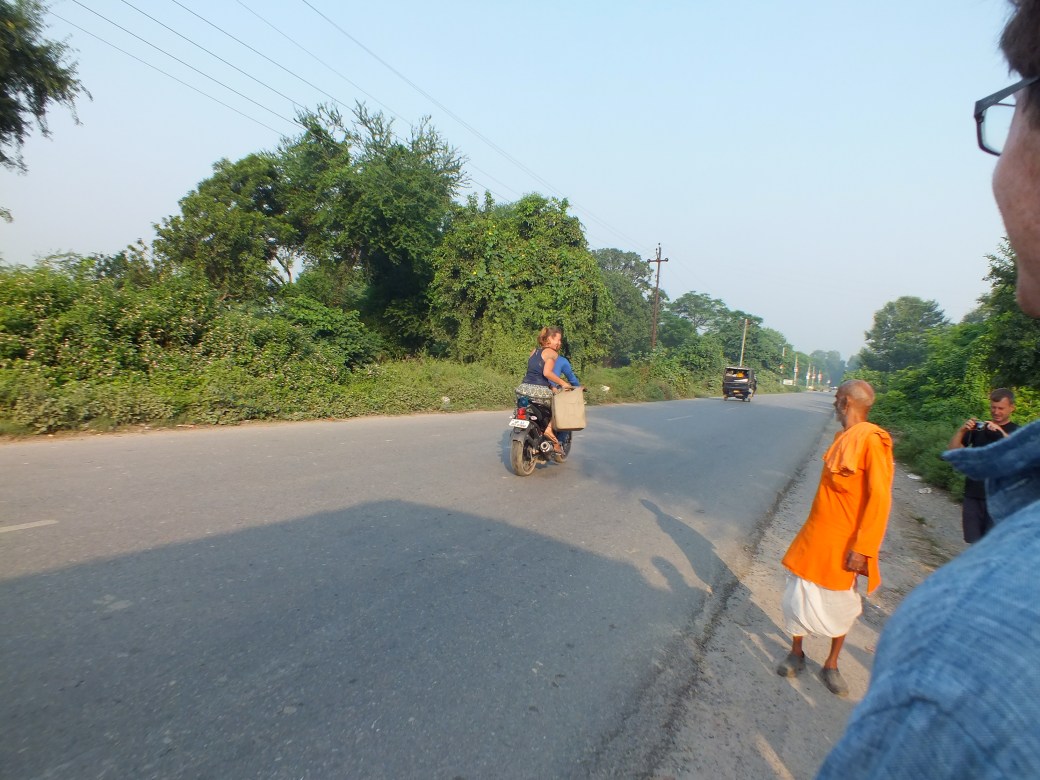
We needed some fuel to restart the complex diesel engine so we sent Ali, our driver mechanic off on the back of a local’s motorbike with a jerry can.

AliRescue.JPG

Ali to the rescue

Eventually she returned, with fuel and a motorbike driver anxious to get paid- Ali did not have enough cash at the gas station, so we took up a collection. We had attracted a huge crowd of men and passing schoolboys in this dusty village. A great story for years probably.

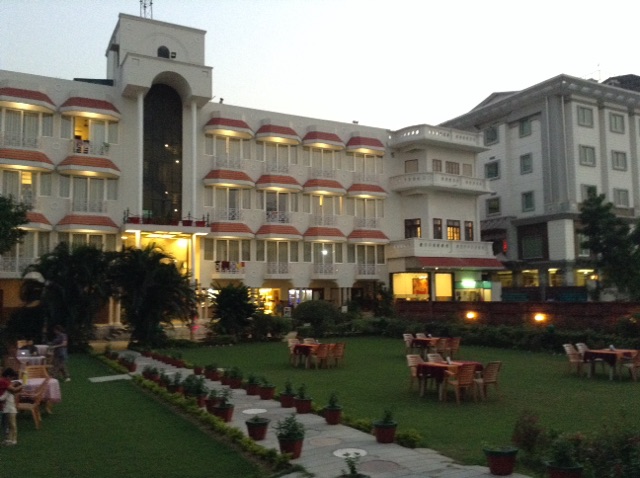
We lost two hours, which we could not make up on bad roads: good between villages but non- existent within them, literally rutted dirt tracks. Our route passed across the rich plains and many rivers of the Ganges basin. But instead of reaching Varanasi in mid afternoon we got to the hotel, the Surya, after dark again, after more than 12 hours on the road.

VaranasiHotel.jpg

However our suffering was rewarded- the Surya was a palace in the Westerner enclave ($69 Cdn. on the web!), fine rooms, excellent restaurant, good drinks in the central square (though I never got to taste the ‘sex on the beach’ that Doug substituted for my mojito)- a pool even.

VarPool.JPG

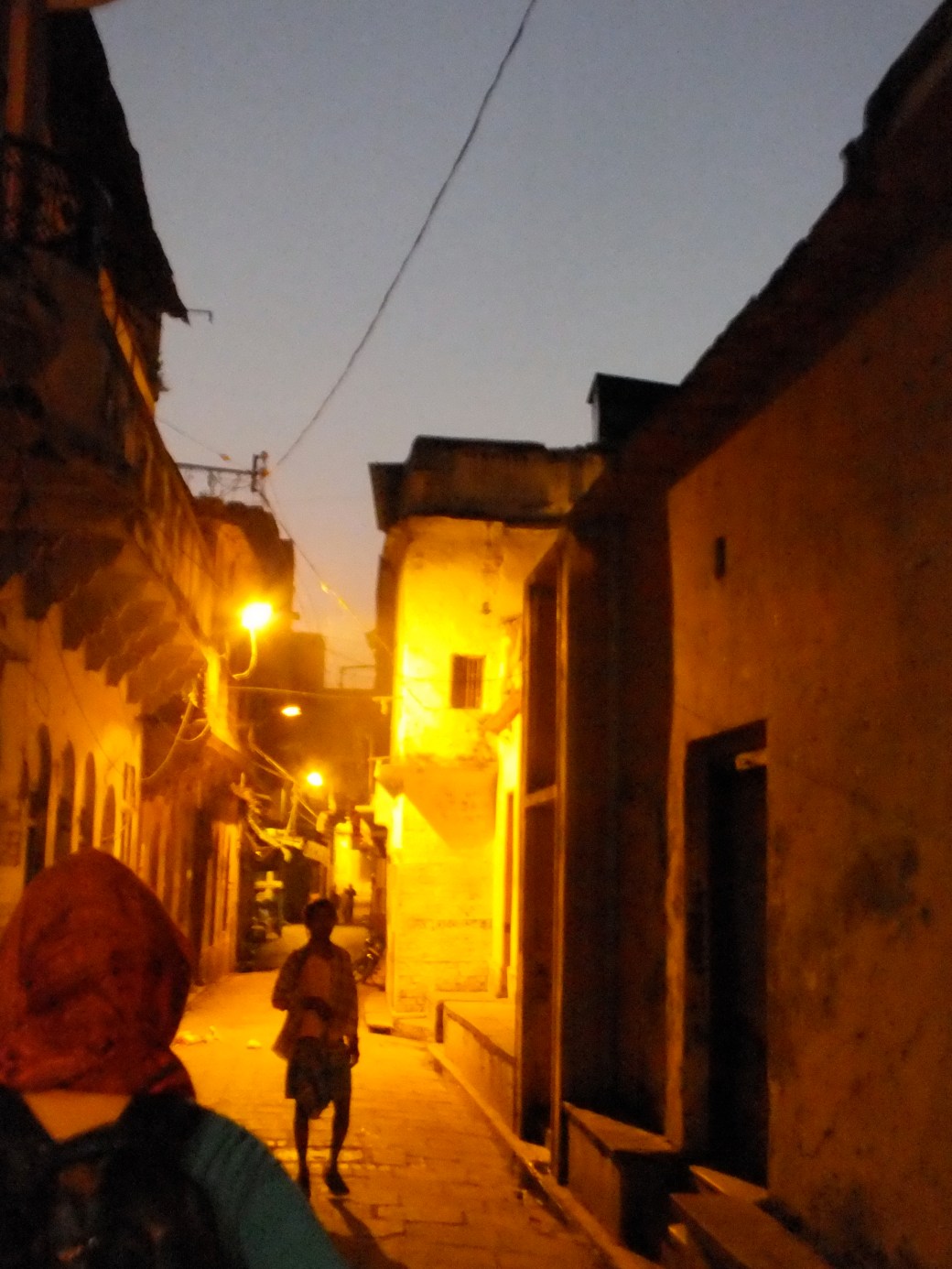
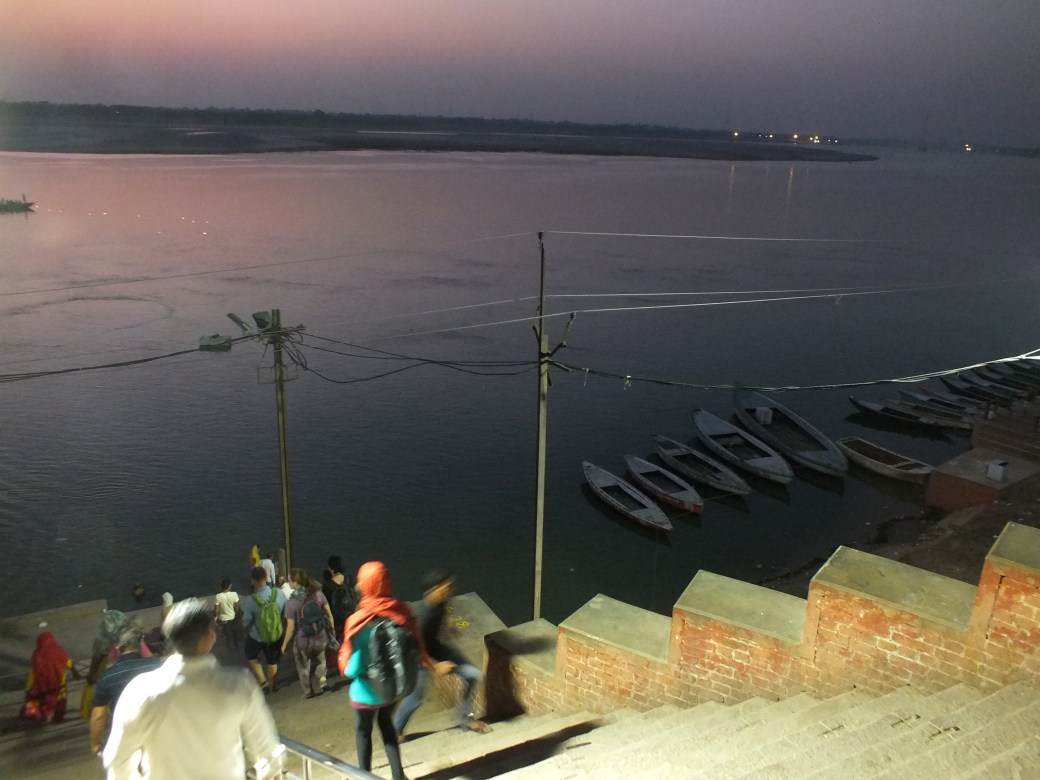
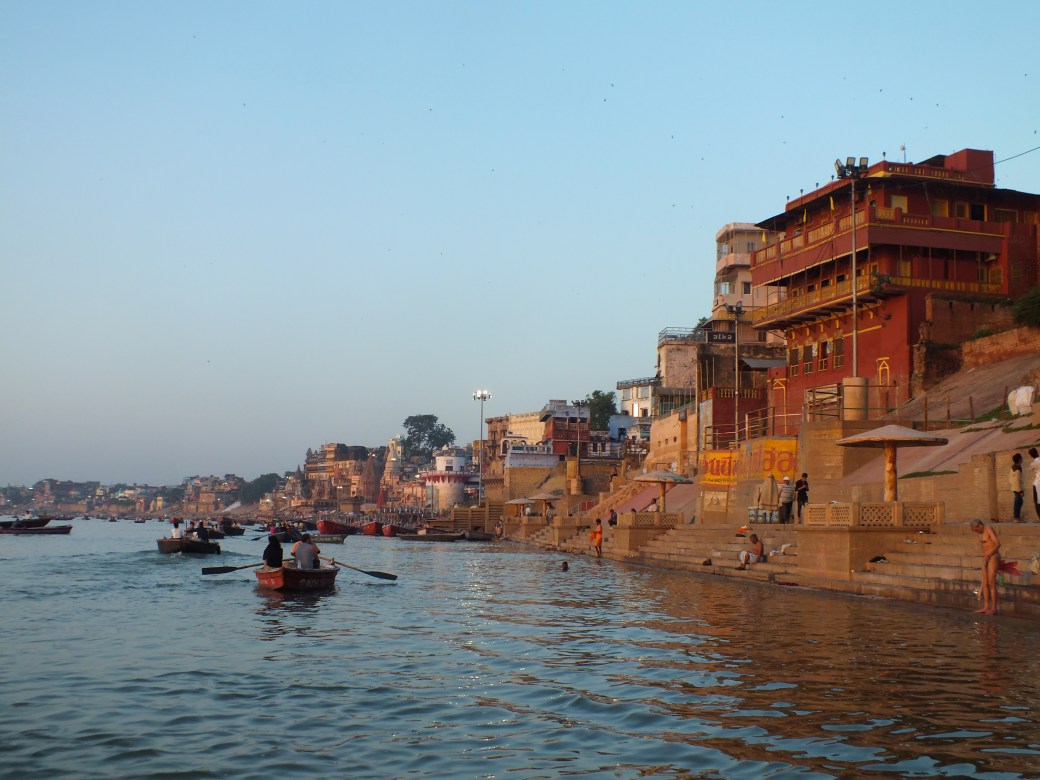
Up before 5 yet again to sift through the empty streets and lanes of old Varanasi in tuk-tuks (motorized rick-shahs) in order to take a boat trip at sunrise down the Ganges, past all the bathers, gurus and rhesus monkeys.

VaransiAlley.JPG

Tuktuk.JPG

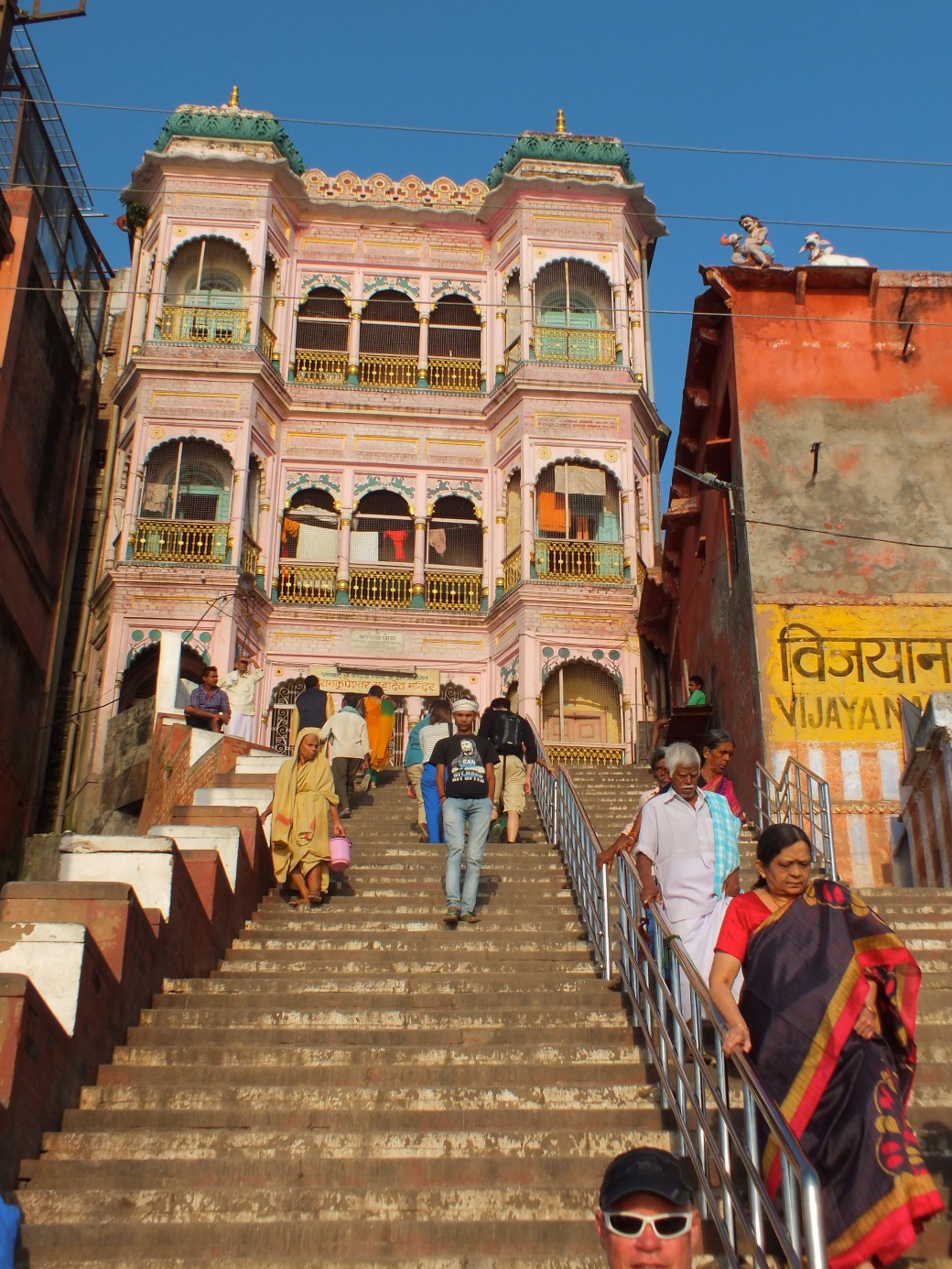
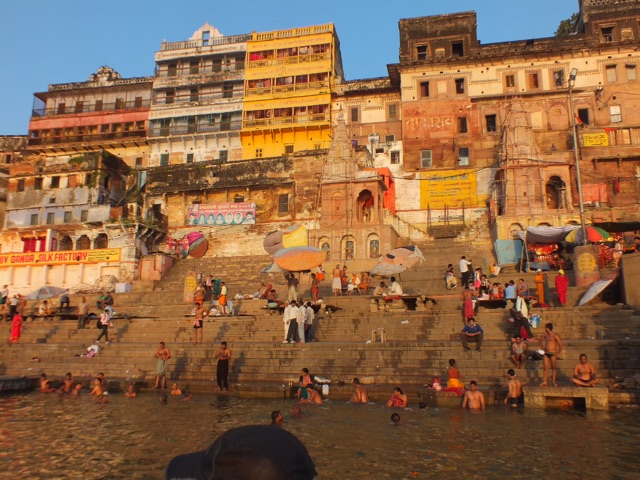
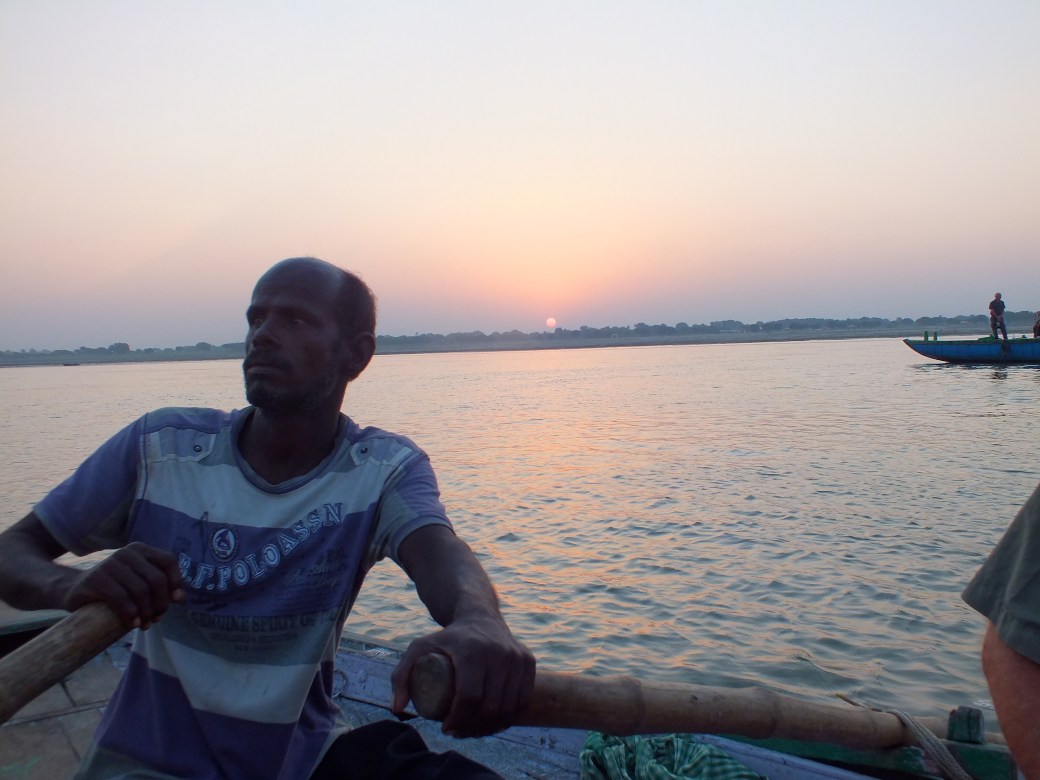
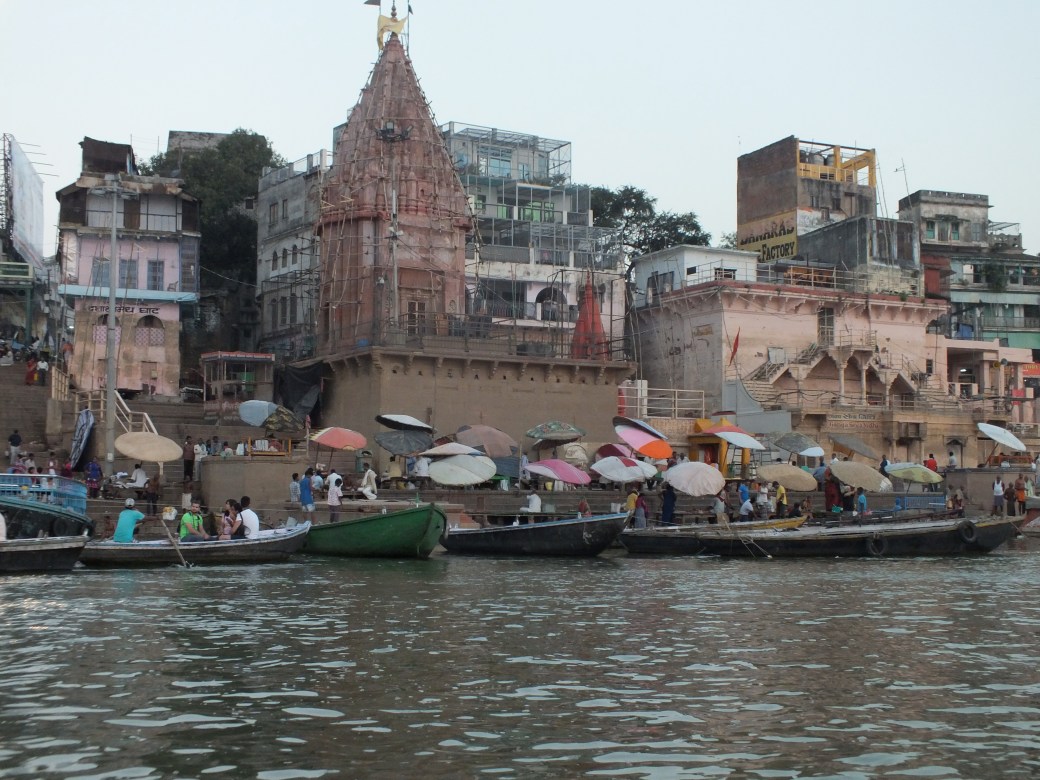
Varanasi- formerly Kashi, then Benares- is reputedly the starting point for the spread of Buddhism; Buddha apparently delivered his first sermon at nearby Sarnath in 528 BC. One of oldest continually inhabited cities in the world, it has been repeatedly conquered, sacked and rebuilt. Now it is one of Hinduism’s 7 holy sites. Millions of pilgrims come to bathe  on the ghats (stairs) lining the edge of the sacred Ganges, some to die and be cremated, an end seen as particularly auspicious in liberating the soul from the life-death-rebirth cycle. For an hour or two we cruised among the masses, all of us in one rowboat with a ragged boatman in charge. No cremations, only one dead body in the water.

Ganges2.JPG

westernGhat.JPG

Ganges.jpg

Ghats.JPG

GangesBoatman.JPG

TheGhats.JPG

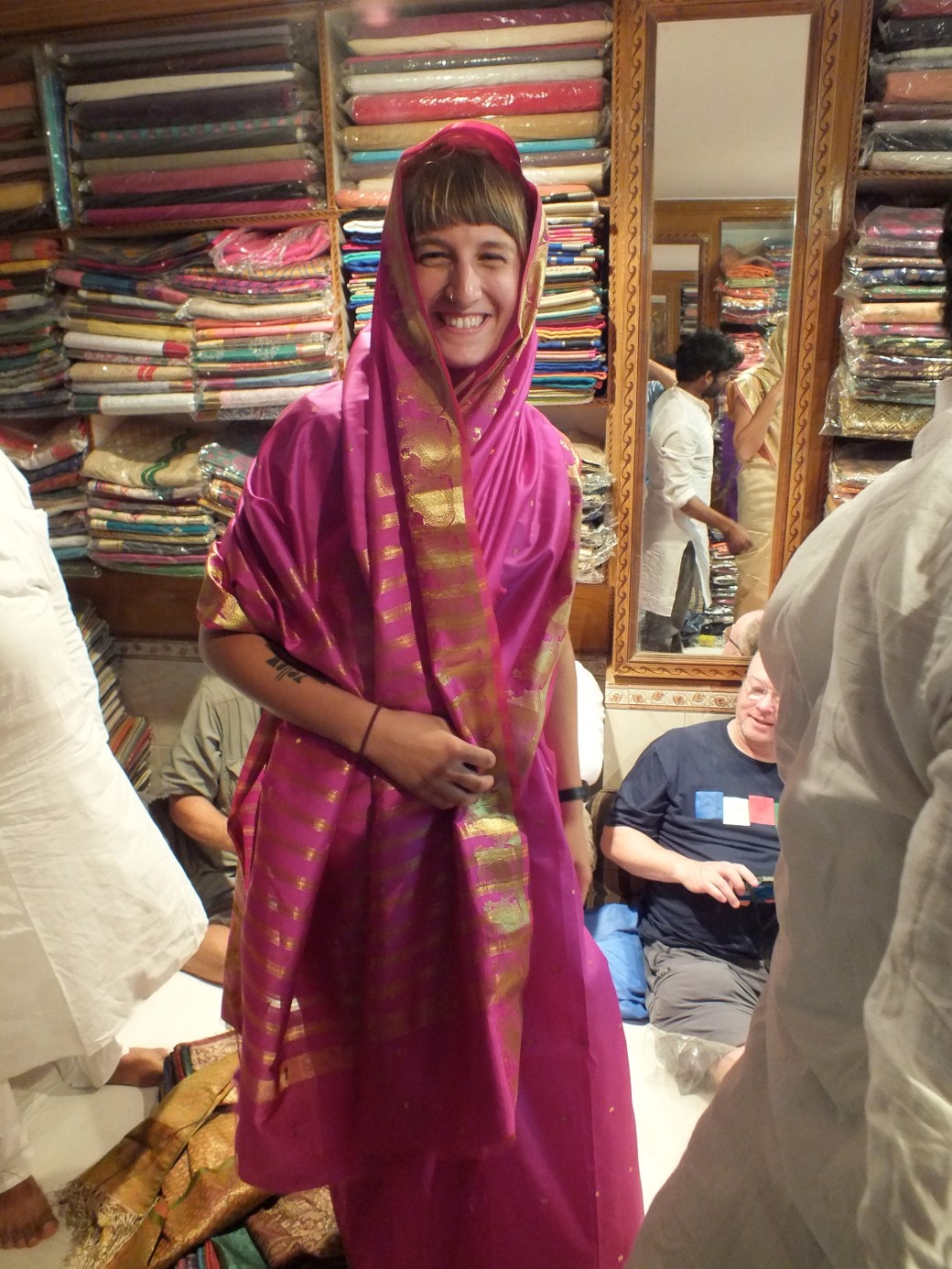
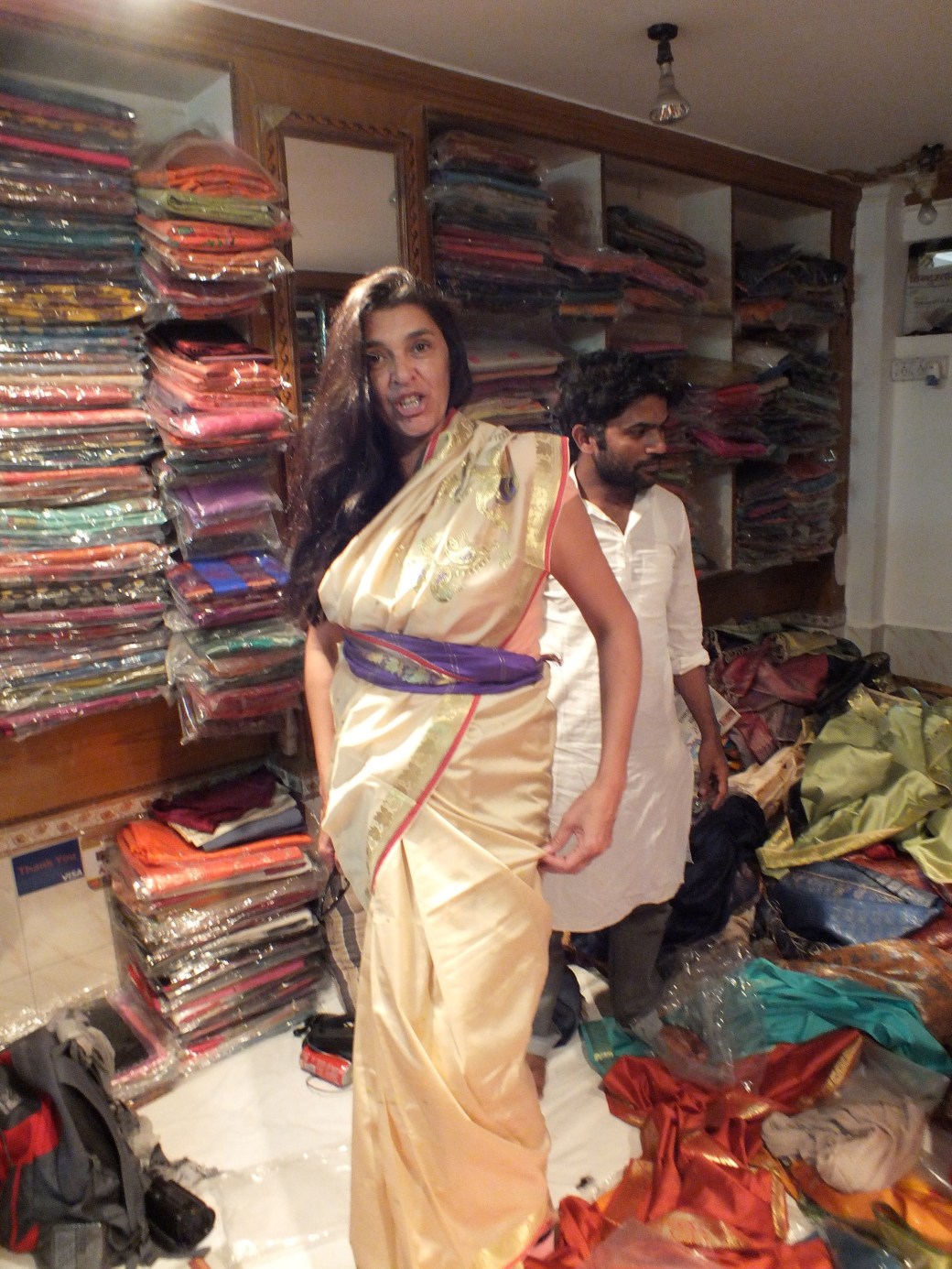
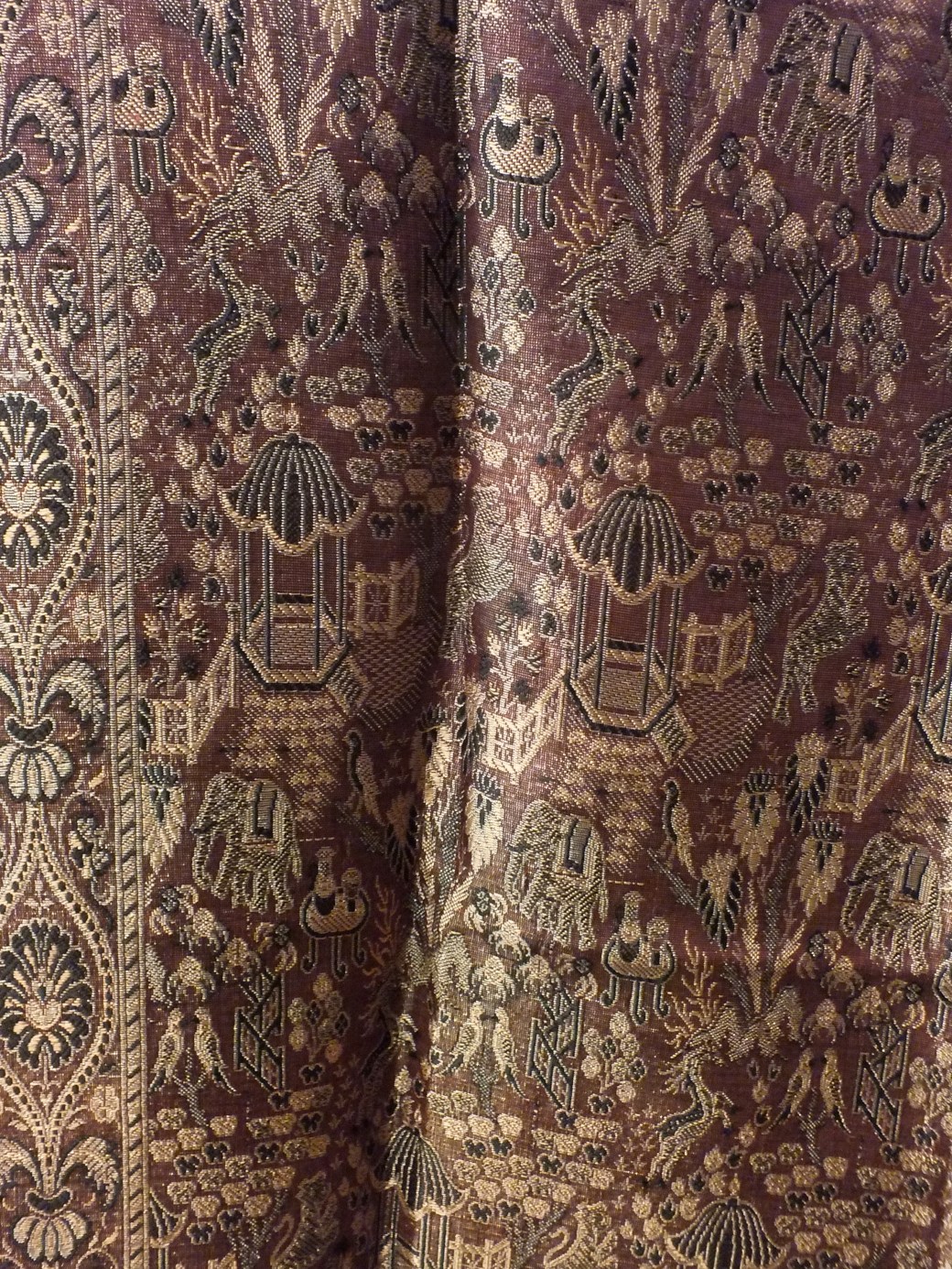
On the way back through the maze of alleys we stopped at a silk factory, viewing the ragged weavers operating archaic looms in small dark caves, then adjourning to a small room lined with hundreds of silk samples. We sat in awe as the owner displayed hundreds of amazingly beautiful sashes, shawls, saris, bed covers, what have you. I was tempted by the lovely colours and patterns in the bed spreads- but too big to carry  home for the dog to lie on, so with great difficulty I selected four sashes for the women folk at home and had them dispatched by mail (they did arrive, to great acclaim).

Loom.JPG

A Loom

AliSari.JPG

Ali Sari

Sari.JPG

Mom  Sari

ShawlSample.JPG

Shawl Sample

I think we grabbed a bite on the street as we visited the really interesting ‘Mother India’ museum- a unique topological map of India in plaster, probably 10 or 12 meters square. Impressive for us geomorphology fans. Easy to see how the Indian subcontinent, a fragment broken off ancient Gonwanda 90 million years ago, zoomed across the early sea to smash into early Central Asia and push up the Himalayas. Who knew?

mother India.JPG

Spent a few hours in the fine pool, in between abortive attempts to cash lousy travelers cheques. Banks and ATMs in hotel area open erratically, manned by shady looking characters. I finally managed a sub-par exchange of a couple of hundred bucks. Fortunately James once again agreed to wait for the payment of my share of the ‘kitty’. More pleasantly I initiated what would become something of a pattern for the rest of the trip: I followed the example of Pete, the intrepid traveler, and ate in a roadside ‘café’ (a few chairs and a tandoori-type cooker). Simple, very cheap, and satisfying.

But our hotel was the end of luxury for a while. Up before 5, need I mention, to head with a boxed-breakfast for Panna National park, to camp and cook for two nights.

TheFuture?.JPG

Future road?

RoadReality.JPG

Road reality

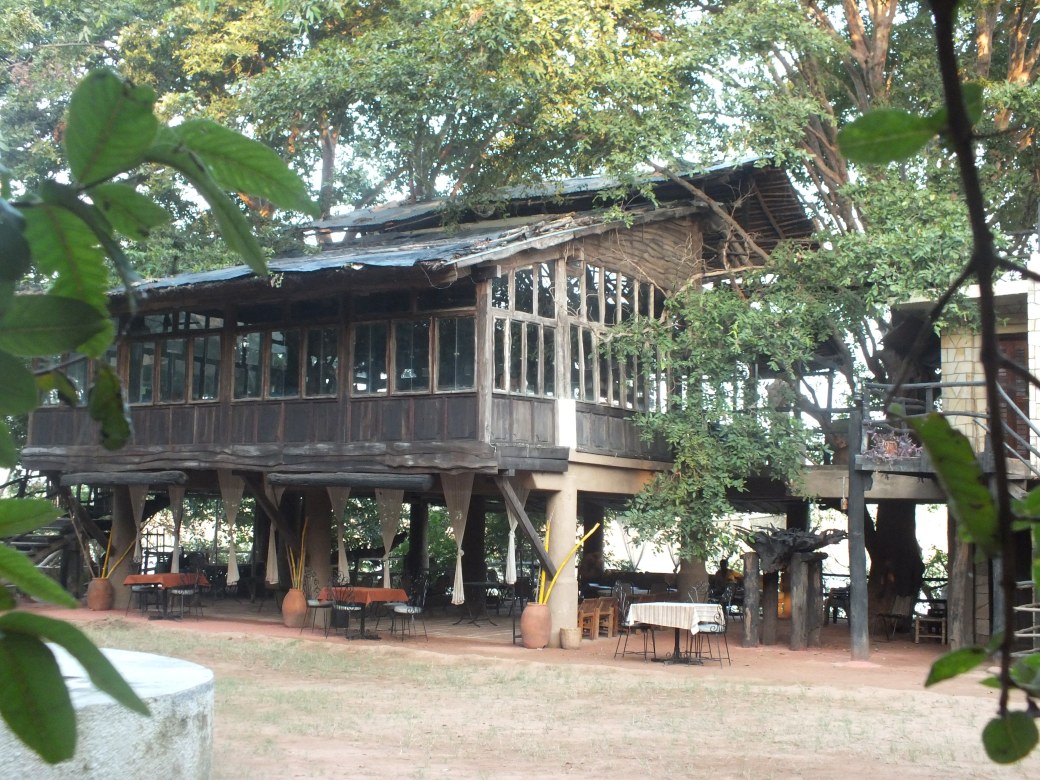
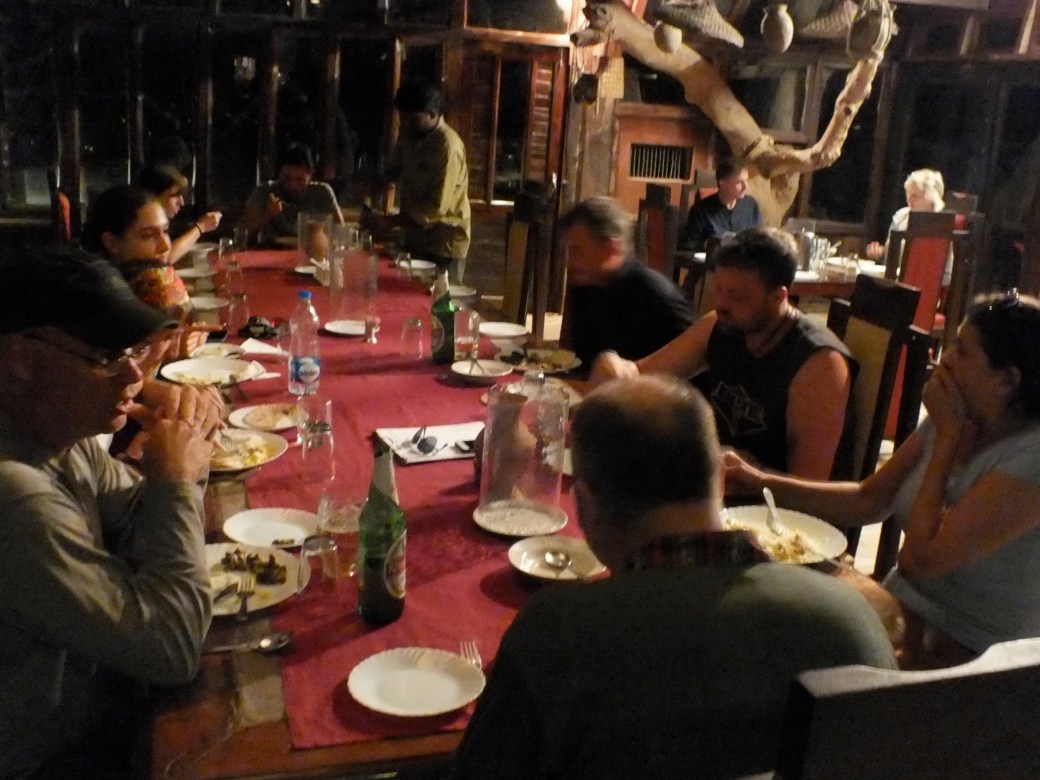
More really bad roads of course, so we bounced along for 15 hours, arriving at the Treehous Resort on the edge of the park long after dark. Worth the trip. Really in a tree, the dining hall. Excellent buffet dinner, veggies and some lamb as I recall.

TreehouseResort.JPG

TreehouseDinner.JPG

In view of our hard day on the road, James decided we would stay in the resort accommodations instead of camping. A blessing. Our rooms were off in the dark bush, not far from the river, apparently crocodile-friendly. Simple but comfortable enough.

By this point I was suffering a horribly congestive cold that made sleeping difficult and noisy with frequent throat clearings, so I spared room-mate Doug by spending the nights on the chair cushions in the ante-room. A bit exciting as I did not know what creatures the loosely-closed room might harbour. And late at night some wild howling began somewhere distant, creeping ever closer for about an hour.

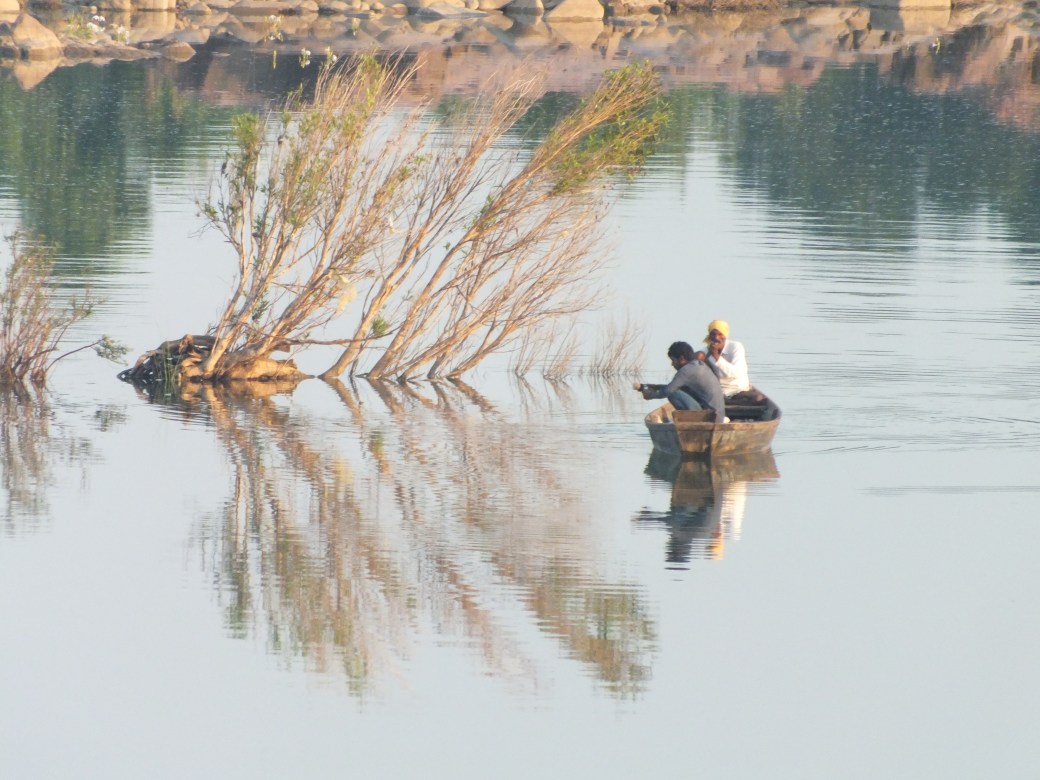
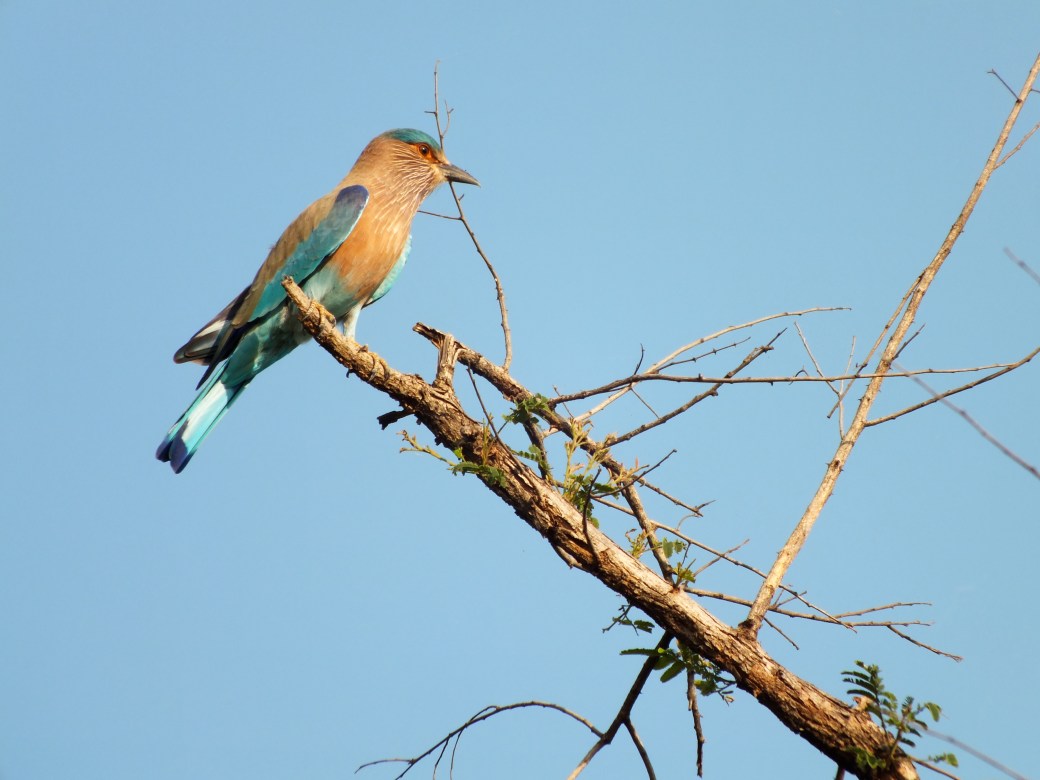
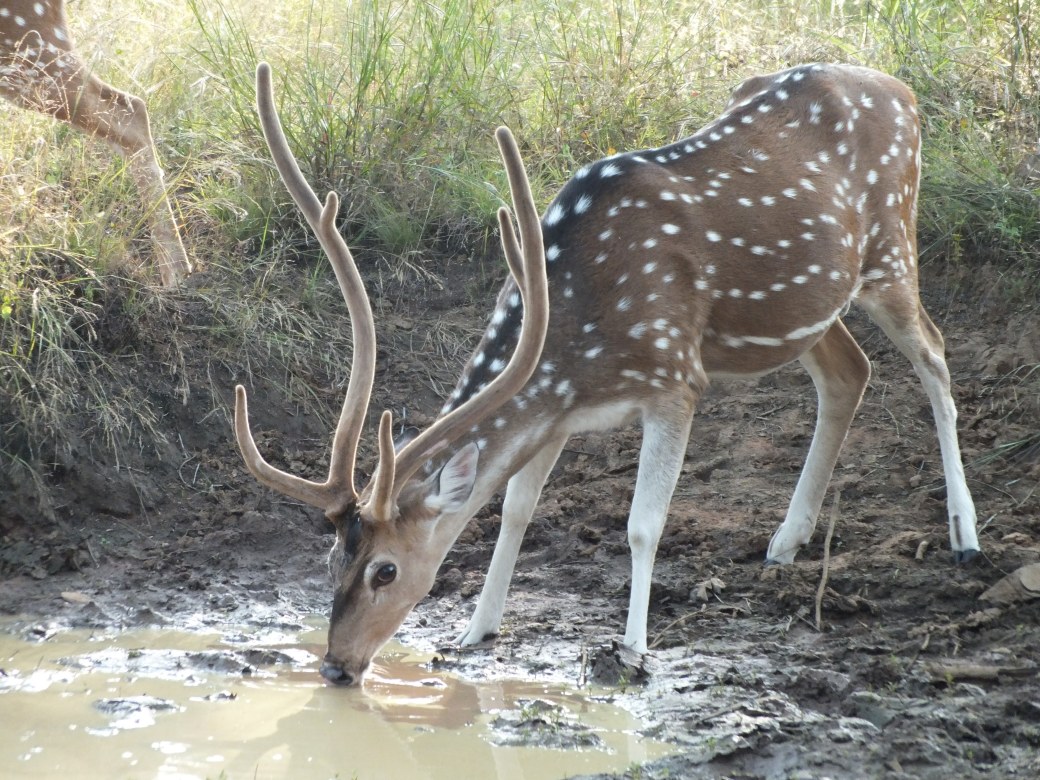
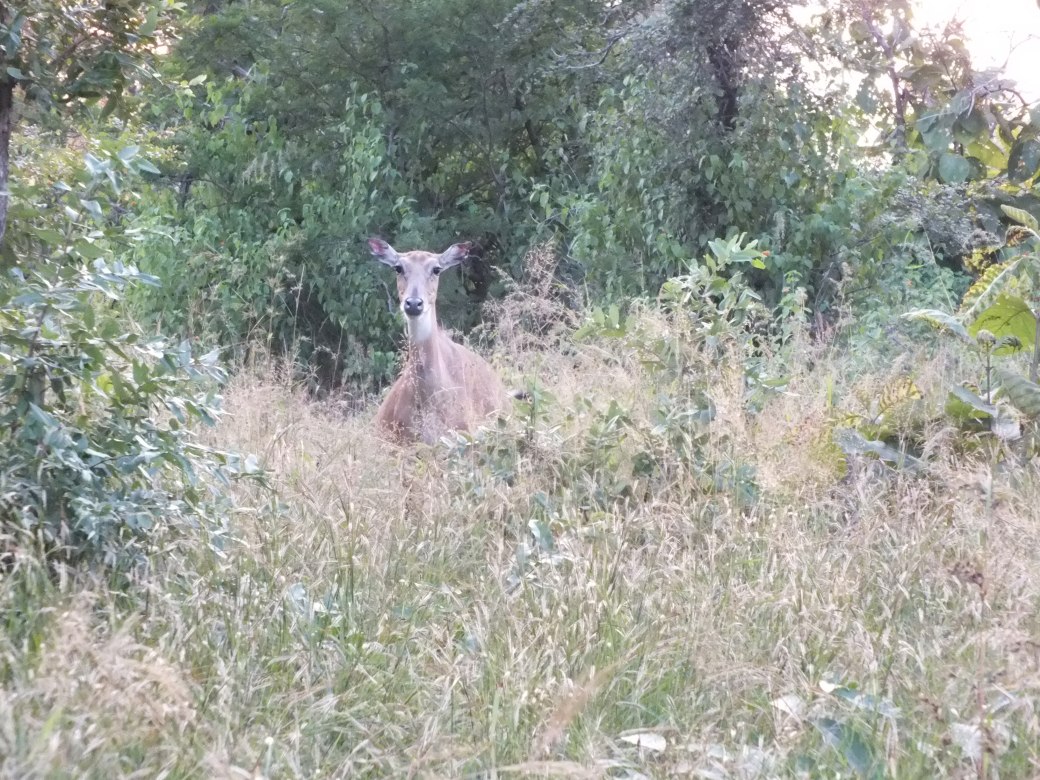
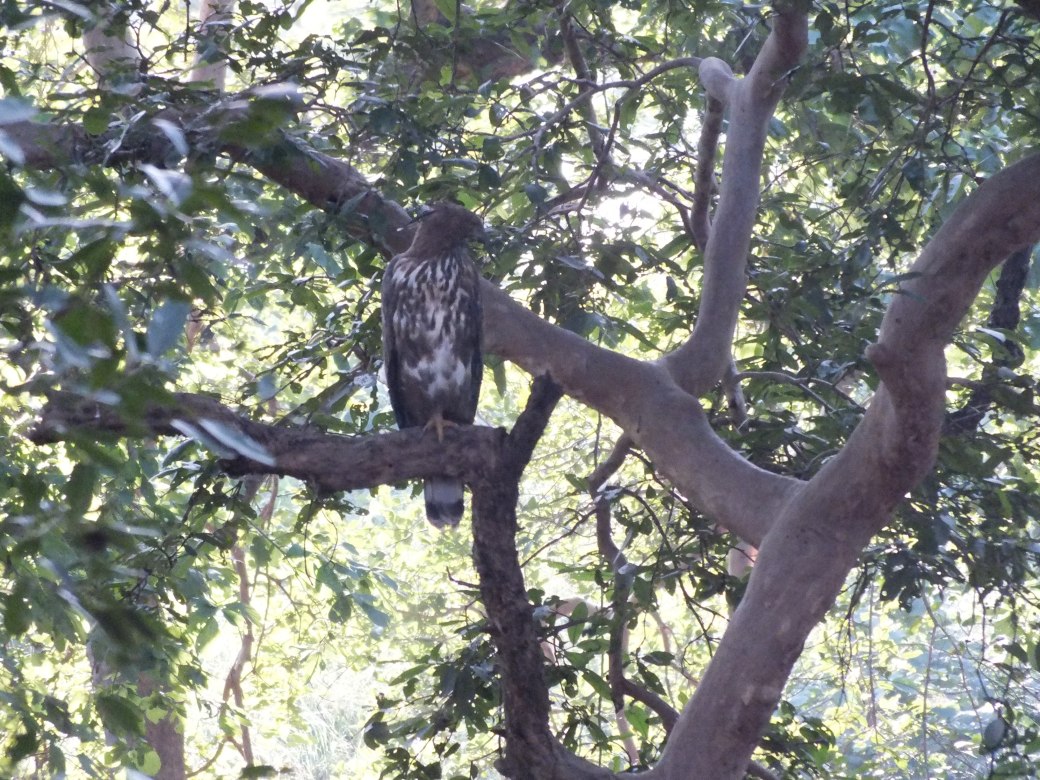
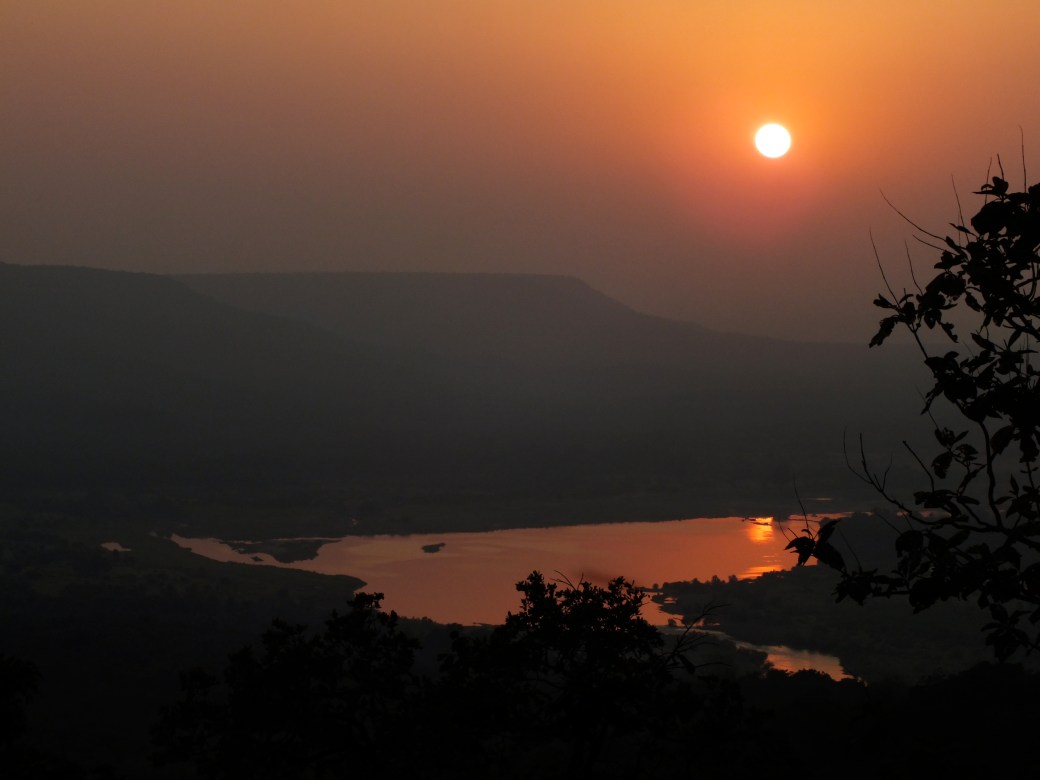
Apart from the food and handsome environment, the highlight of the Treehouse stay was our safari by jeep through the adjacent Panna National Park, a tiger reserve, three of us plus a honeymooning couple from Spain in one of the two jeeps. The guides were really competent, telling us about the flora and fauna before us, stopping the jeep regularly to point out birds or animals which we could not detect. We did not get to see the tigers- there are apparently 30 or so, re-seeded in a conservation effort closely monitored night-and-day, via radio-collars, by park staff. However, we did see two varieties of deer, a lot of colourful birds, and a fine sunset. Great learning experience.

Panna National Park

Fishermen.JPG

Bird.JPG

Spotted Deer.JPG

SpottedDeer2.JPG

Spotted Deer3.JPG

Monkey.JPGmuledeer.JPG

muledeer2.JPG

Hawk.JPG

pannasunset.JPG

Khajuraho and Orchha

 The pieces-de resistance in this segment of the trip were Khajuraho and Occha.

Khajuraho.JPG

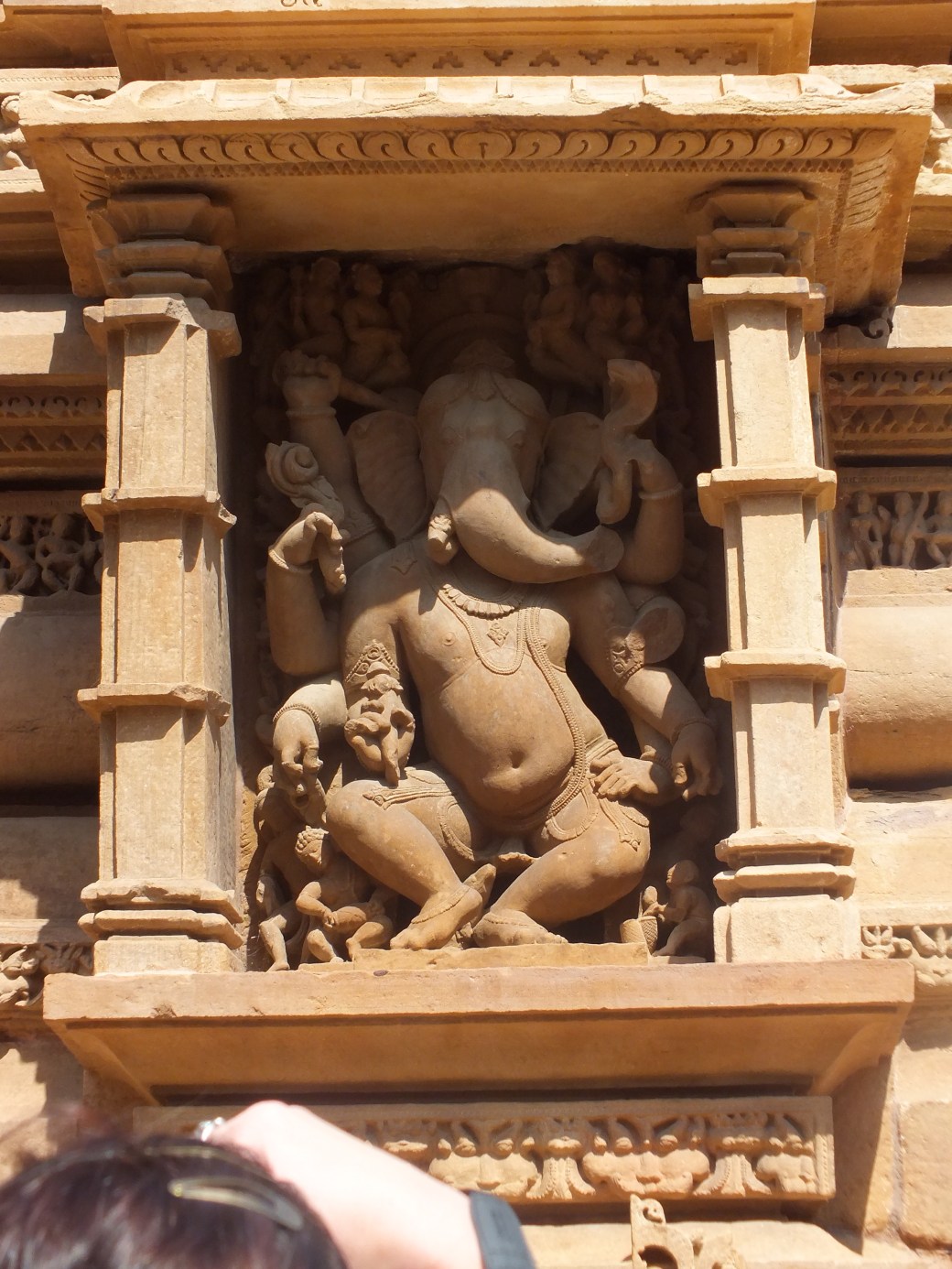
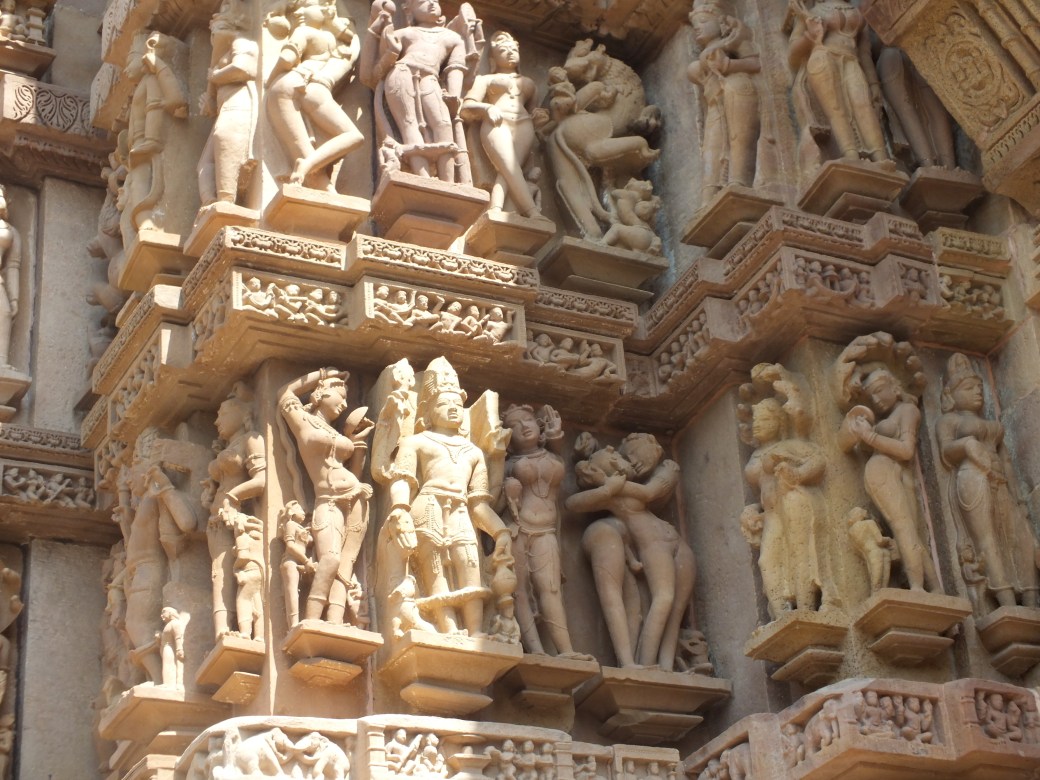
“Khajuraho was once the capital of the Chandellas of Jejakabhukti, , a small Rajput kingdom, between the10th-13th Centuries CE. Rajput kingdoms were small local dynasties that dominated political life across northern and central India between the 6th Century BCE and the 20th Century CE. The Chandellas of Jejakabhukti ruled over much of the modern-day region of Bundelkhand, and built the magnificent Hindu and Jain temples in Khajuraho in around 1000 AD. Considered to be “one of the seven wonders of India”, the temples are in three geographic groups – western, eastern and southern. Because they were built in quite a remote and inaccessible location, the western group of temples have been almost perfectly preserved. Set in peaceful, well-kept gardens, the temples are magnificently decorated and covered in some very graphic carvings depicting all sorts of erotic acts!” (Dragoman notes).

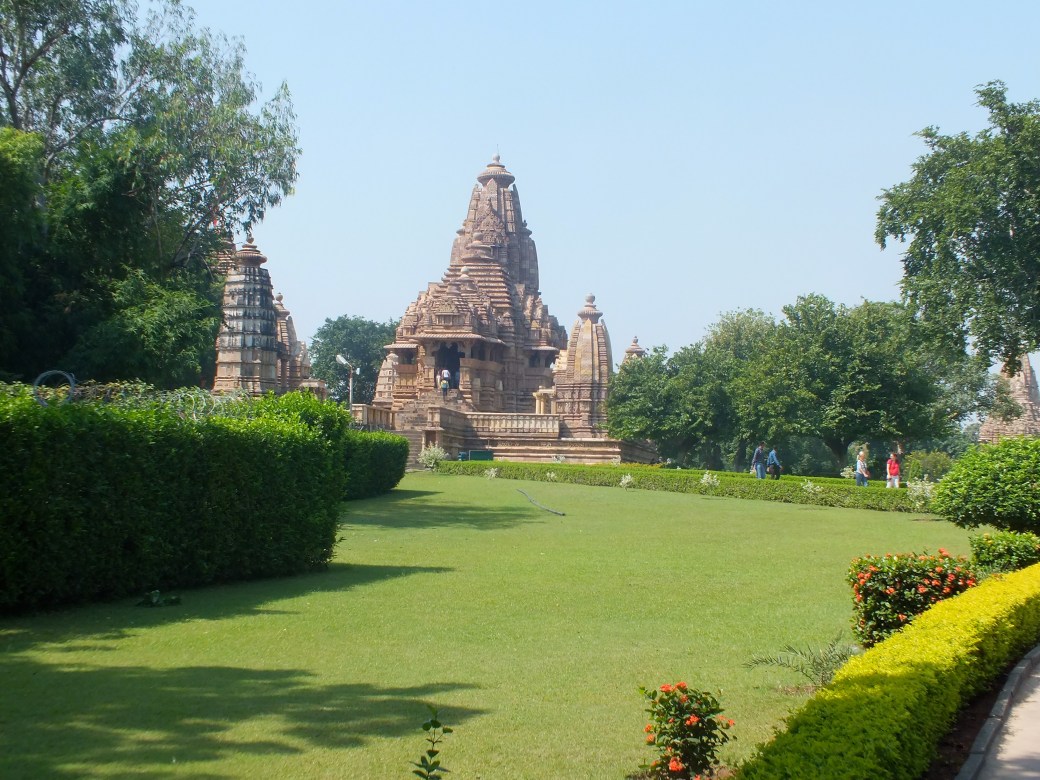
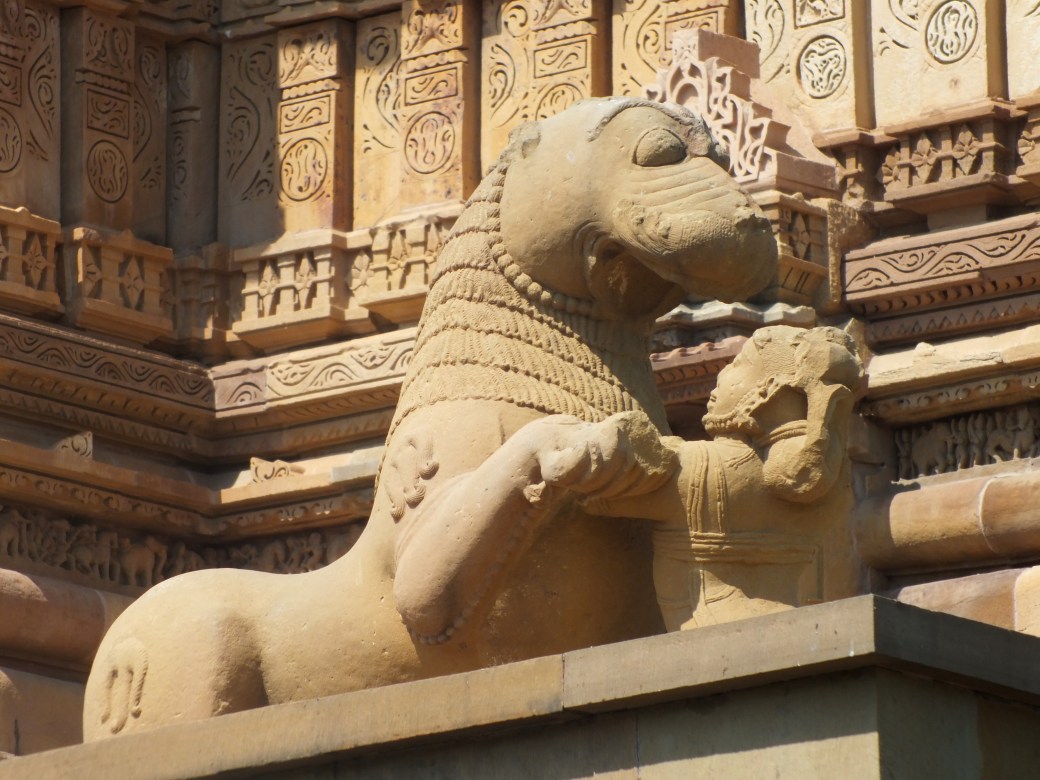
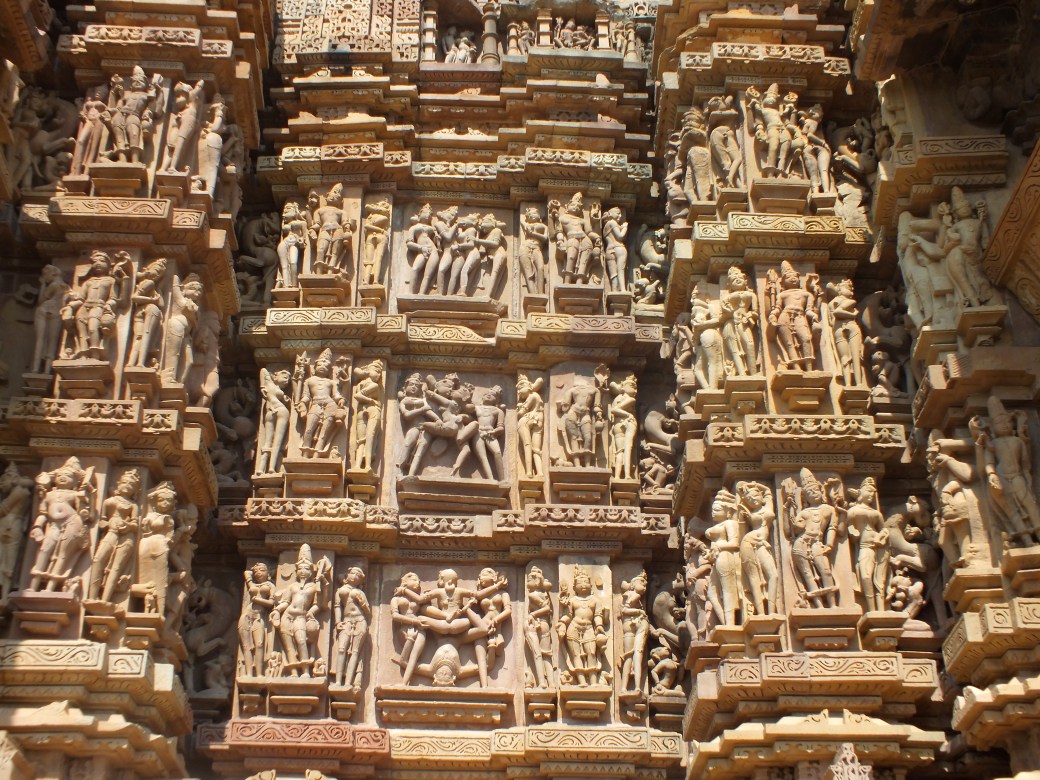
In fact Khajuraho was lost to the jungle for about three hundred years, before being rediscovered by a British officer in 1838. Of the 15 temples surviving out of about 85 originally created, we focused our attention on a couple of temples in the ‘Western group’, Lakshmana, built over 20 years, from about 934 AD, and Kandariya-Mahadev, built between 1025 and 1050 AD, representing the peak of Chandellan architecture. Both feature a wide variety of imaginative sexual activities, with human as well as animal pairings. The quality of the carvings, in a yellow sandstone imported from quarries in Panna, 30 kilometers away, and the examples of classical Indo-Aryan architecture are extraordinary . An extremely beautiful but hard to fathom legacy…

Lakshmana Temple

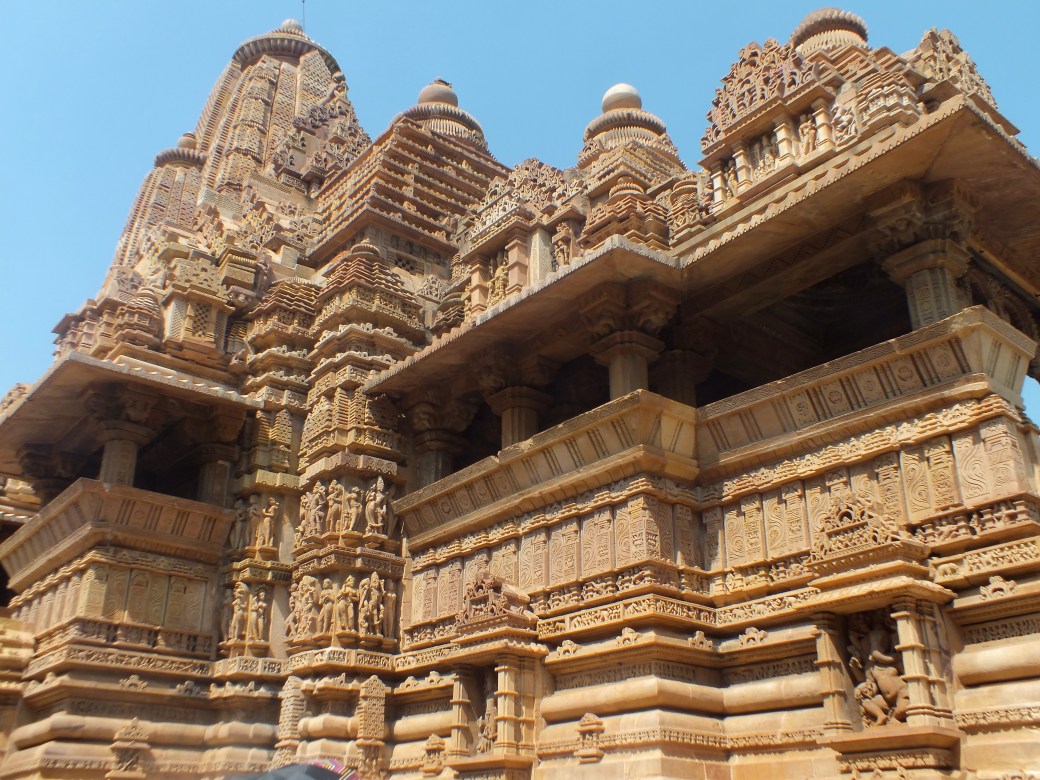
Lakshmana temple was built between 934 and 954 AD by Yasoverman, a sixth generation rajput in the Chandella dynasty, who by conquest greatly expanded the Chandella domain in Central India, eventually declaring his kingdom independent from the broader Prathihara empire.

LakshamaTemple.JPG

LakshamaDetail.JPG

LakshamaDetail2.JPG

Lakshamadetail3.JPG

The qualities of the Khajuraho temples that make them so aesthetically powerful are on one hand the effective integration of sculpture and architecture, and on the other, the dynamism of the sculptures themselves- the figures, particularly the erotic ones, appear to be in motion (Stella Kramrisch, art critic). These features are best preserved in the Lakshmana temple.

Kandariya-Mahadev Temple

KandariyaMahadev.JPG

K-M detail.JPG

K-M detail2.JPG

K-M detail3.JPG

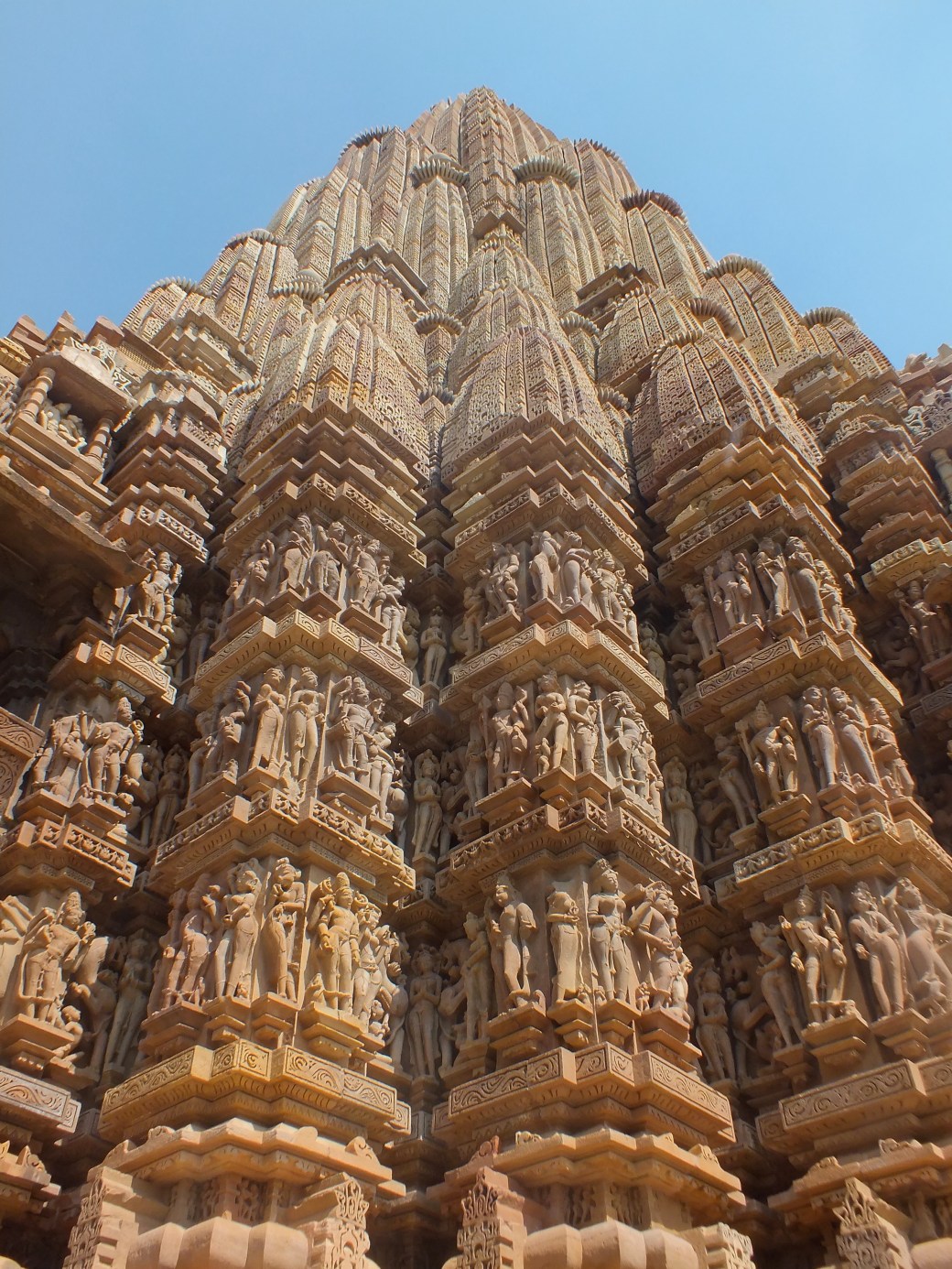
Kandariya-Mahadev temple was built circa 1025-50 by Vidyadhara, a powerful rajput during the most prosperous period of the Chandella dynasty. It is the largest of the temples, perhaps the finest, among the extant temples. Its soaring graded roofs represent the sacred mythical mountain Kailash in the Himalayas.

From a technical point of view, Kandariya-Mahadev temple exhibits the best sculpture and architecture among the extant Khajuraho temples. It is the tallest, over 30 metres, resembling a mountain of masonry. Its 800 figures display a variety of lively, even violent postures. The erotic sculptures reveal a mastery of the rendering of female contours.

The last of the Chandella rulers, Parmardidev, was defeated in battle in 1182 by Prithviraj Chauhan, the powerful leader of the Delhi Rajput. Thereafter, Khajuraho fell into obscurity, and the temples disappeared into the jungle.

Orchha

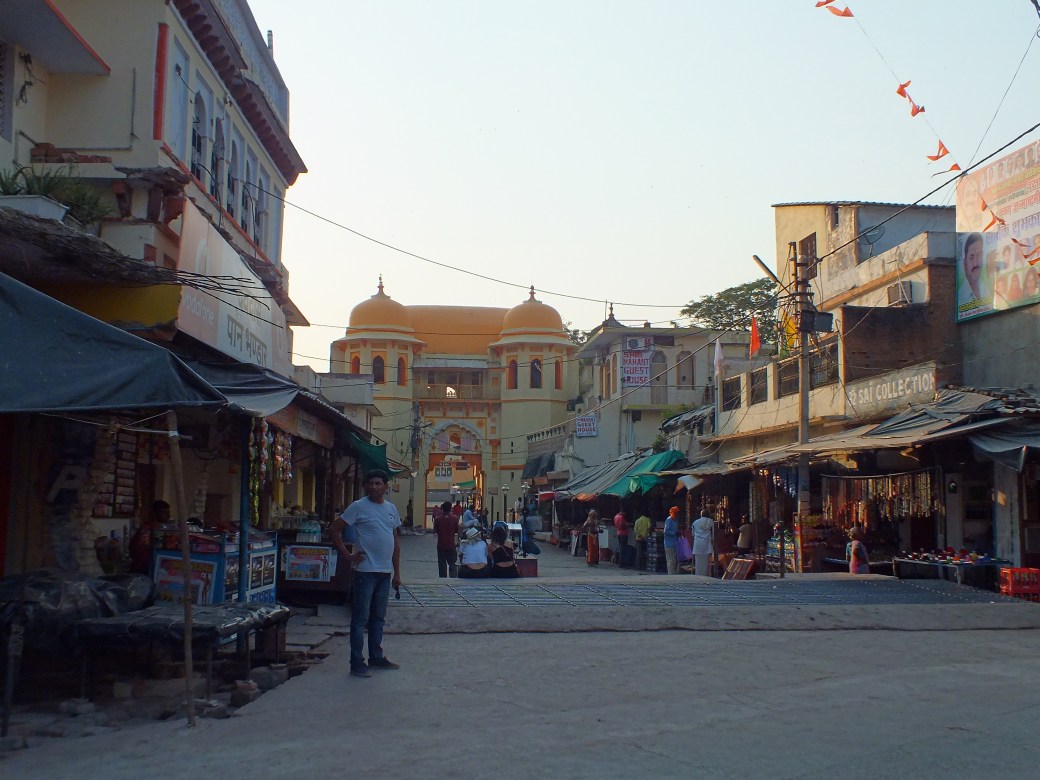
The name of this small town 170 km west of Khajuraho literally means ‘hidden’; indeed it is not often visited by tourists despite its historically interesting sites.

DowntnOrchha.JPG

Downtown Orchha

This is another rajput capital, built much later than Khajuraho in the medieval era by the Bundel Rajput Rudrapratap. The Bundel dynasty, (‘bundela’= shedder of blood) originating in the 11 century, moved its capital to Orchha in 1531 and ruled much of Central India from there until 1783, though from the early 17th century the Bundels served as vassals of the Mughal invaders.

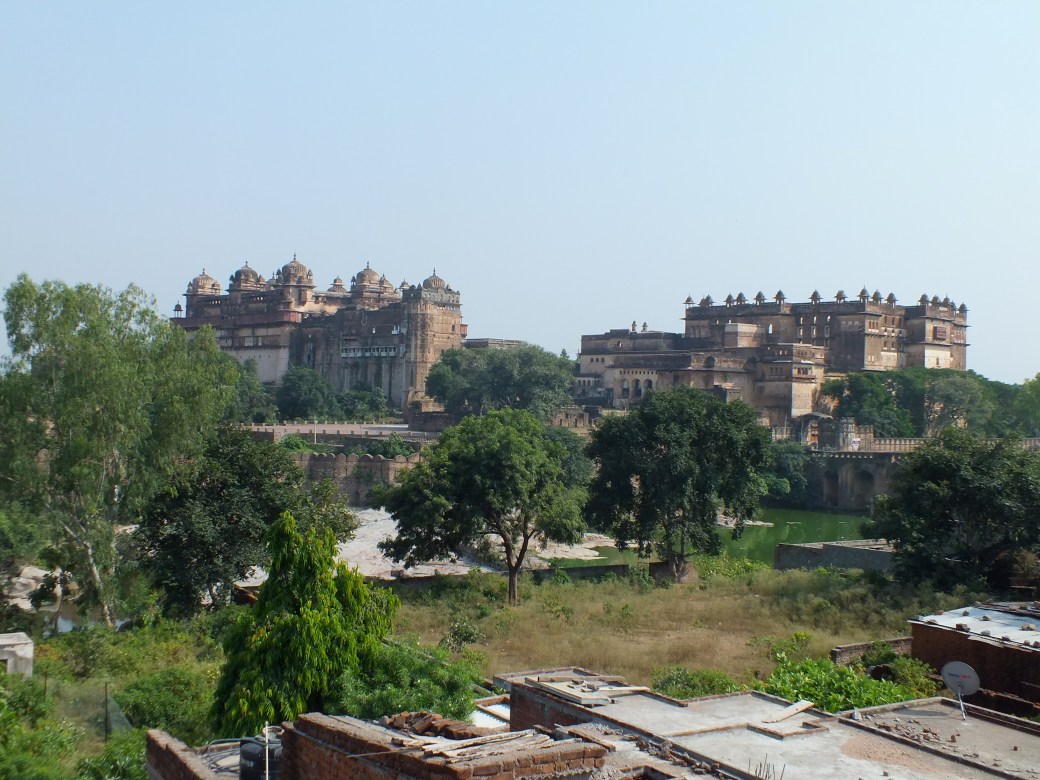
Orchha fort.JPG

Orchha fort

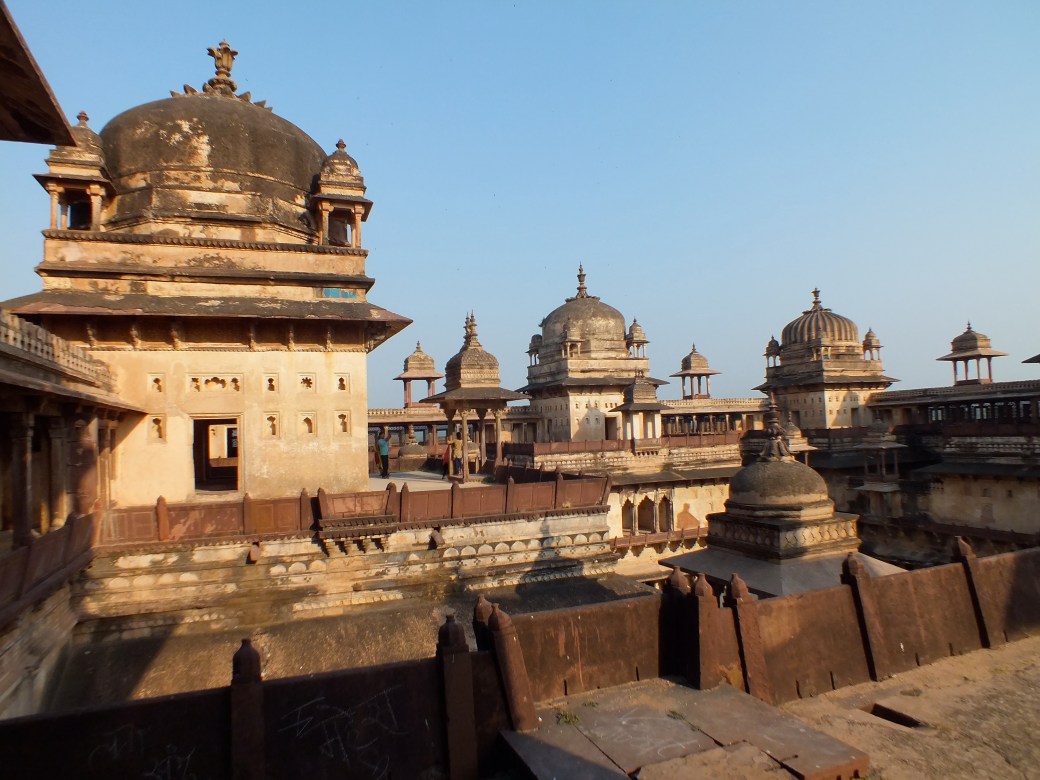
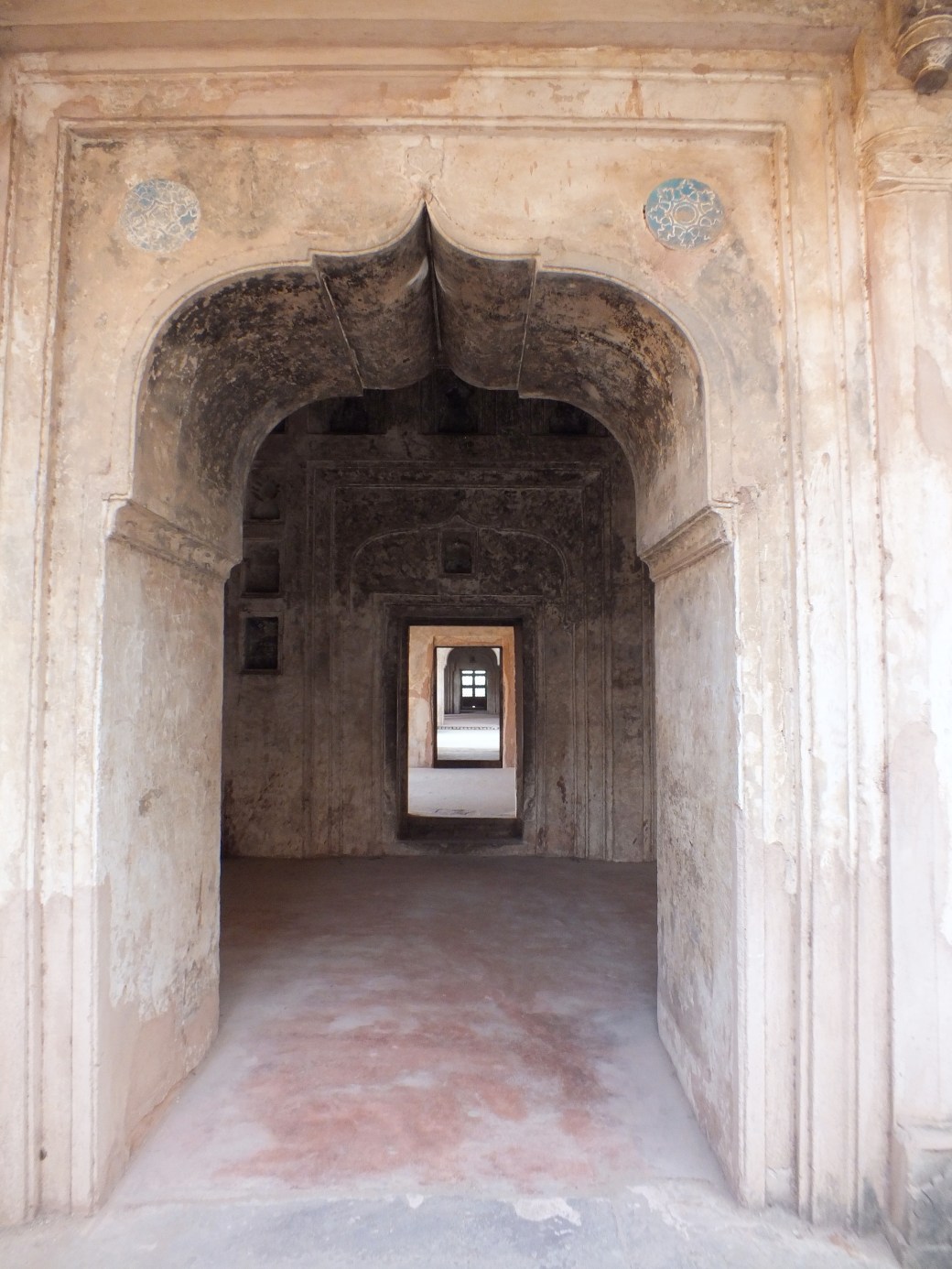
The Bundel legacy is a massive fort containing several palaces, temples; and a series of large cenotaphs. Within the fort, the Jahangir Mahal was built by Bir Singh Deo, Rudrapratap’s successor, in the early 1600s to mark the visit of Jahangir, the son of the second Mughal Emperor Akbar.

Fortdetail.JPG

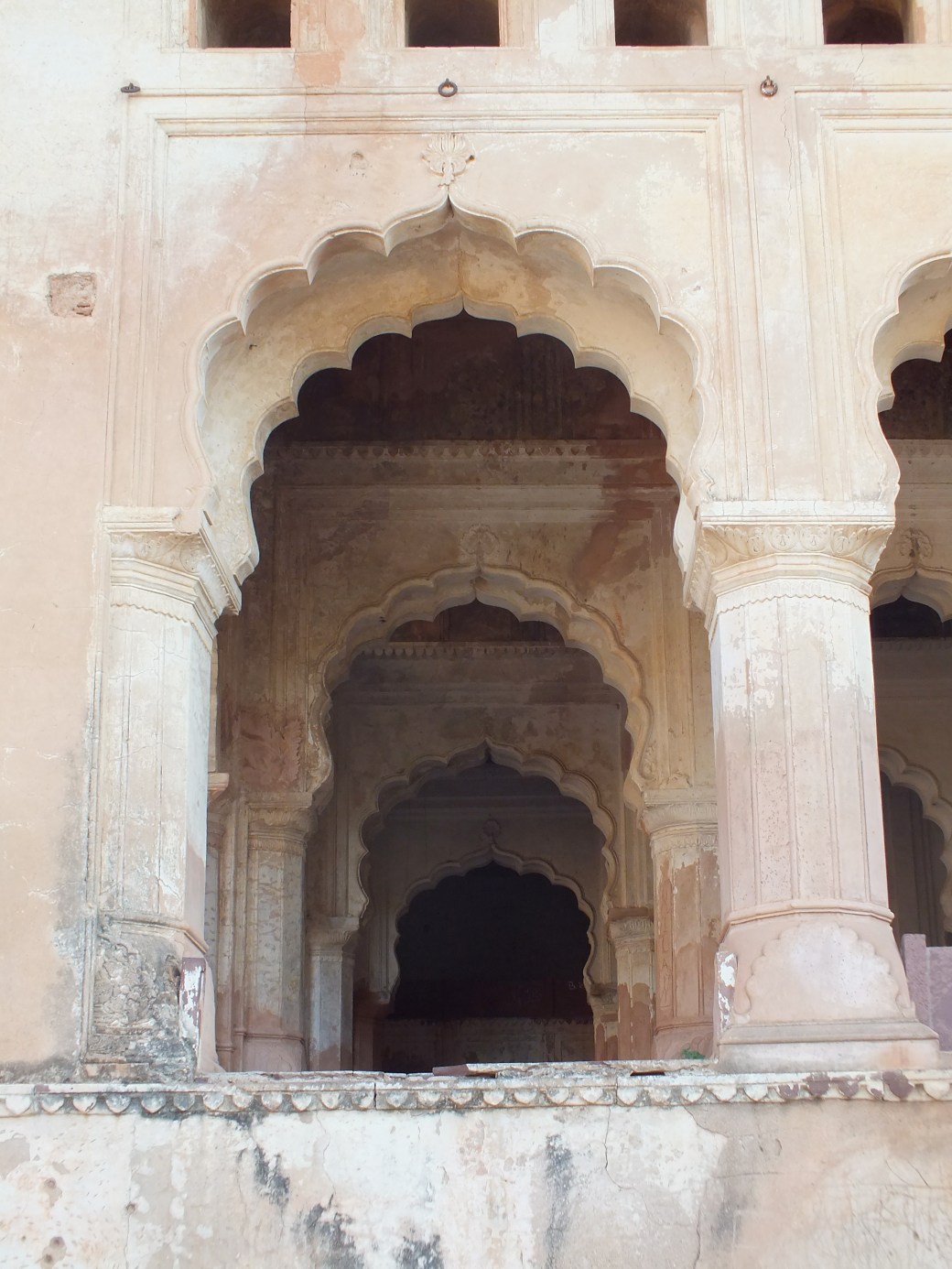
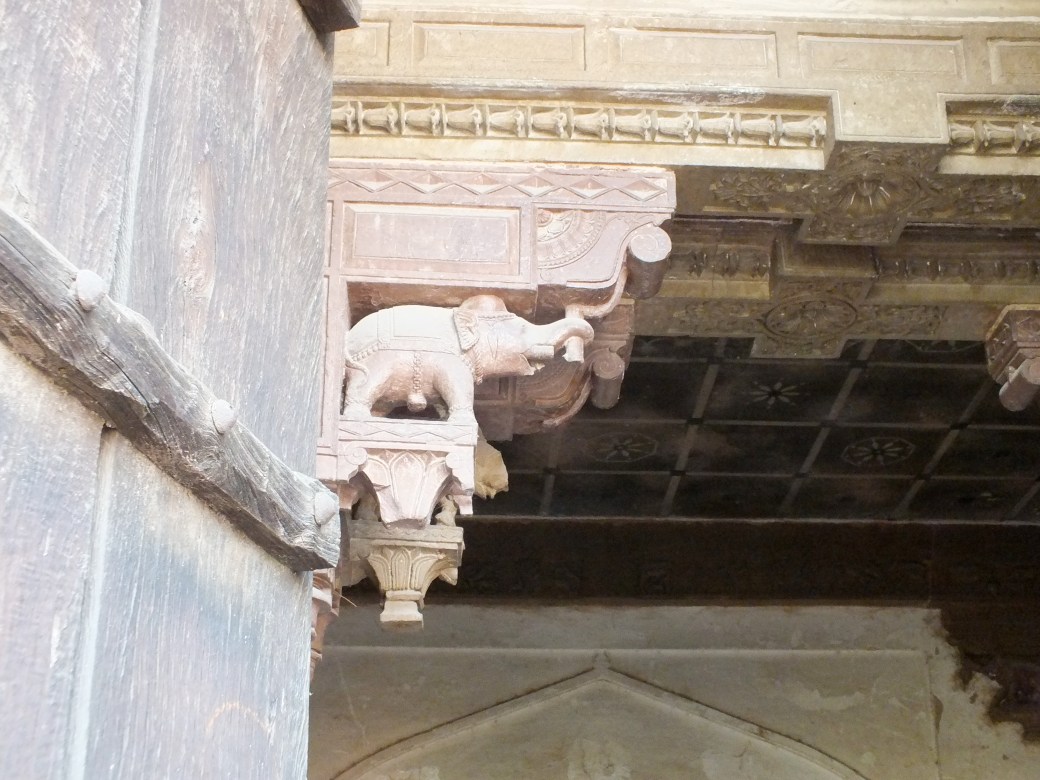
The 70m square palace, 5 stories capped with domes, houses 8 pavilions rich with hanging balconies, trellis work, and window overlooking the Betwa river. The architecture is a mix of traditional Hindu and Mughal styles, and has some remarkable innovations like a water-based cooling system.

Fortdetail1.JPG

Fortdetail2.JPG

fortdetail3.JPG

Fortdetail4.JPG

Fortdetail5.JPG

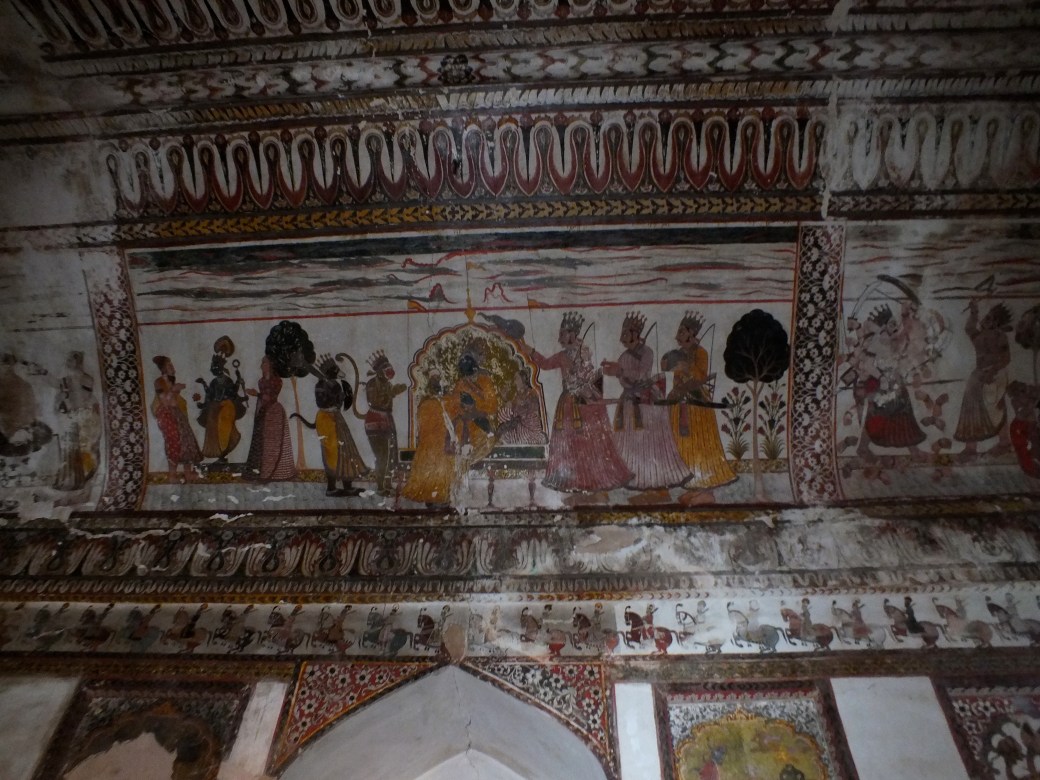
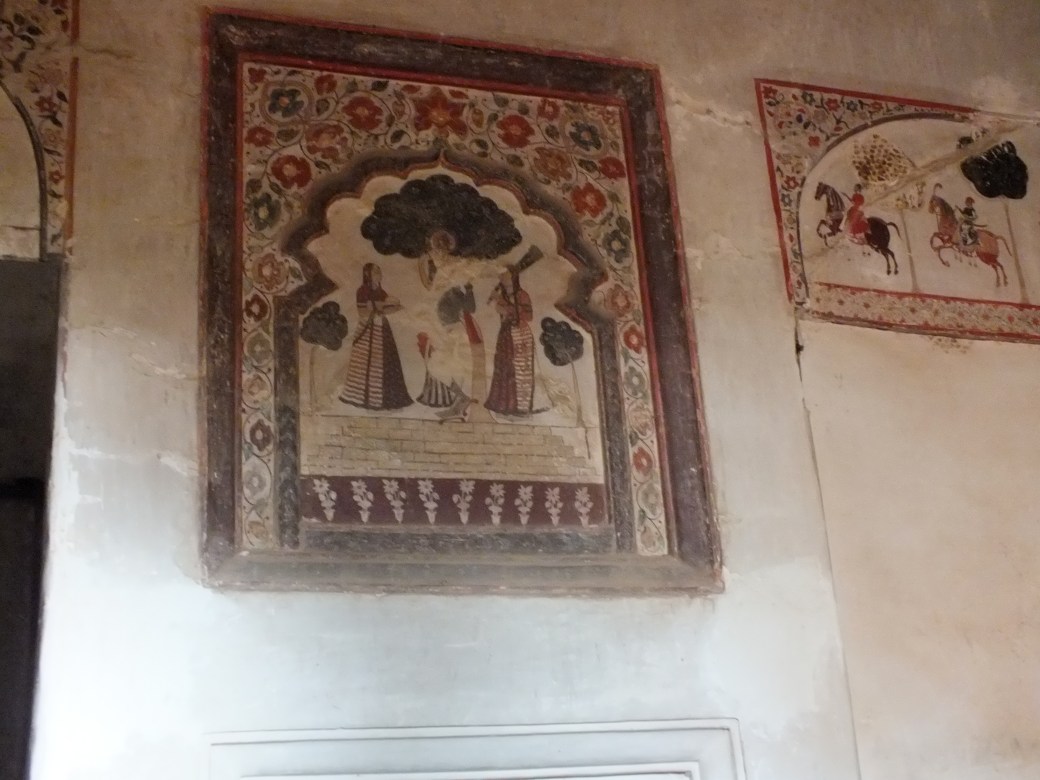
This palace displays the finest examples of the Bundela school of painting.

Fortpaint.JPG

Fortpaint2.JPG

Fortpaint3.JPG

Raj Mahal, a second palace in the fort complex, built between 1554 and 1591, contains royal chambers with walls lined with murals depicting Hindu mythology. Several other prominent palaces and temples lie within the fort.

BetwaRiver.JPG

We camped for the first time, in Orchha on the banks of the Betwa, a beautiful site where we were able to swim in the reputedly crocodile-free river. My sub-group cooked up some sub-par ratatouille. A night we sat around a campfire in the light of a full moon. It was here that we inaugurated a new practice: getting the tuk-tuk drivers to forage for some beer, more than some, a lot. Later, when most of us had dropped off, the ‘booze brother’ found their way to a nearby club where apparently they managed to join the band for a short gig…

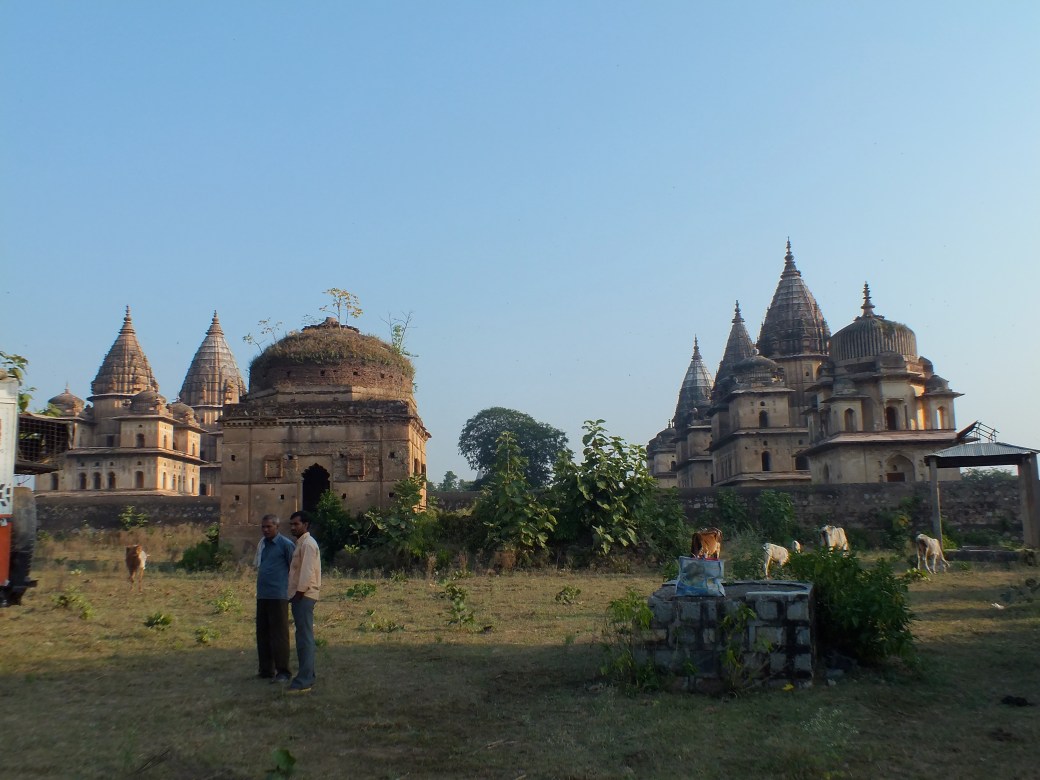
Chhatris.JPG

The banks of the Betwa are festooned with a series of 15 Chhatris or cenotaphs dedicated to Bundel rulers. When we arrived at our campsite, a Bollywood film crew was working on a epic at the nearest one. Apparently the script did not call for scruffy western extras, especially one swimming in his disposable underwear.

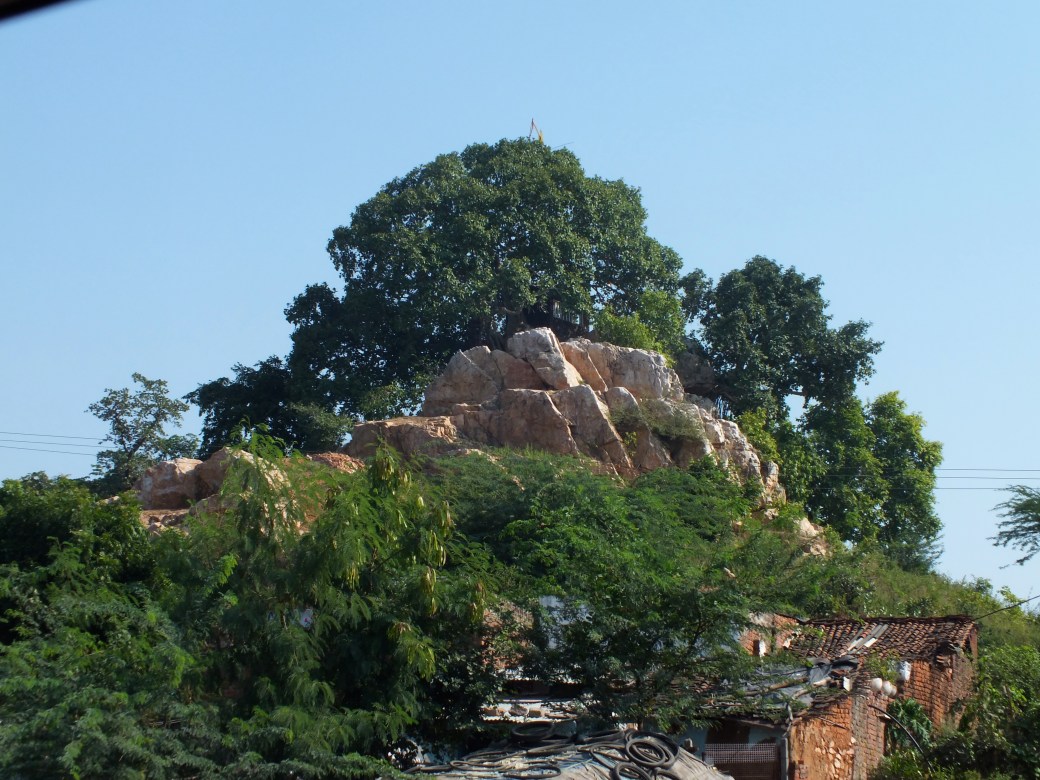
vindhya range.JPG

Incidentally, Orchha is bounded by rocky hills, the remains of an ancient mountain chain, the Vindhya Range, named after the goddess Vindhyavasini, running right across India, dividing the country into northern and southern halves. We followed this range throughout our long trip across Northern India- which we continued, in our next segment, toward Agra.

RoadtoAgra.JPG

On the road to Agra…

A Nepalese Idyll

A journey that started badly with no local cash in the Kathmandu airport. US travelers cheques useless, ATM not accessible, the border bureaucrat refusing to accept VISA for my entry visa…Finally he relented and I faced the next hurdle with no cash: getting a taxi into town for the rendezvous with my travel group. Earthier Nepalese being quite accommodating, a taxi driver agreed to haul me to an ATM on the way. There are lots of ATMs in Nepal. The issue is finding one that works with foreign bankcards and also has money. I think we visited about 8 on the trip to the hotel, finally finding one in a biggish bank that was just being filled up. So I got to the hotel Tibet and was duly rewarded: first, a quite charming building in the foreign quarter, redolent of 19th century emissaries; and secondly, my new companions. We might baptize them Sotiri One, after our noble truck.

annapurna

Our two leaders/drivers/mechanics, James and Ali, and their passengers, Rekha, Hazel, Doug and me: James, a charming, earthy lad from Manchester area, a man of many talents; Ali, an Italian dancer and yoga aficiando before becoming a Dragoman leader; Rekha and Hazel, both Londoners, both with fascinating roots in India, two of the most intelligent, enchanting, not to mention beautiful, women I have ever met; and of course Doug, a Glaswegian with a deep intelligence often displayed in hilarious wit.

We got acquainted over dinner, Indian food, in the company of a delightful family band- mom, dad and two kids- playing Indian music. After a hearty Colonial breakfast early next morning we set off towards, Nuwakot, a former capital of Nepal. So I did not get to see much of Katmandu; there was little sign of earthquake damage but a lot of construction, particularly of streets.

kathmandu

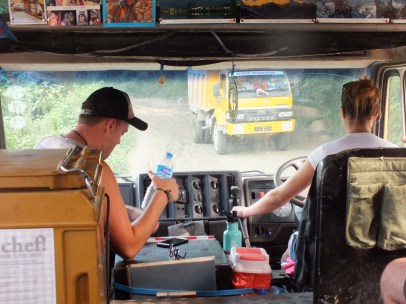
As we edged out of the city the road gradually deteriorated into a dirt path, sometimes not wide enough for two vehicles to pass.

dirt-path

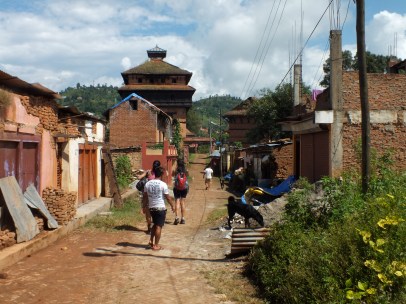
For the next 6 or 8 hours we very slowly worked our way through steeply hilled terrain, covering maybe 70 km, a foretaste of what we would see of roads in Nepal. But in the end the effort rewarded by our arrival at the ‘Famous Farm’, on the edge of the somewhat derelict village of Nuwakot . Nuwakot was the capital of Nepal for a brief period after being captured by Prithvi Narayan Shah in the 1760s. His 7-story fortress, his Palace, BhairabTemple – a UNESCO World Heritage site-and Taleju Temple testify to the small town’s former glory.

nuwkot

Here there was considerable earthquake damage. In fact our hotel, the ‘Famous Farm’, had suffered but been repaired by its owner, the former operator of another major British tour company, Himalayan Encounters. The Farm, famous for I know not what, has been leading the efforts to rebuild the town, offering a modern town-house type replacement of destroyed houses, so far not winning the support of the displaced residents.

famous-farm

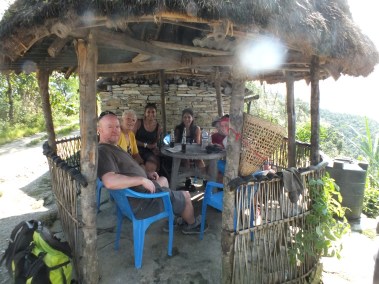
The Farm itself is delightful, probably the home of a 19th century noble, beautifully restored. Superbly detailed architecture, comfortable rooms, really fine food which we enjoyed on the panoramic patio or the magnificent dining room. In the group picture above we are on the patio. We spent an extra day at the Farm, enjoying really interesting conversations with inn-keepers and their staff, and exploring the temples, homes and historic buildings around Durbar Square.

By now we, the members of Sotiri One, were really warming up to one another. From the start we were like old friends reuniting. Rekha and Hazel both descended from first generation immigrants, Rekha and her parents escaping from Nairobi, Hazel’s mom and dad, one probably of Brahmin background the other from a rural farm, meeting in London in the 60s. Although they had just met Hazel and Rekha behaved like close sisters,  off on great flights of fancy. In one lengthy saga they were orphaned  sisters now seeking their real family in India, escorted by their step-dad: me! Throughout the trip we pondered with them life’s great questions- including those that Mr. Perfect would have to answer appropriately. Like, “What would you choose as your last meal if you were going to die?” Never sorted that one out.

By coincidence I had almost met Hazel, standing out in the crowd, in the Kathmandu queue at Delhi airport- we were on the same flights from London. Fate.

Doug entertained us with great flights of humour,  ascerbic Scots wit, and stories of his many travels and interesting environmental work back home. I was impressed that he quit his job and sold his upscale Porsche to travel for 18 months or so, following the wind. James exhibited a quiet wit, except when he got his hands on some fireworks in the Thar desert. He too had quit a good job to join Dragoman. He had been in the army and a number of varied jobs earlier. Ali, from deep in the Appenines, trained in dance and yoga, embodied Sotiri’s spirit, always ready with a broad smile and infectious laughter regardless of the challenges on the road.

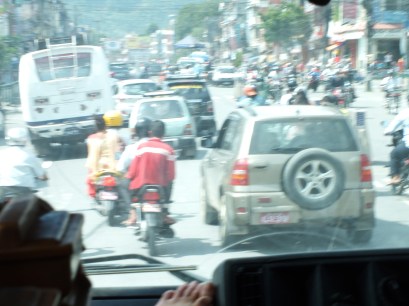
Our next journey was much shorter and on a much better surface, like a secondary road elsewhere, except for the traffic. Generally, the Nepalese are a gentle, calm bunch- but not on the road. Words cannot describe the traffic havoc, trucks, buses, cars, motorbikes relentlessly pressing forward in both lanes, torpedos be damned, with the most notable skill being a firm hand on the horn. On top of this incessant buzz we had local drivers pausing alongside to gawk at Ali, a female trucker breaking all precedent.

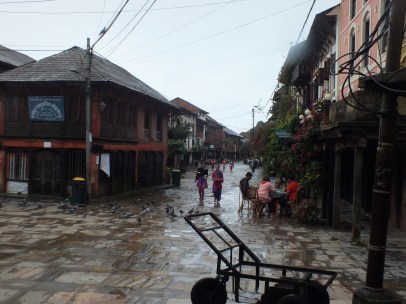
Nonetheless, in the early afternoon we arrived at Bandipur, another hill town, accessible by a restricted road, maybe 5 km of narrow switchbacks. If fact for the last 500 m we had to disembark as Ali and James almost literally pushed Sotiri up what looked more like a rocky riverbed than a road. Bandipur, labelled a “living museum of Newari culture” (Lonely Planet), is a village of traditional homes preserved by the Bandipur Social Development Committee, with leadership, once again, from Himalayan Encounters. The main ‘mall’ houses a charming collection of cafes, restaurants, shops, temples and hotels. Our overnight here was in a much more modest lodge, apparently a stand-in for the original booking, probably the Old Inn Bandipur, also restored by Himalayan Encounters. Hard to believe that this charming but really isolated village was a centre of trade between India and Tibet until the highway was built in the 1960s.

bandiour

We enjoyed a few glasses of lassi, masala tea and the ubiquitous Kingfisher in this very location… the street wet from one of the massive cloudbursts we experienced throughout Nepal, apparently from a later-than-usual Monsoon. The one in Bandipur was particularly fierce, as if our hilltop hotel was in the middle of a thundercloud.

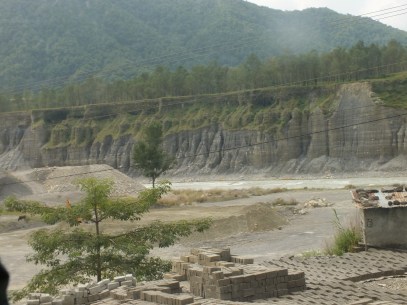
After getting ourselves down off the Bandipur hilltop, we continued northwestward on the Prithvi Highway to Pokhara, generally following the large, fast flowing and very brown Seti river. For lunch we stopped on its banks and crossed on a suspension bridge to a sort of picnic ground on the other side. Despite the speed and colour of the water, young boys were enjoying a swim, relief from the humid 30-35 C air. As we got closer to Pokhara, the hills flanking the river turned to steep gravel cliffs, probably between 100 and 200 feet high at their highest, testifying to the great power of the Seti.

seti-river

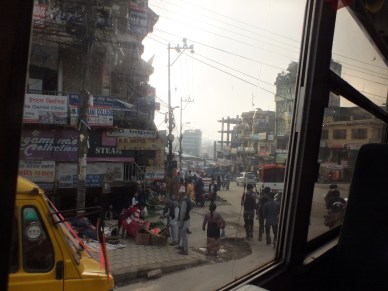
In the early afternoon we fell into the morass of vehicles of all sorts clogging the streets of Pokhara

pokhara

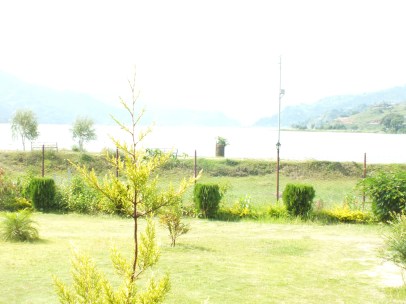
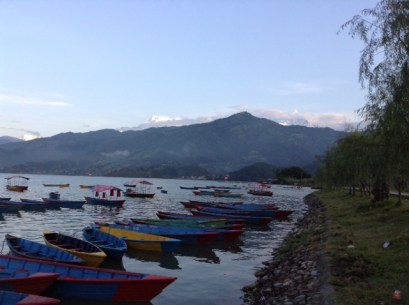
Eventually we reached the Lakeside City Hotel, a modern motel-like place on the edge of the lake, Phewa Tal. It was easy to find because, inscrutably, it sat behind a life-size model of a Twin Otter advertising a bar…phewa-tal

Pokhara presents a radical change from the serenity of the hill-top towns. It nourishes the vast trekking industry in the Annapurna region, as well as a big community of hang-gliders. Dozens of hiking supply shops, outfitters, cafes, restaurants, European bakeries, what have you. And crowds of people who looked like they just stepped out of the 60s hippie scene. We had a good time- comfortable rooms overlooking the lake, decent drinks at the patio restaurant, a variety of restaurants and lots to look at on the streets. My appetite was still not restored so I did not benefit greatly from the food. But we had fun boating on the lake…I lie, I trembled in fear that my rambunctious boat-mates would capsize the flimsy flat-bottomed craft.

pokhara

Here we had the only bit of rain during my whole 6-week trip. It lasted overnight and the following morning. I had planned to go hang-gliding that morning, but weather prevented. No worry, I had a great day accompanying Rekha and Hazel on a long tour thru just about every shop in lakeside Pokhara, then a trek to the Phewa waterfall, and a fine ice cream at the end.

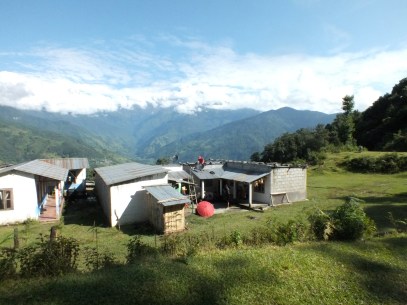
Next day, the piece-de-resistance: an excursion to the Eco-Lodge overlooking Annapurna. We drove up a valley in jeeps to the village of Damphus*, then hiked a few steep kilometers thru small mountain farms.

*named after a former Montreal hockey player? probably not.

mountain-farm

Near the end our guide invited us to tea at is family home.

guides-home

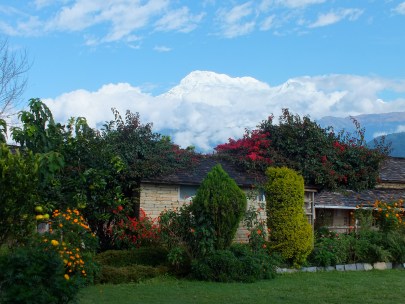
Refreshed, we continued up the very rough trail to the Annapurna Eco-Lodge, a really remarkable place. It has been developed by an extended Nepalese family as a largely self-sustaining hotel: its food, water, and some power are all produced on-site. We got a tour of its functions, milked the cows, relaxed in the luxuriant gardens and enjoyed the excellent local cuisine, vegetarian of course. At the girls insistence I joined the yoga lessons for two sessions. Impressively invigorating!

ecolodge

Typical of the family’s dedication to the project, a member studied Japanese for a year before visiting Kobe to master a simple, sand-based water purification system perfected there. He gave us a demonstration of its operation. By coincidence, a Japanese couple he met in Kobe were visiting the lodge- so I got to practice some rusty phrases.

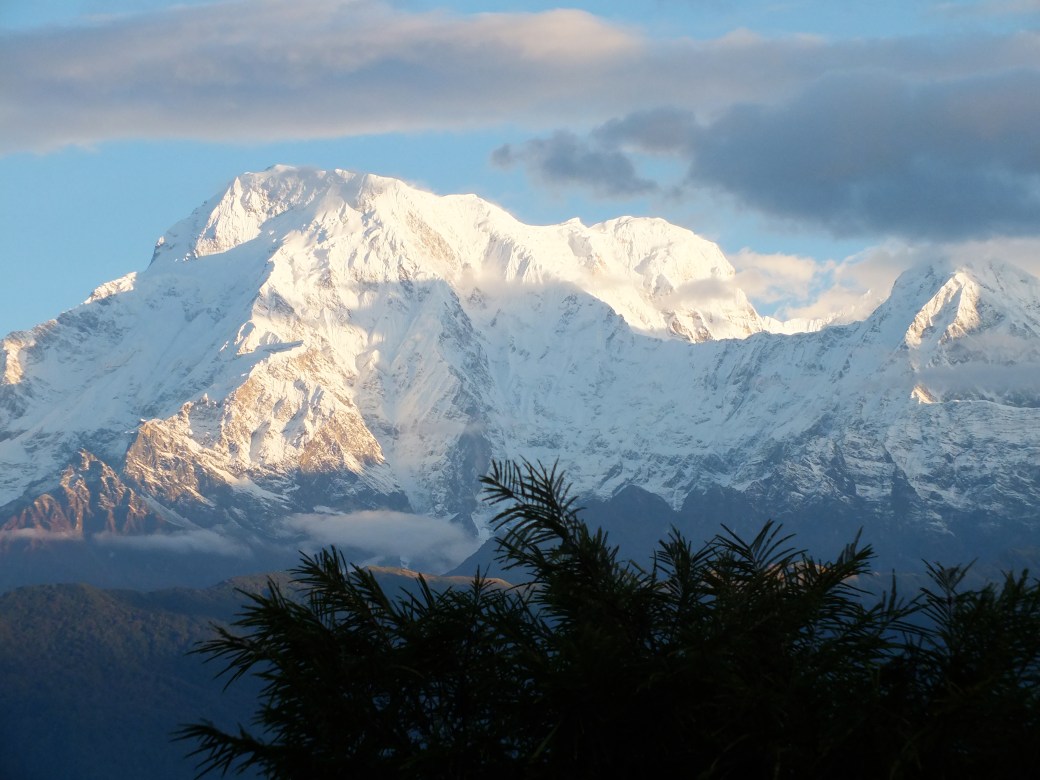
During the day, heavy low clouds obscured the Himalayas. But each morning at 6 the sky was clear. I was up to stare in awe at the horizon. Annapurna, shining brilliantly in the early sun!

annapurna

And as well, spectacular Machapuchare , Annapurna II, III, and IV. Absolutely breathtaking

achapuchare

As a fitting denouement to this enthralling natural display, on our final night at the lodge a couple dozen members of the family- moms, wives, daughters, brothers and sons- joined us with their musical instruments and voices, to entertained us with dance and song about local events. We were invited to join in- it was a ball!

annapdanceparty

Relunctantly, we left this real-life Shangri-la the next morning, down the trail, back in the jeeps to Pokhara for another night before heading south to Chitwan National Park. Views of Annapurna and her sisters followed us a good part of the way, until we turned

roadfromhell

from the familiar Prithvi Highway onto the ROAD from HELL! No kidding, the worst and scariest road I have ever been on, steep cliff on the passenger side, a sheer drop 200 feet or so to the swirling Tisuli River.

This section, probably only 30 km or so between Bharatpur and Narayangarh, involved about 3 hours of hair-raising bouncing over one endless pothole, often at about 5km/hr as maniacal buses, bikes and trucks shot by on the edge of the precipice. Fortunately we were on the inside of the ‘road’ though we often had to venture to the other edge to avoid cavernous holes. Good thing we were in such high-spirited,  undauntable company.

Late in the afternoon we reached the rather fine Rhino hotel in Chitwan (so named because rhinos wander the park-like grounds at night), probably a relic of 19th century hunting parties of the Raj. Our stay in Chitwan was a little disappointing in so far as we did not see much game, despite a hike thru the jungle,

chitwan-jungle

a scary boat trip on the crocodile infested river,

chitwan-boat

and a lengthy jeep ride thru the game preserve.

dscf3905

Doug and I did get leeched, though. Happily there were a lot of elephants around, obviously quite domesticated.

chitwan-elephant

The other disappointing thing here was that the heart of our Nepal group, Hazel and Rekha were about to head back to Kathmandu..

les-girls

They continue to celebrate their friendship at home. Here they are about to wreak havoc on London nightlife.

We did have a delightful celebration of the Nepalese holiday over dinner, with food and drinks provided by the hotel owner. And several rounds of farewell drinks late into the night.

idyllicgroup

Idyll: “a carefree episode that suggests a mood of peace and contentment” (after Webster).

Thus ended our Idyll, one of the most enthralling adventures in my long life. First we had the pleasures of pastoral Nepal, a spectacularly verdant environment and its warmly welcoming people. Secondly, Sotiri, her competent crew James and Ali, fulfilling the promise of the Dragoman mode of travel, allowing us to absorb these new experiences. And best of all, our random foursome that bonded in a trice, as if we had been friends for years. Moments that will live forever!

About

Dennis Dicks, Professor Emeritus of Educational Technology at Concordia University, Montreal served as a faculty member, department chair, associate dean, and project director at the University for 34 years. Currently he is a village councilor in Senneville Quebec where he resides with his wife Yoshiko,  dog Bingo and Caesar cat. Daughter Naomi and son Taro live on adjacent streets- daughter Amiko currently resides in California. Dr. Dicks studied at Carleton University, Ottawa, the University of Chicago, and Imperial College, London. Denzo is his Japanese nickname, roughly transliterating as ‘electric elephant’.

Why Travel? It is said travel expands mental and behavioural horizons, exposing the traveler to new ways of viewing and dealing with the many challenges that life poses, a process greatly abetted by immersion in the languages and cultures visited. This is what I try to do. As part of my broad interest in “the human condition”, I have explored the various roots of our current civilization- first in extensive European trips, in a minor way in the Middle East, and more recently in crossing both China and India. Understanding where humans have been, literally and figuratively, generates a deeper understanding of current issues of conflict and survival. We have been there before!

https://denzo.live/2017/01/04/intro-to-india